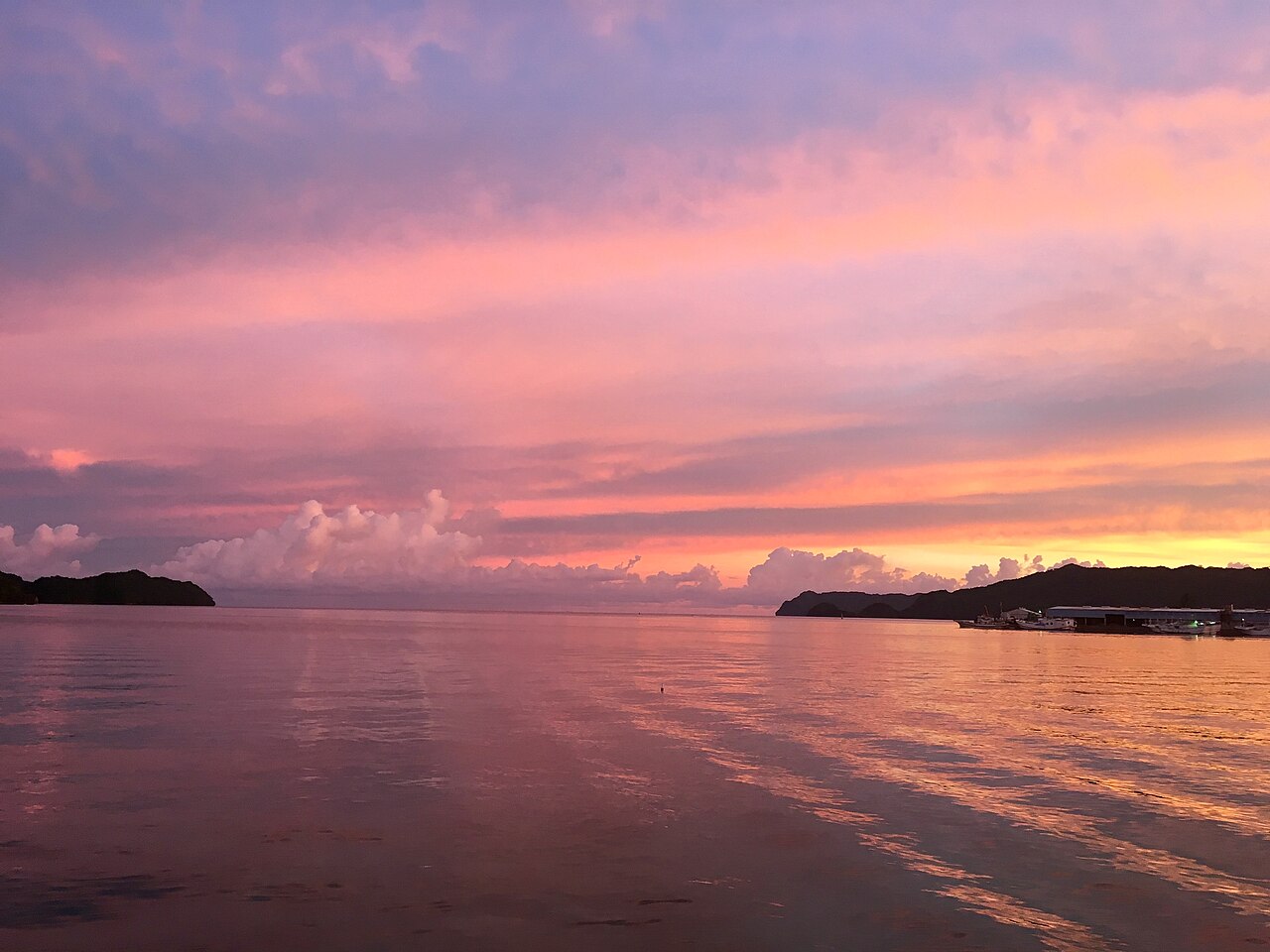
01 Why it’s unique
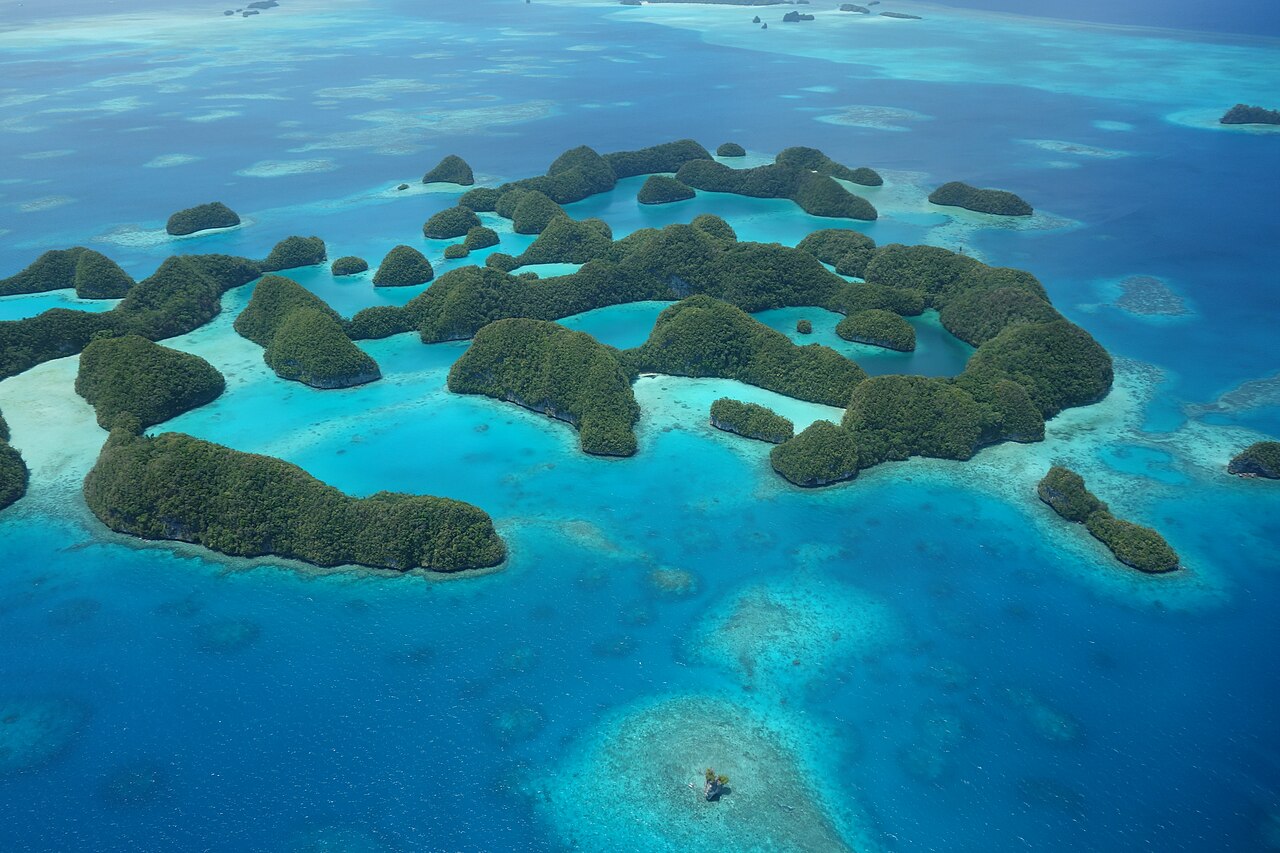
The Rock Islands Southern Lagoon (UNESCO, 2012), about 445 uninhabited limestone islands shaped like mushrooms by the sea. Palau created the world’s first shark sanctuary in 2009 and closed most of its waters to fishing in 2020. Visitors sign the Palau Pledge, stamped in their passport, promising to protect the islands.
02 Culture and history
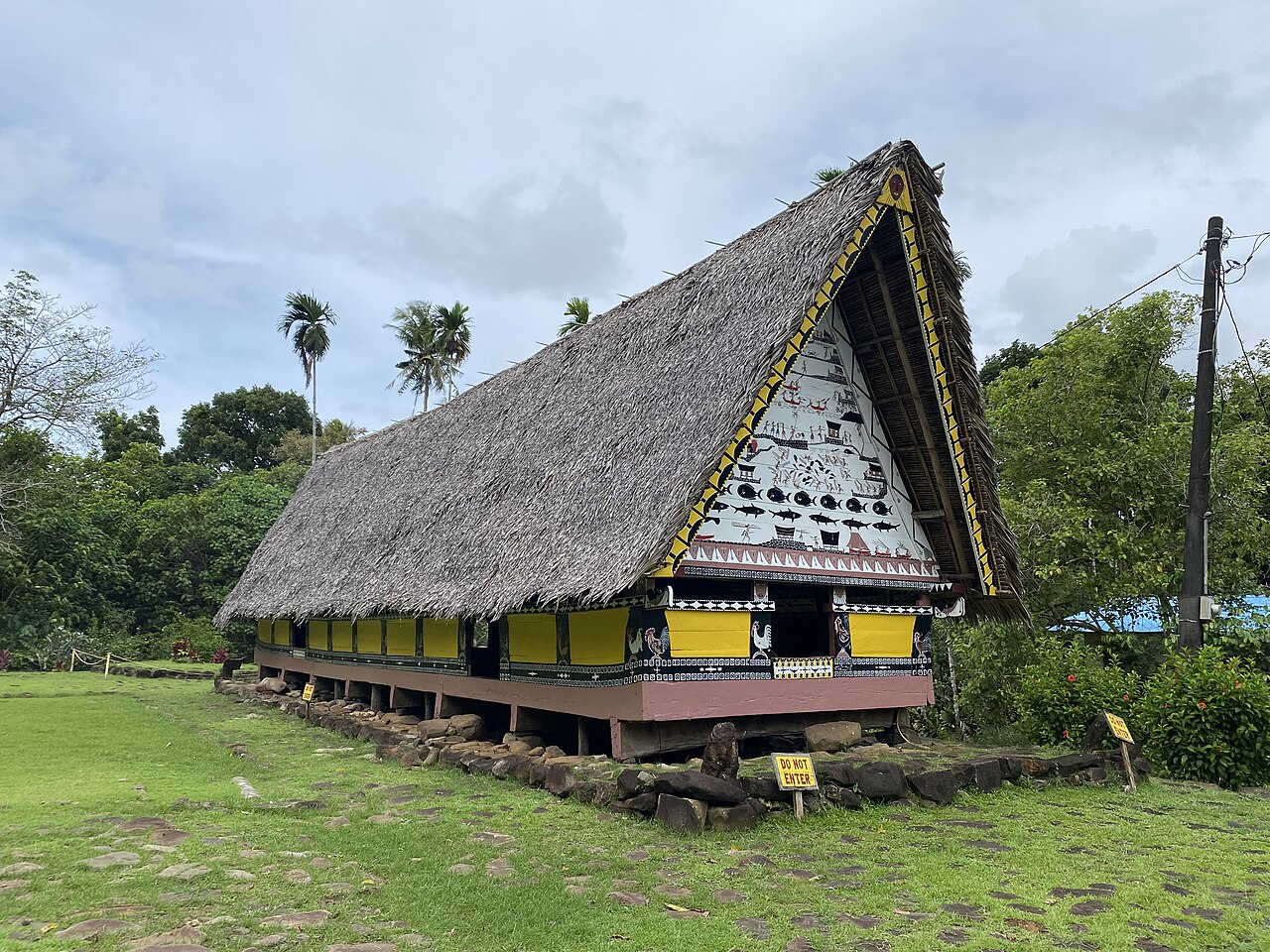
Palauan society is matrilineal and organised in clans. The bai, a tall-gabled meeting house, has painted beams telling legends; storyboards, carved wooden panels developed in the 1930s with the Japanese artist Hijikata Hisakatsu, carry those stories in portable form. Under Japanese rule, Koror grew into a city of about 30,000 people. The Battle of Peleliu (September–November 1944) was among the bloodiest of the Pacific war, and its tanks and caves remain.
03 Placemaking
The Airai bai, over a century old, is one of the last original meeting houses. On Babeldaob, the Badrulchau stone monoliths stand in rows on a hillside overlooking the sea. The national capitol at Melekeok (2006) is a neoclassical domed building resembling the US Capitol, set in the jungle: a striking statement about identity and influence.
04 Diving and water
Blue Corner (sharks and schooling fish in strong current), German Channel (manta rays), Chandelier Cave, Ulong Channel and WWII wrecks. Jellyfish Lake, with millions of stingless golden jellyfish, closed after a drought and has since reopened; check its status before going.
05 Photography
The Rock Islands from the air; the Milky Way lagoon with its white limestone mud; storyboard carvers; the Badrulchau monoliths.