RAW Logbook Preparation · Marsden Cove Marina35°50′S 174°28′E 21:06 UTC+13 178 days to go // Members

Work in progress We prepare and add to this site every day. A lot is still missing, but it will be finished before we set sail.

§ 01.1 · 01

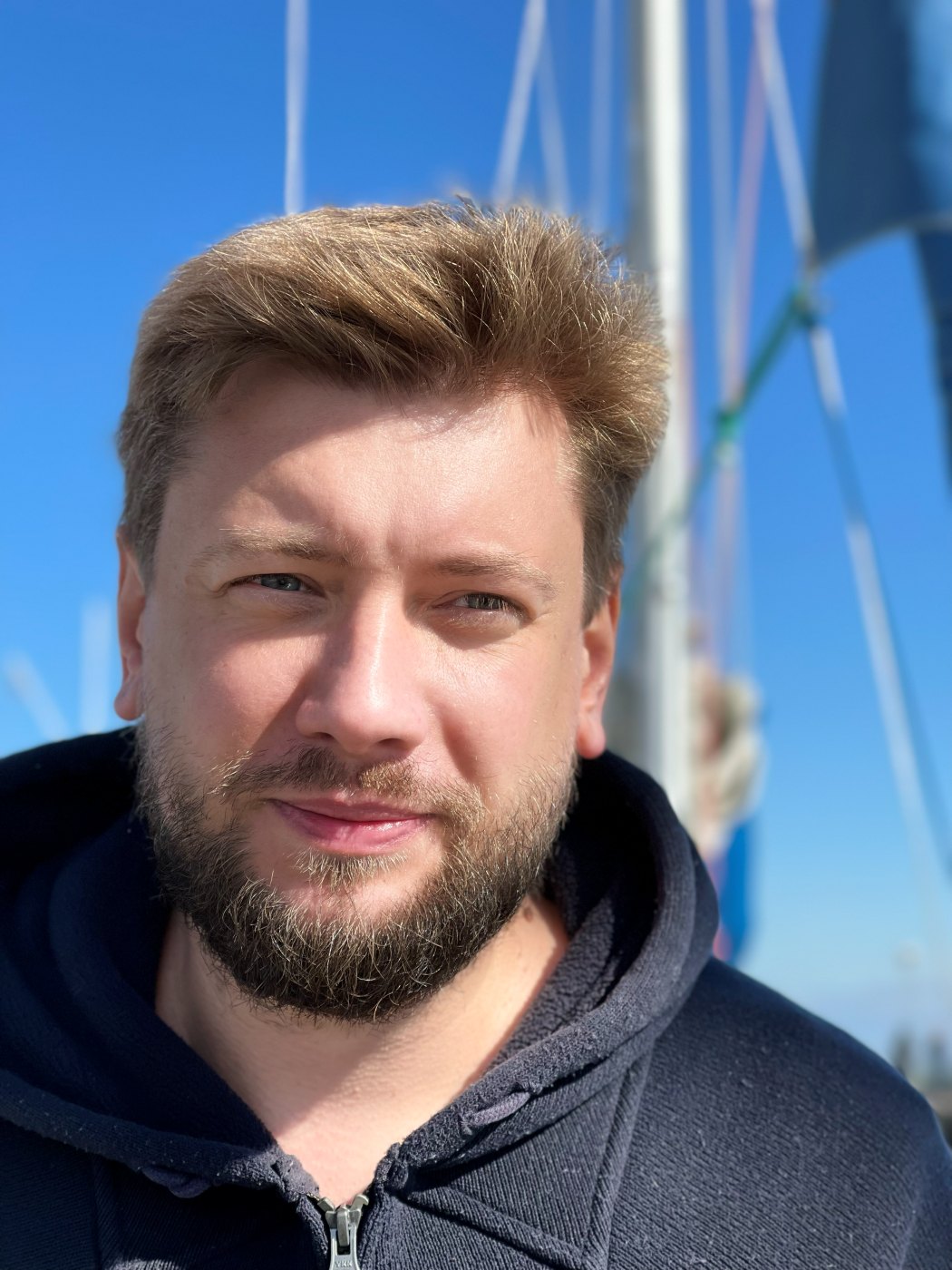
Petras

Skipper

Lithuanian artist, shown in ten countries and held in museum and private collections. Each of his works is made for its place and time: it raises a question that matters there and then, and through a democratic art form invites the public to discuss it. His work spans the whole history of the medium, from pinhole cameras and hand-made silver prints to photomicrography and light installations in public space; he photographed Esther Shalev-Gerz’s retrospectives at the Jeu de Paume in Paris and in Lausanne, and his most recent work is <em>Čiurlionis’s Sun</em>, made for the national Čiurlionis anniversary programme.

Website
petrassaulenas.com ↗
On board
Skipper · photography and imaging
Disciplines
Photography, media art, installation, art and science
Education
MA in audiovisual art, Vilnius Academy of Arts, 2012
Memberships
Lithuanian Artists’ Association · Union of Lithuanian Art Photographers · board, Lithuanian Analogue Photography Association
Collections
Museums and private collections in Lithuania and abroad
Recognition
Lecturer of the year 2016 · state stipend 2022 · nominated for the Neringa Mayor’s Prize 2024
Exhibited in
Lithuania, Latvia, Poland, Finland, Germany, Italy, Switzerland, Spain, Ukraine, United Kingdom
Languages
Lithuanian, English
Works by Petras19 photos
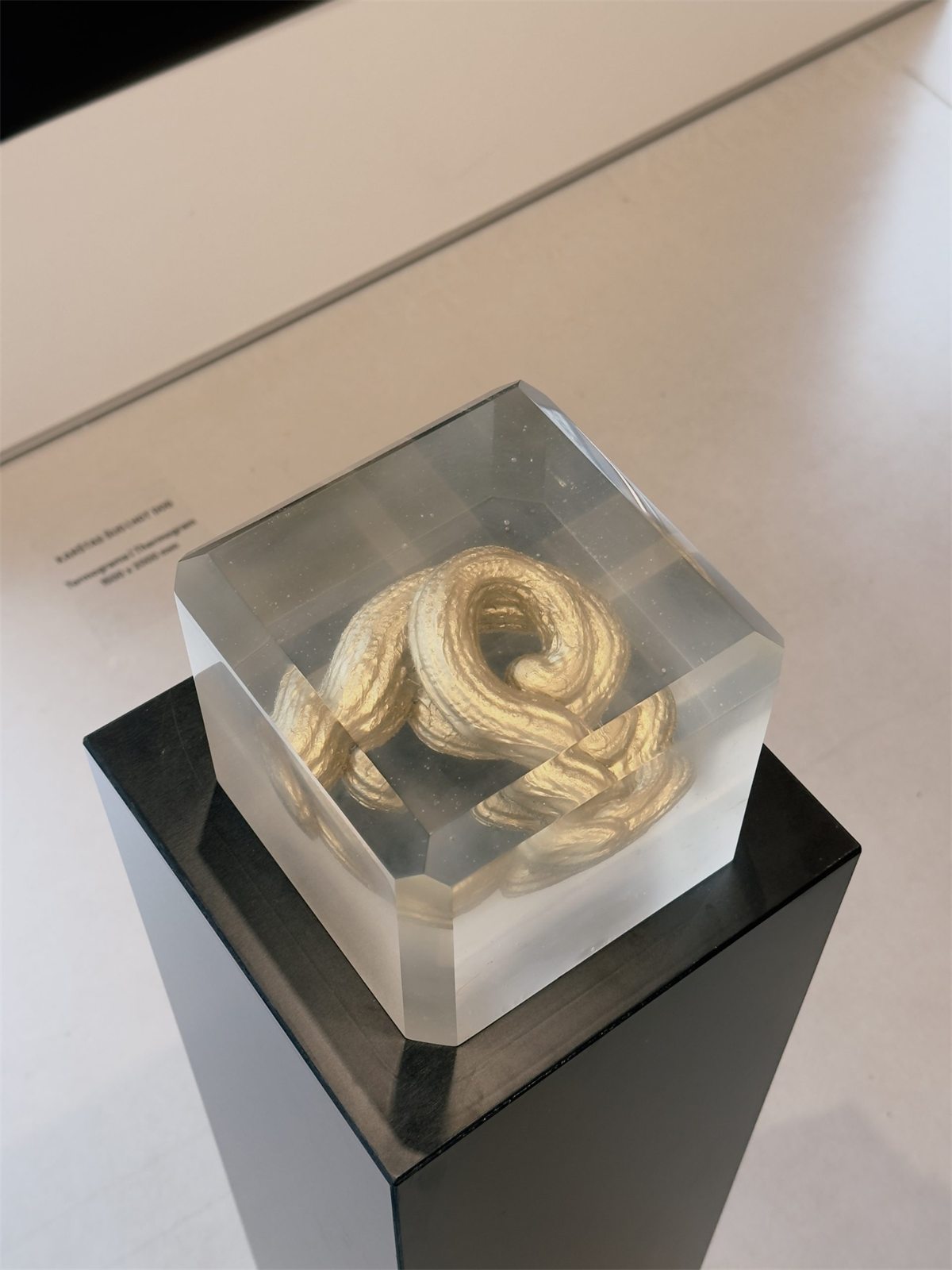
Golden Content, with Julia, 2024 · Plastic coated in gold-coloured paint, epoxy resin, 25 × 25 cm
01Golden Content, 2024slaptameile.lt ↗
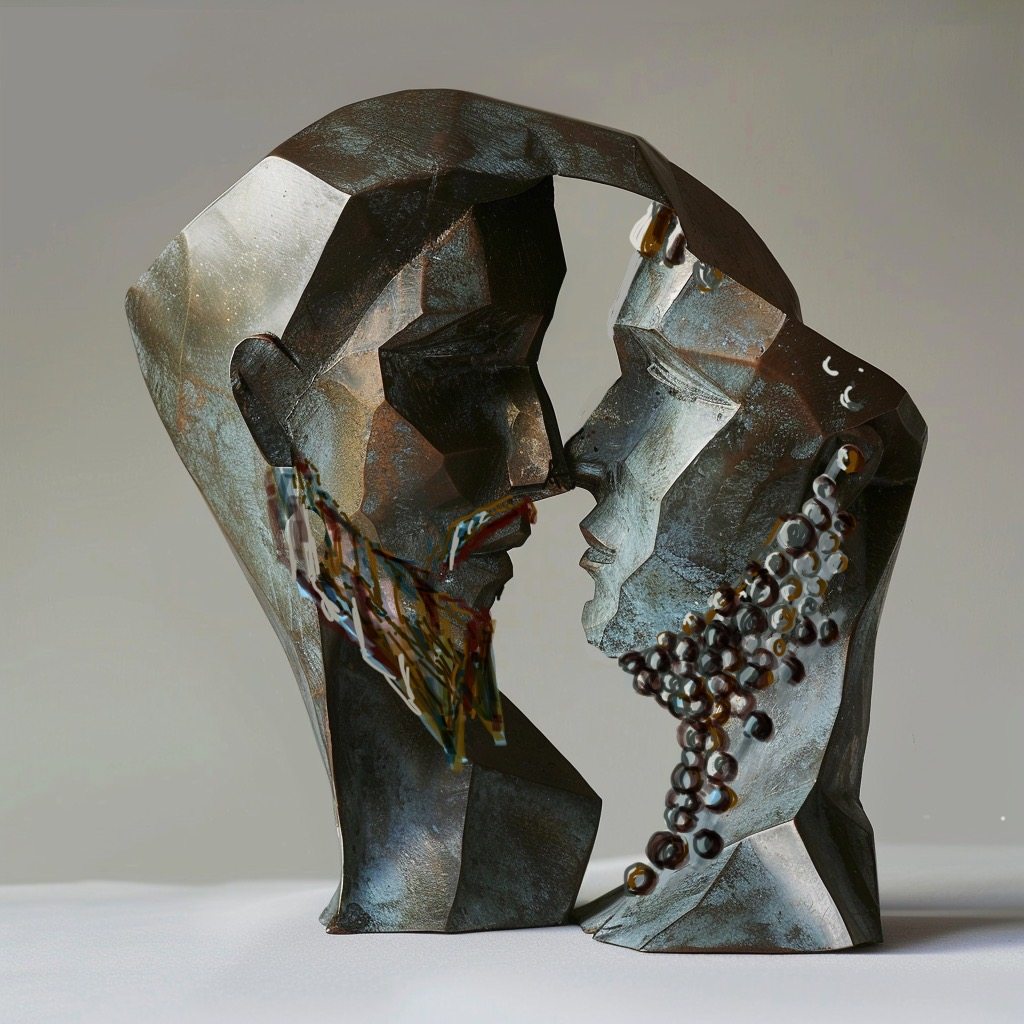
Barbara and Sigismund Augustus, with Julia, 2024 · Sculpture project in bronze
02Barbara and Sigismund Augustus, 2024slaptameile.lt ↗
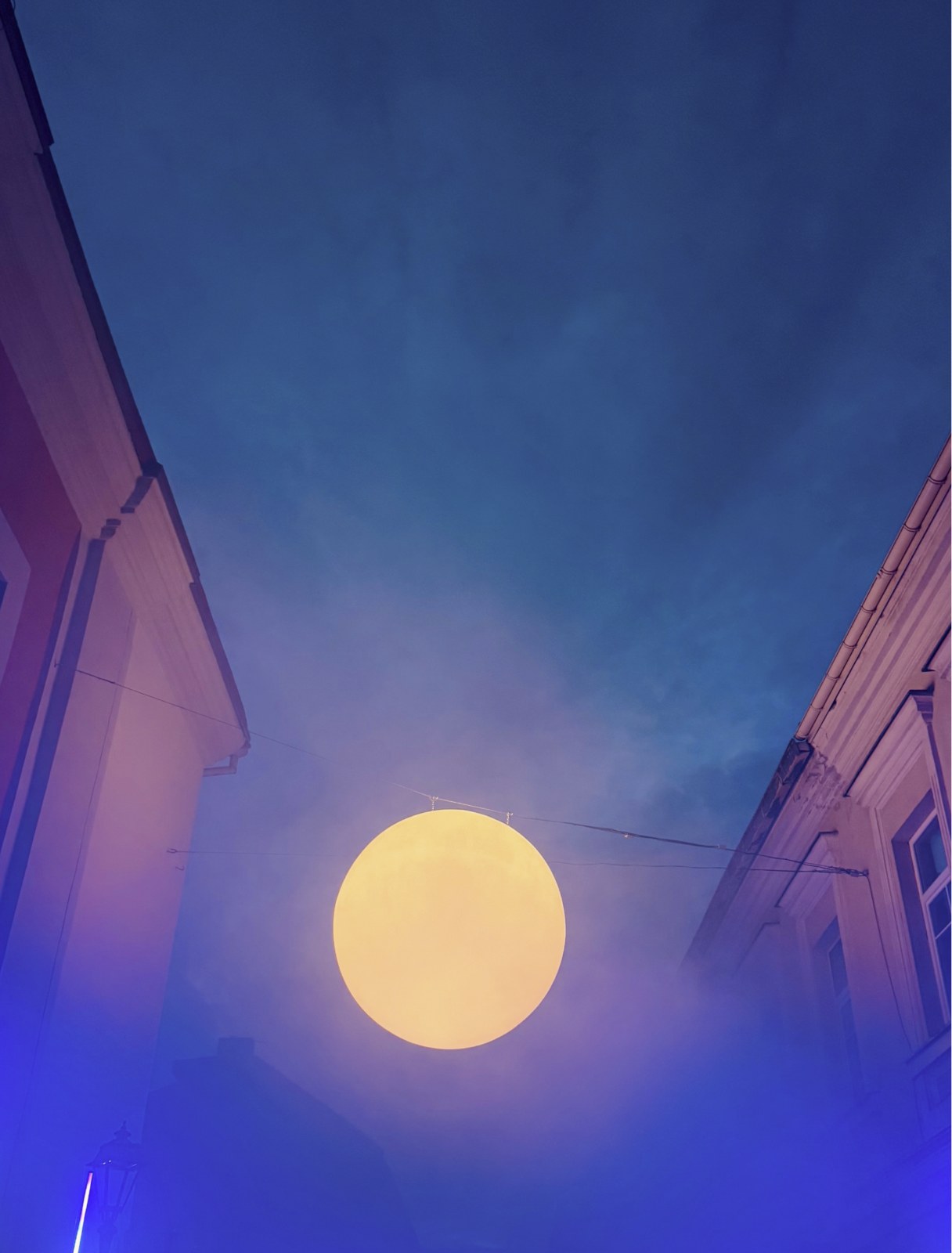
Čiurlionis’s Sun, 2025 · Light installation: a sun in fog, with Čiurlionis’s music
03Čiurlionis’s Sun, 2025
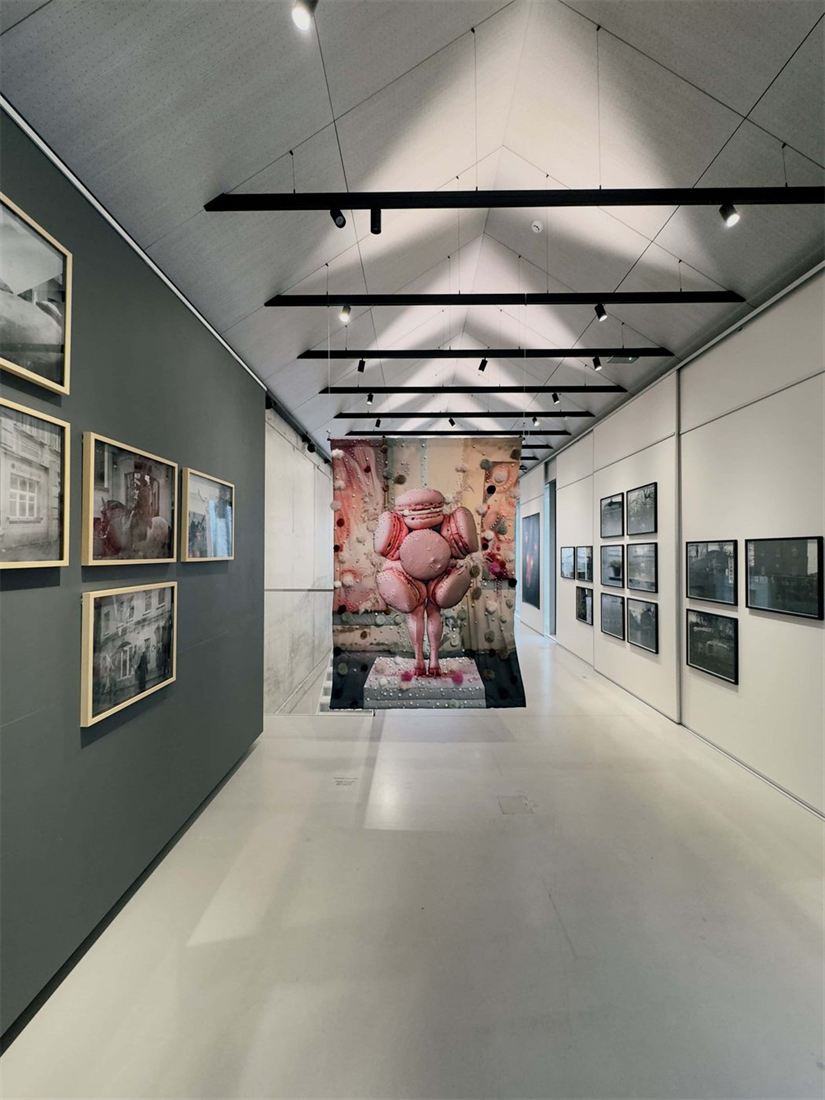
To the Left, with Julia, 2024 · Exhibition: analogue and digital photography, textile, wood sculpture, installation
04To the Left, 2024
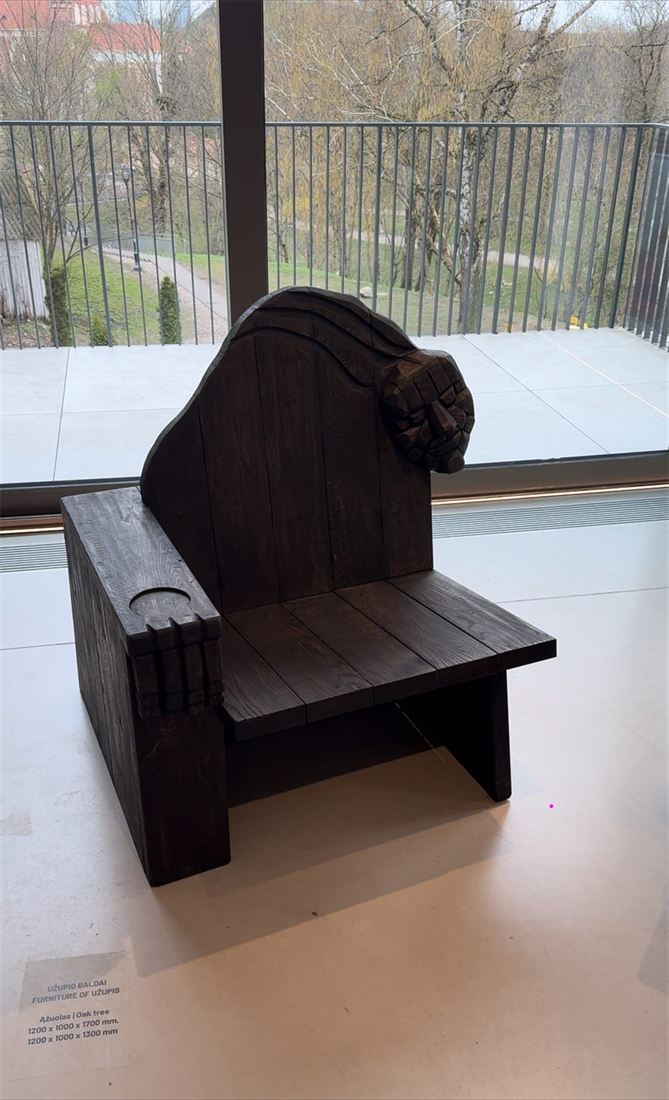
Užupis, 2024 · Silver gelatin prints
05Užupis, 2024
Freetown Christiania, 2024 · Silver gelatin prints
06Freetown Christiania, 2024
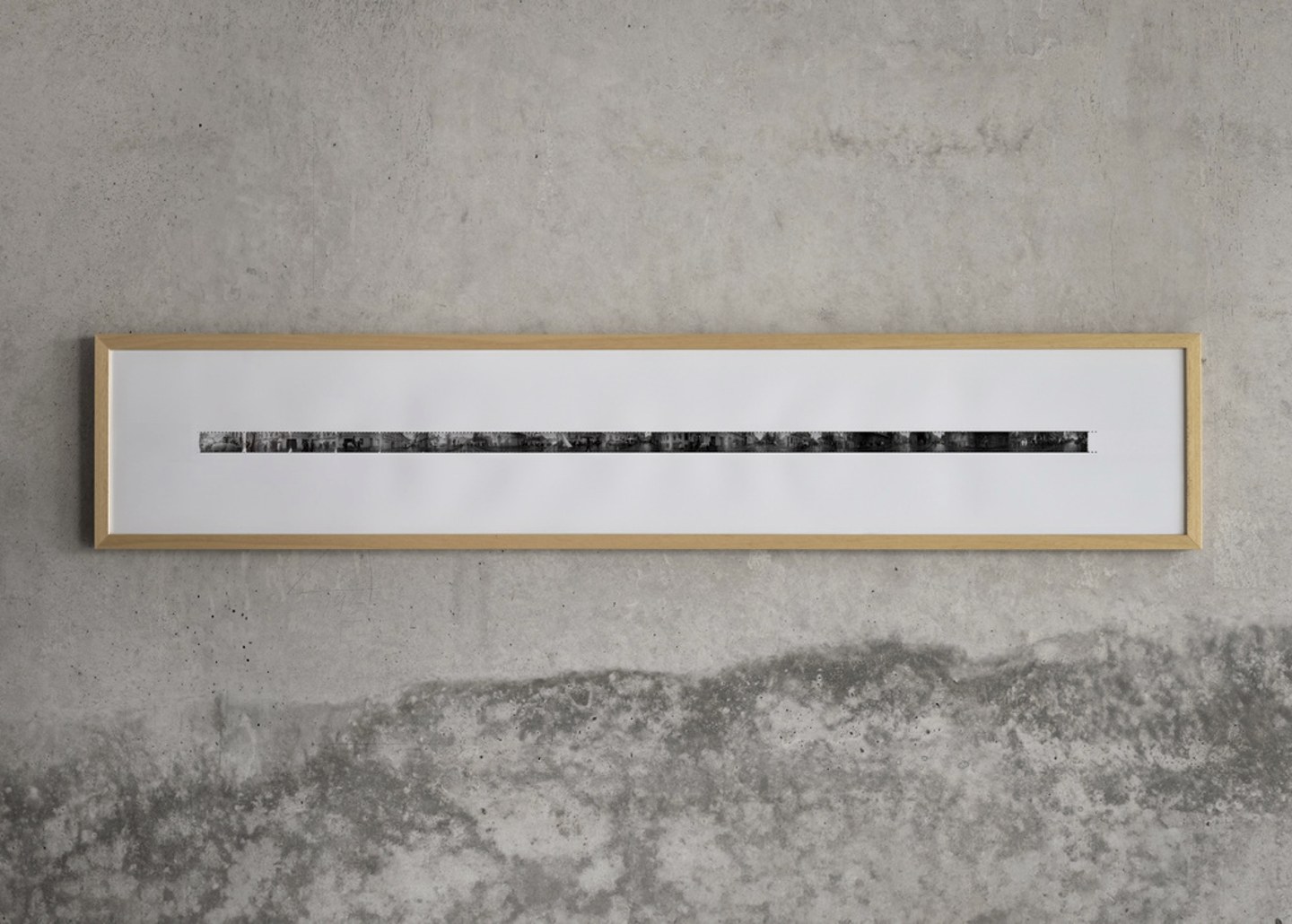
1 April 2023: The Republic of Užupis at 25, 2023–24 · Panoramic silver gelatin contact print, 1500 × 250 mm
071 April 2023: The Republic of Užupis at 25, 2023–24
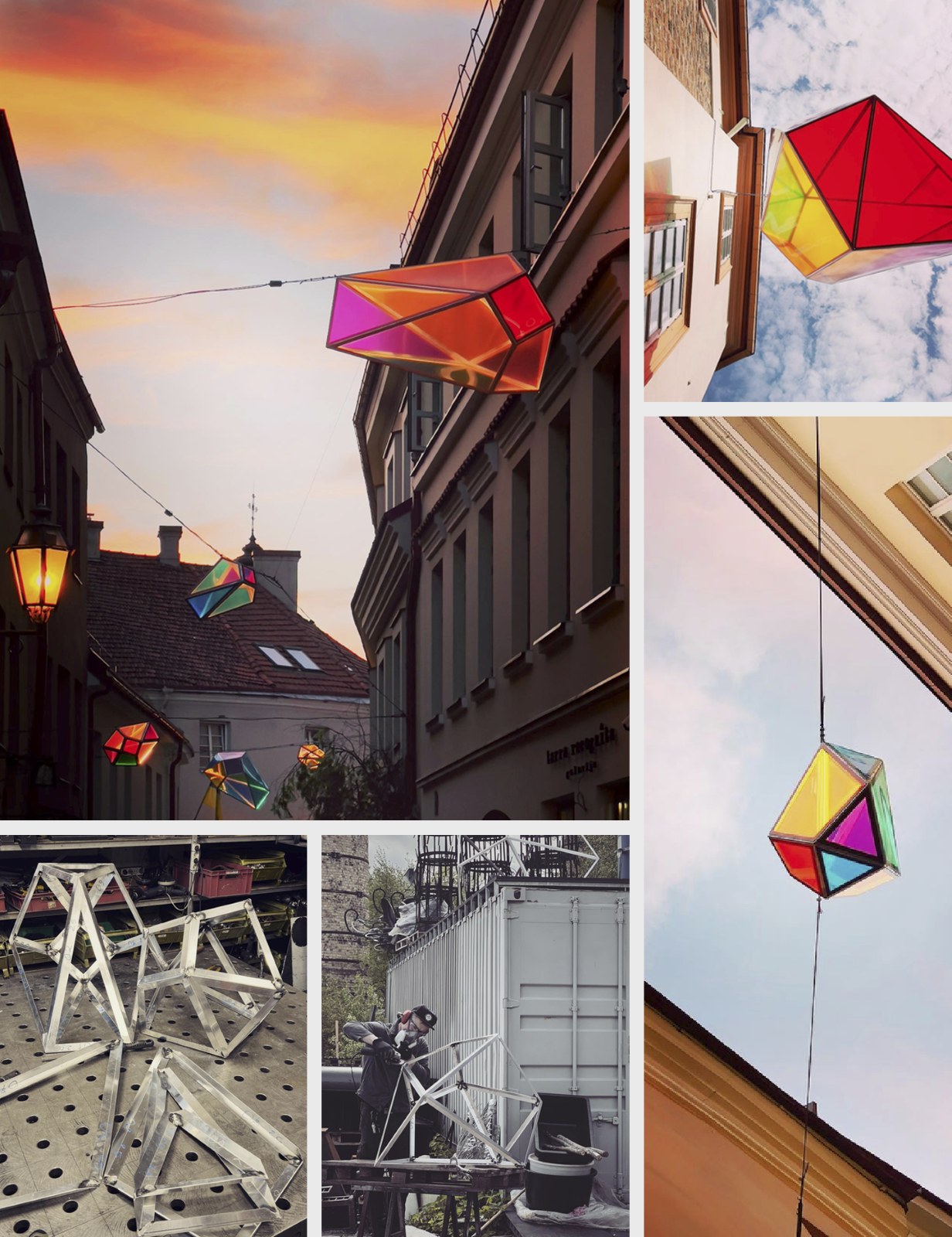
Vitrum, 2022 · Spatial stained-glass objects and light
08Vitrum, 2022
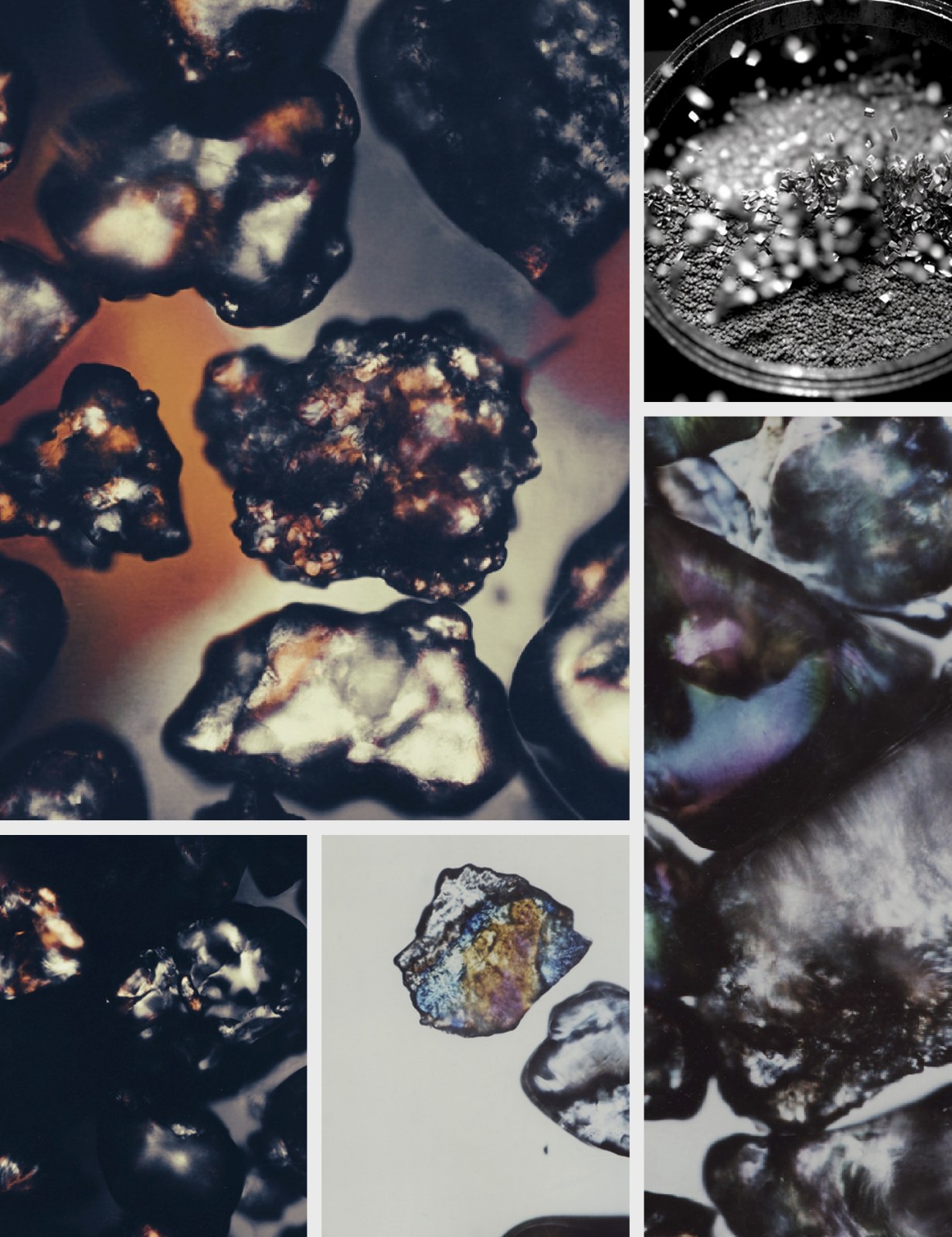
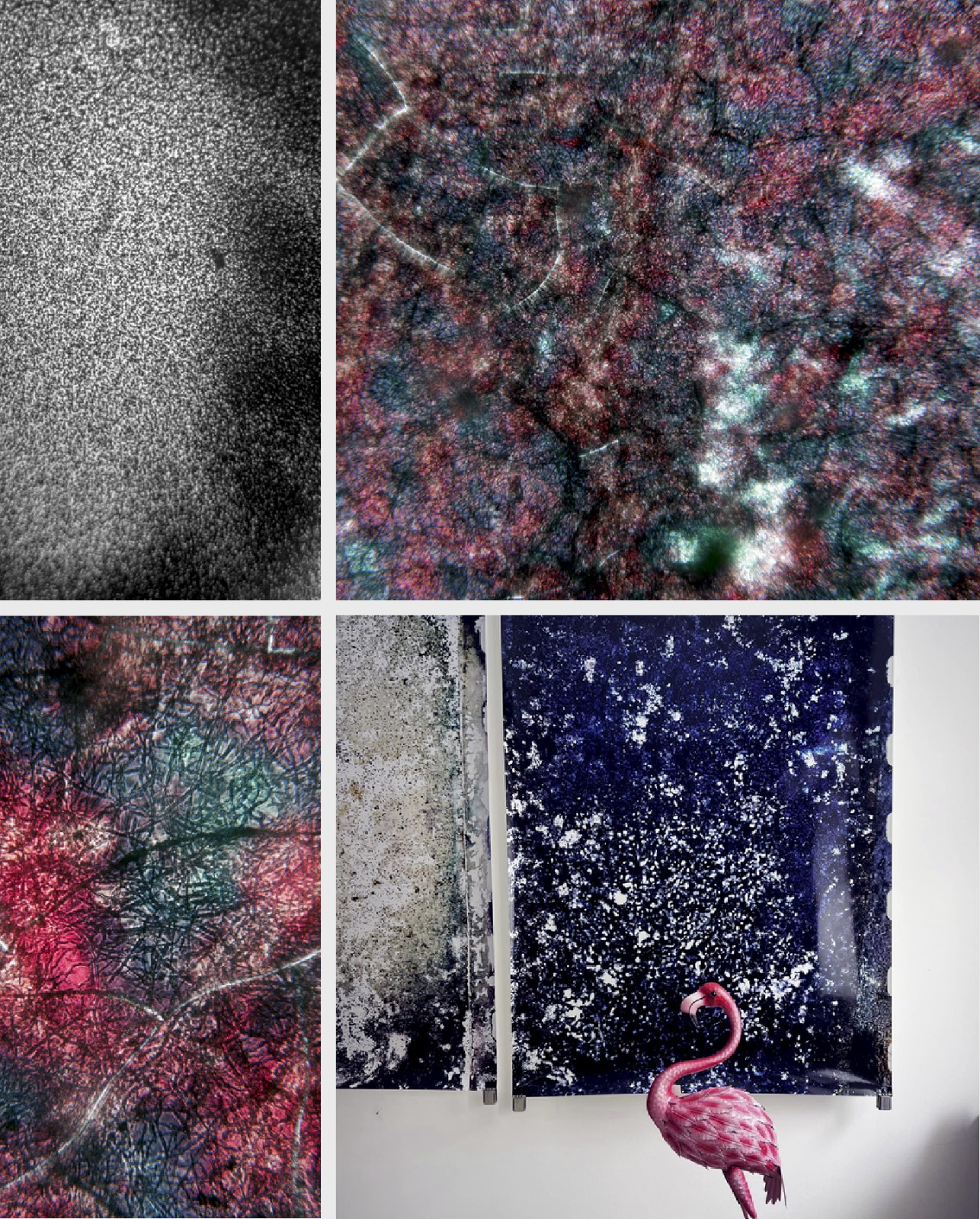
Vitrum: quartz sand, 2022 · Photomicrographs in polarised light, in lightboxes
09Vitrum: quartz sand, 2022
Fotogrāfija, 2022 · Photographs
10Fotogrāfija, 2022
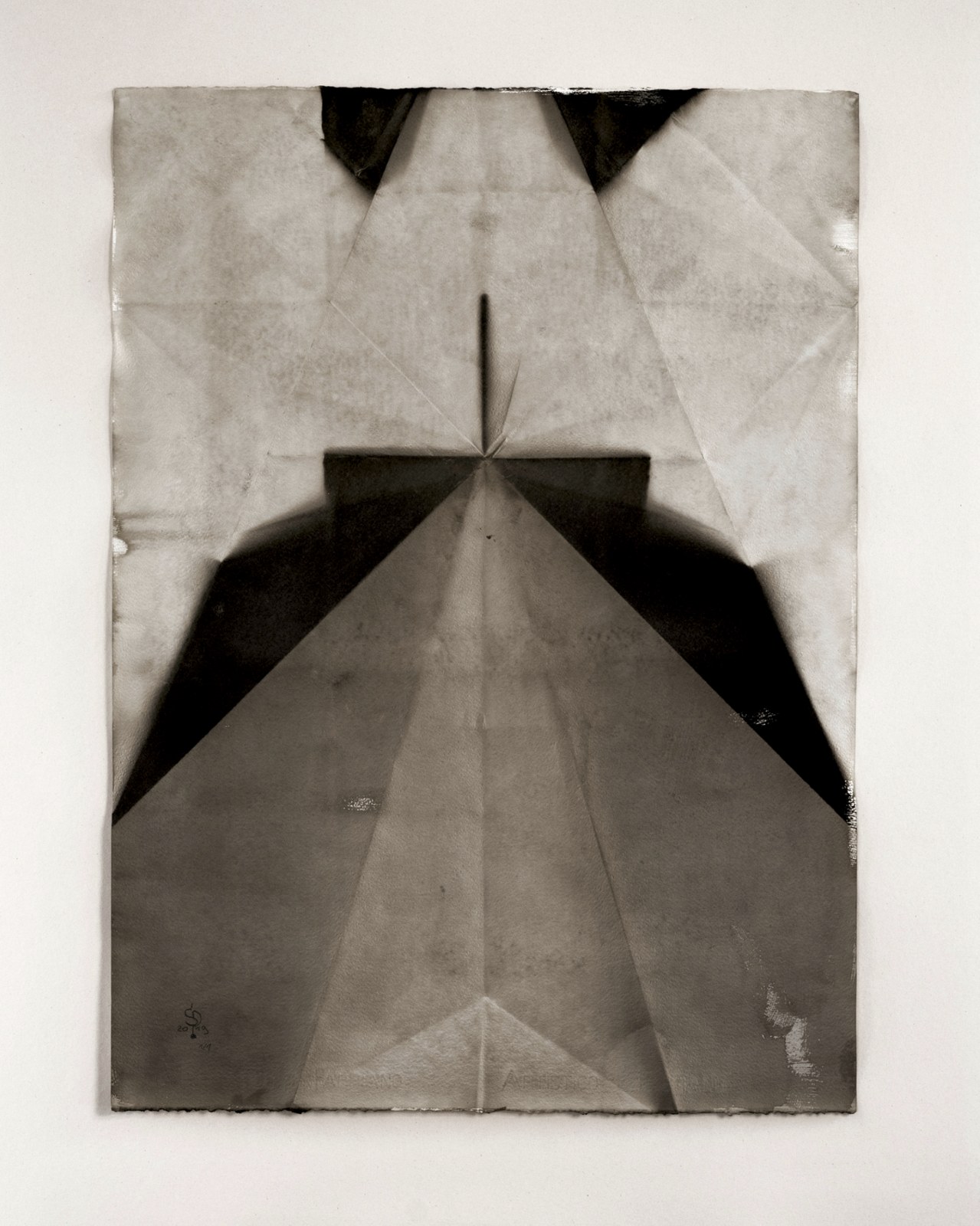
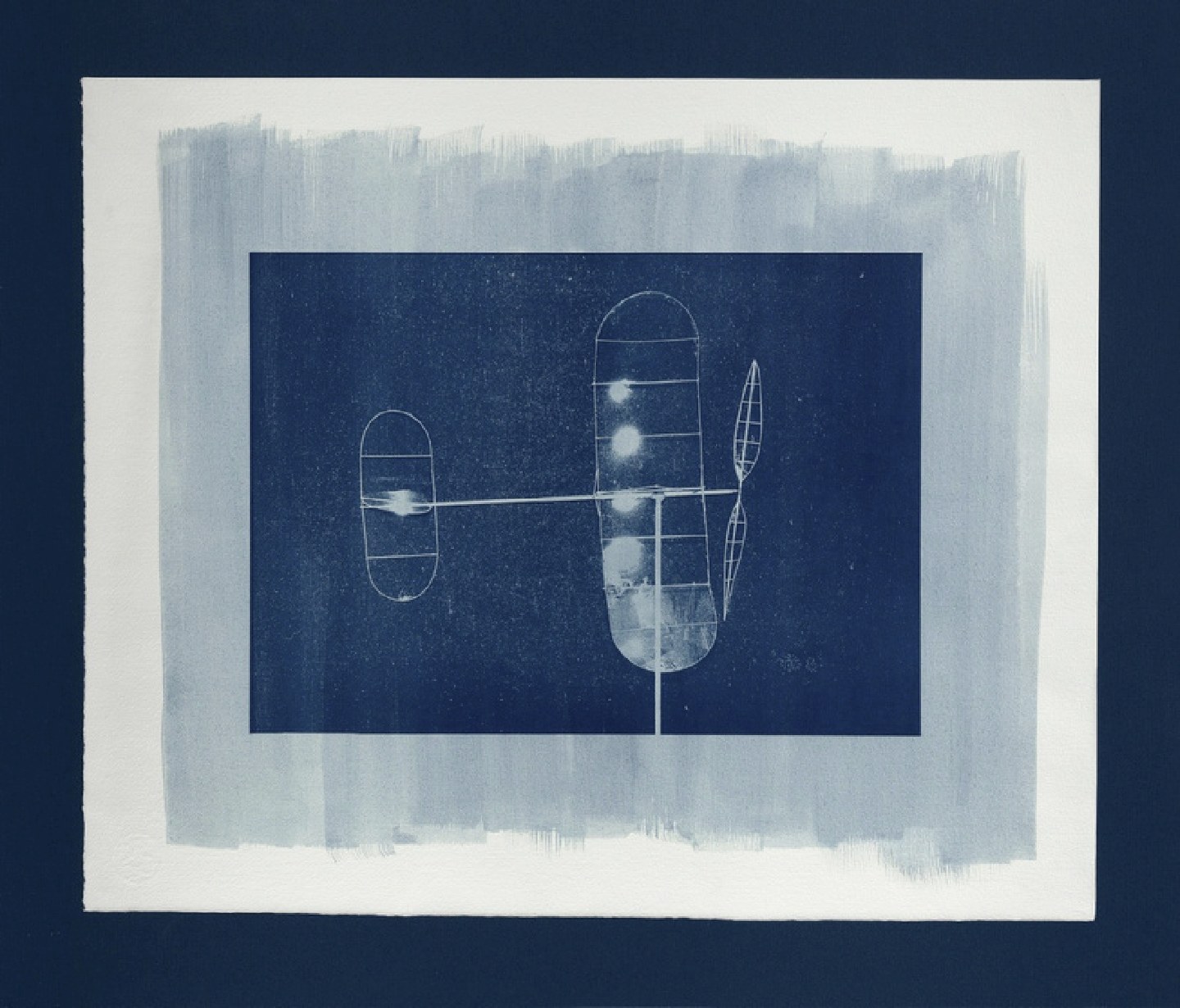
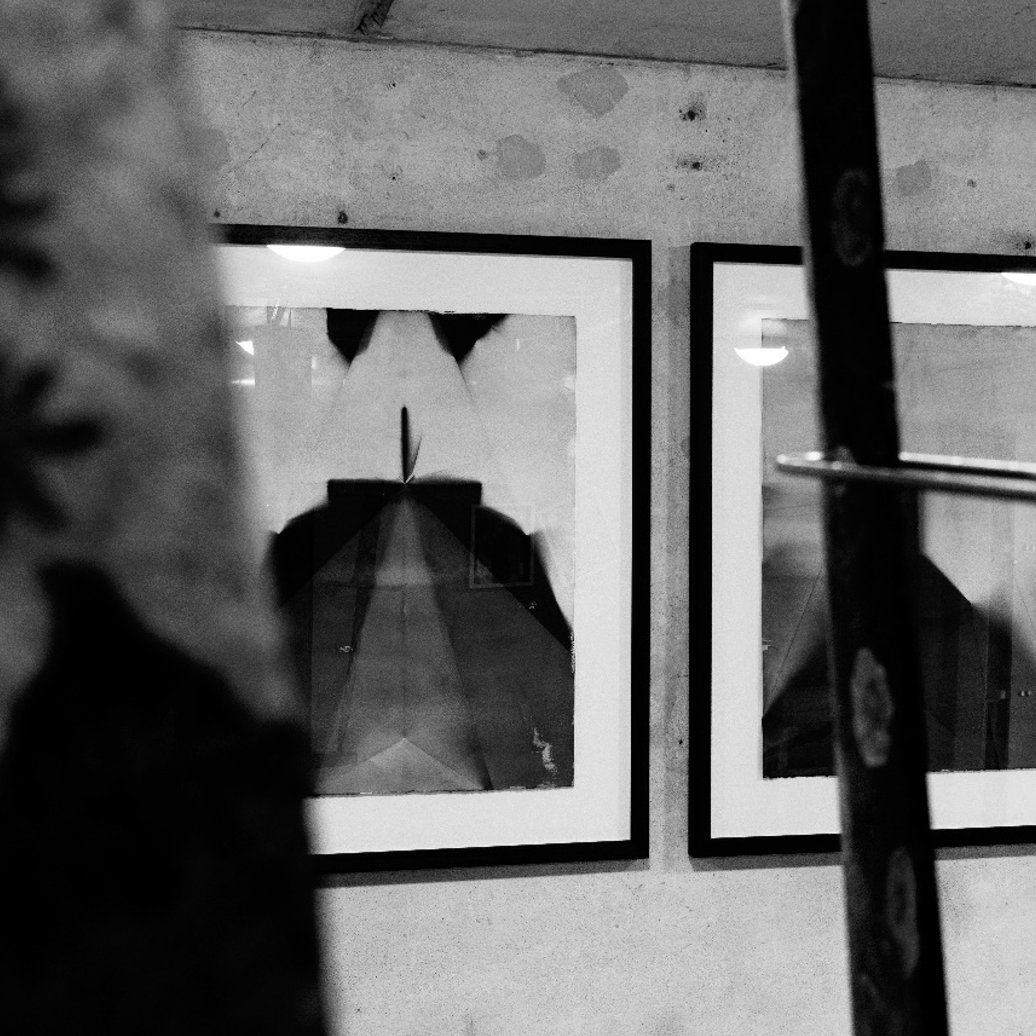
Unfolded, 2019 · A paper plane, unfolded and printed with light; salt evaporated from Baltic seawater
11Unfolded, 2019
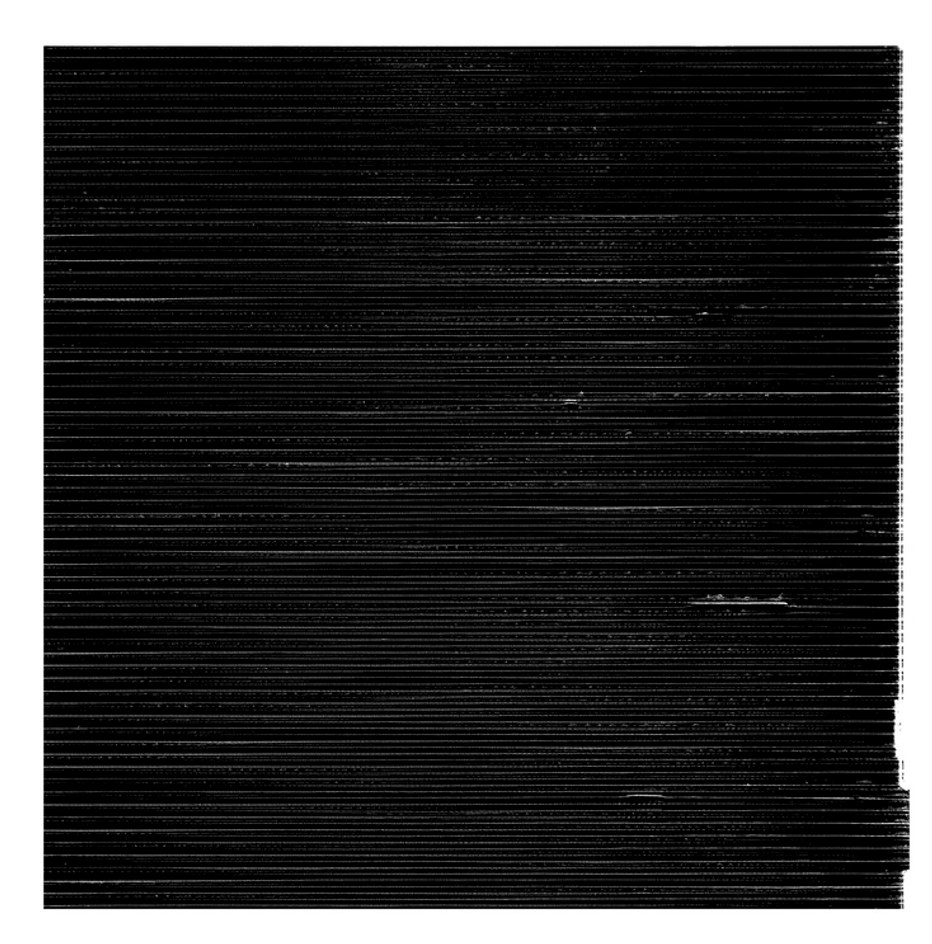
Print of a Print: Rectilinear #001, 2019 · 1100 × 1100 mm; a negative made from a 3D printer’s first layer
12Print of a Print: Rectilinear #001, 2019
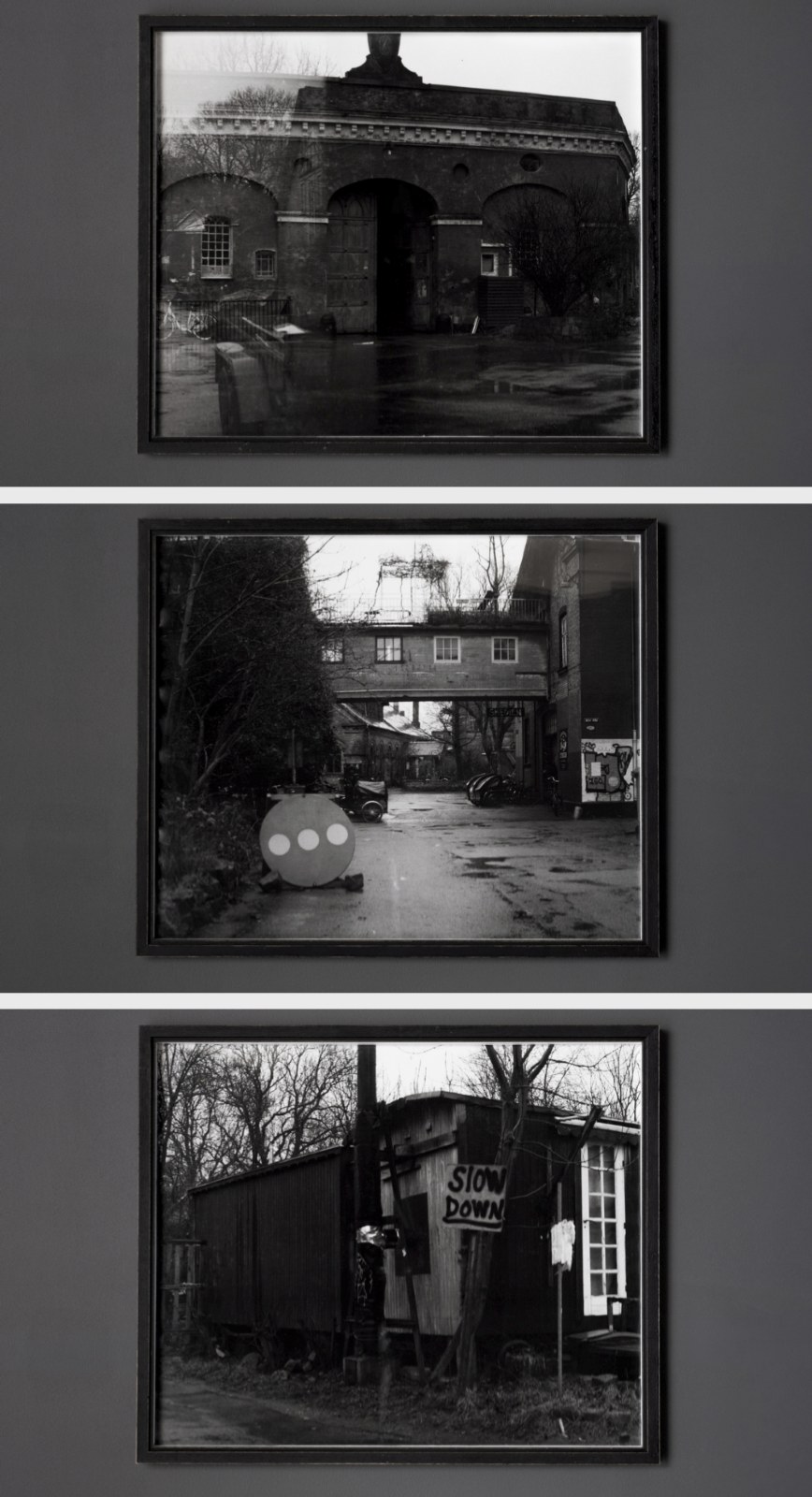
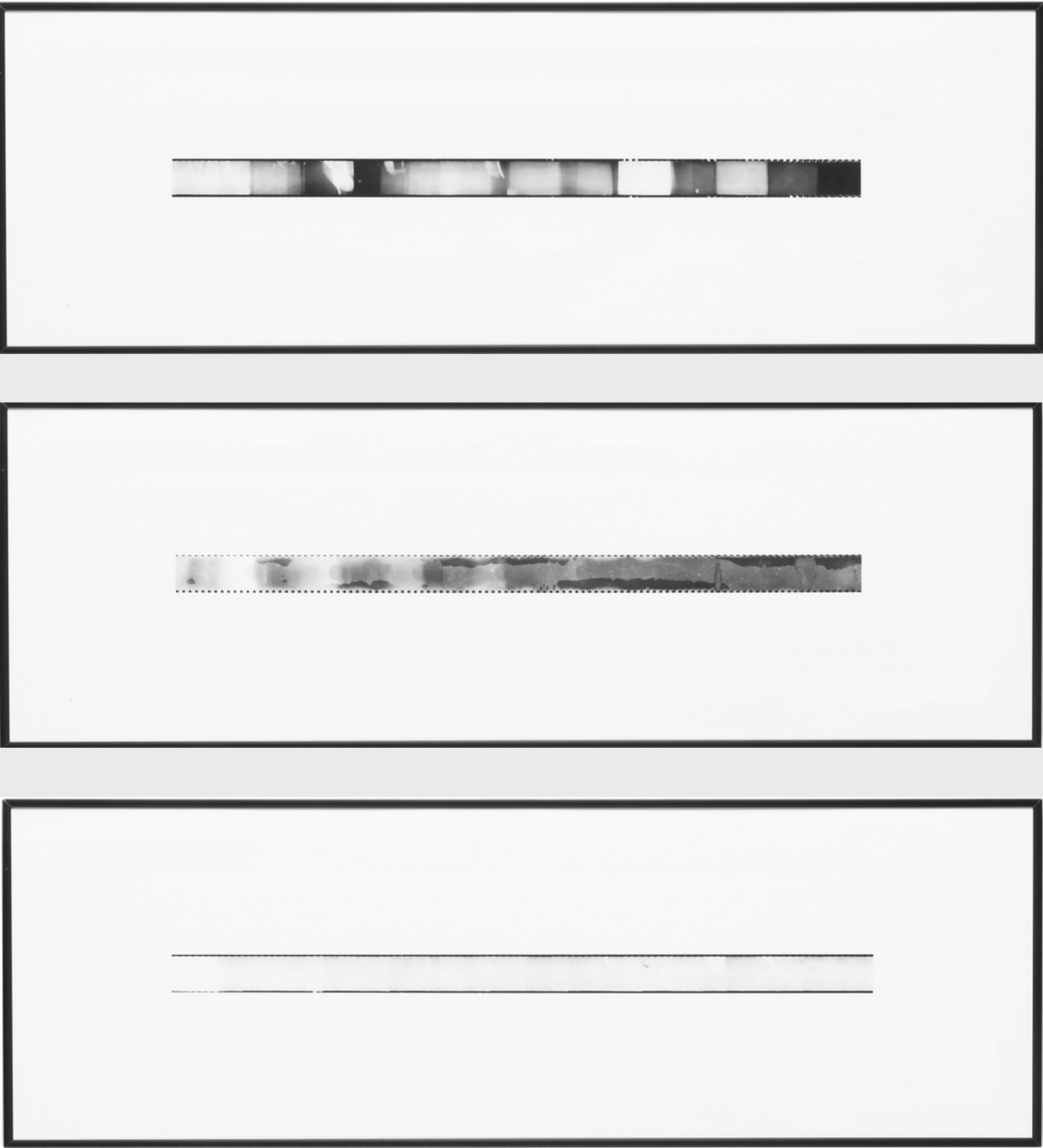
Continuity and Calm, 2017–18 · Silver gelatin contact prints from fifty-year-old film; triptych, 25 × 75 cm each
13Continuity and Calm, 2017–18
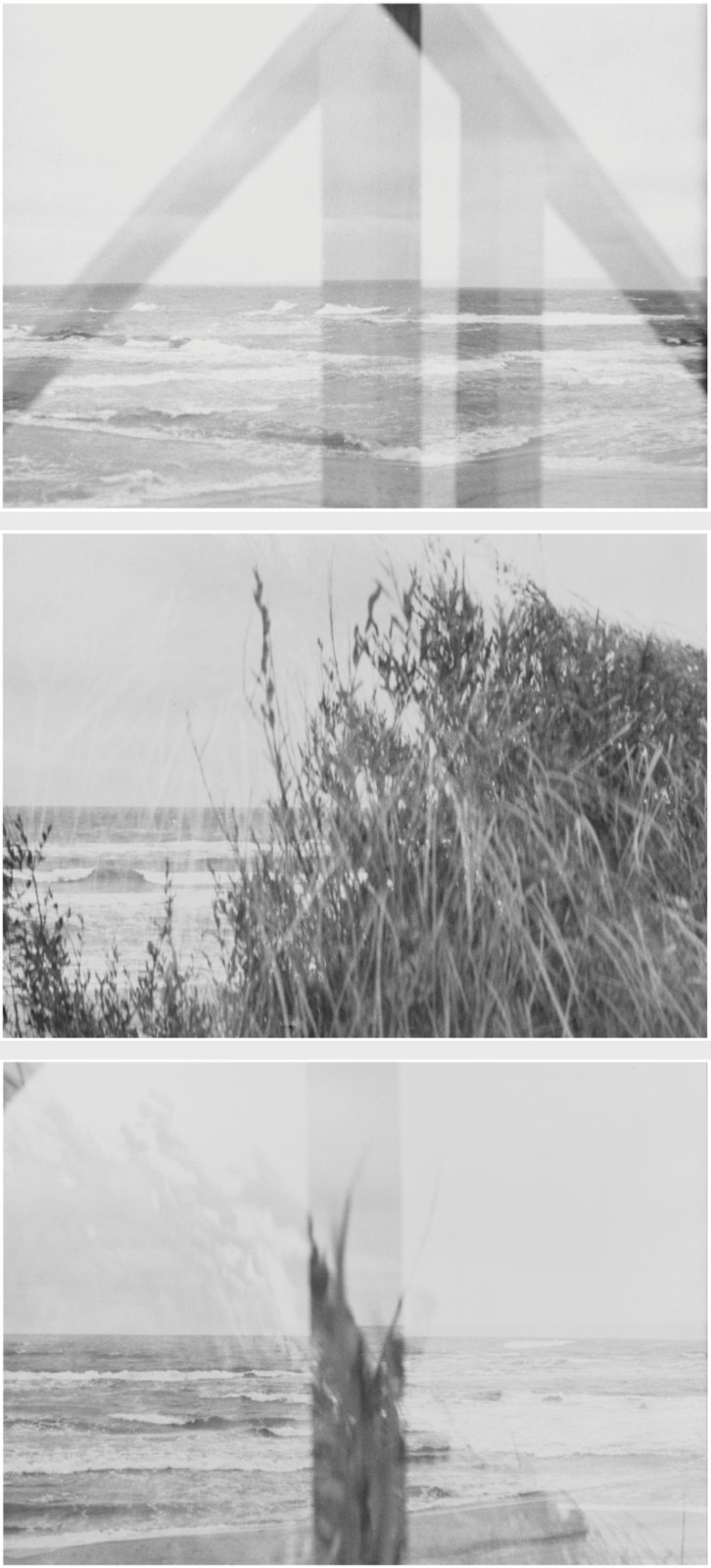
Horizon: Nida, 2014–17 · Silver gelatin contact print, 1500 × 250 mm, of seventeen seascapes from one roll of film, with sixteen projection prints, 600 × 500 mm
14Horizon: Nida, 2014–17
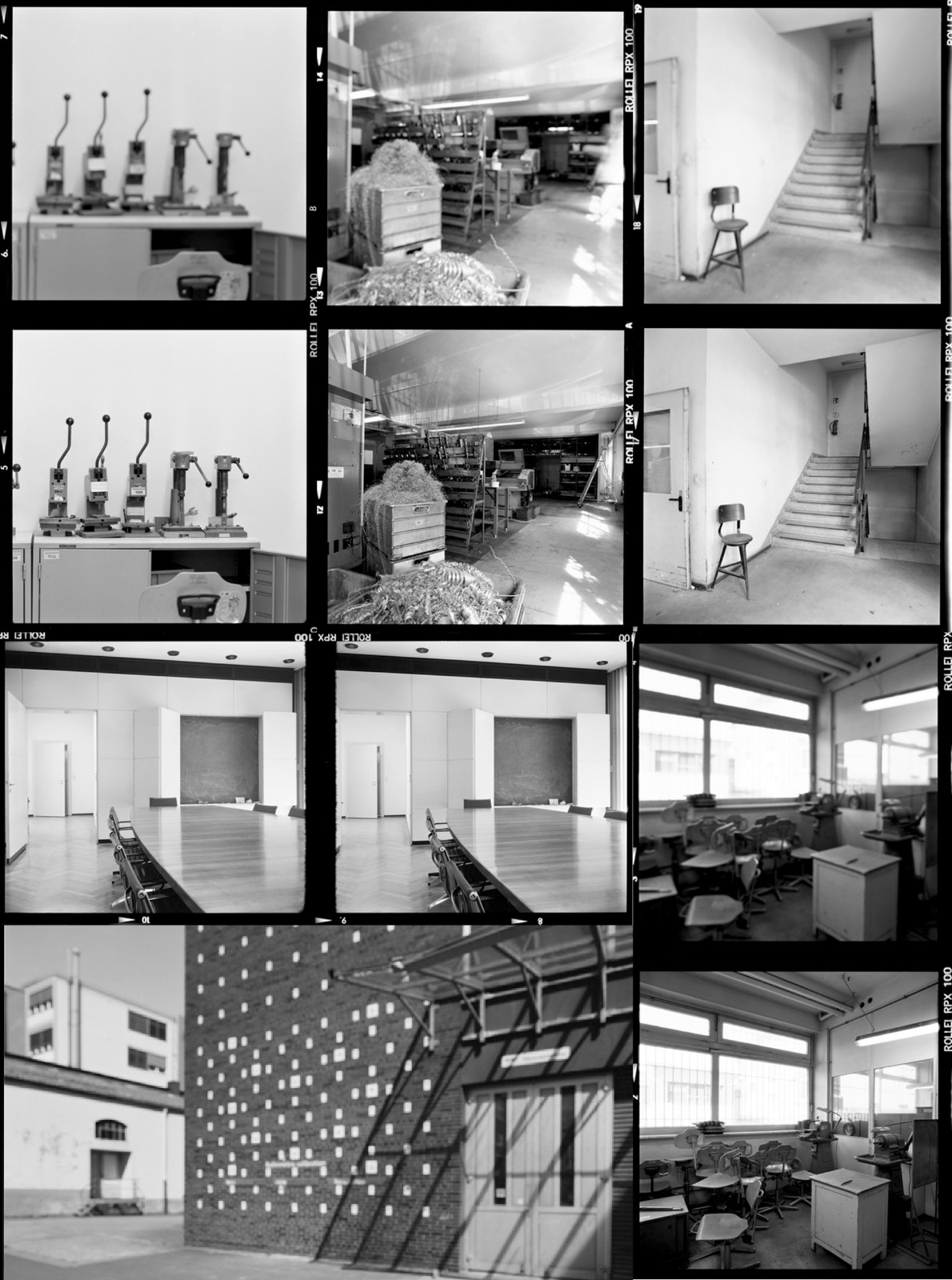
Rollei: The Vanishing Epoch, 2015 · Paired frames, sharp and soft, on a Rolleiflex with Rollei RPX 100 film; silver gelatin prints
15Rollei: The Vanishing Epoch, 2015
Pages from the Book, 2013 · Cyanotype contact print, 30 × 40 cm
16Pages from the Book, 2013
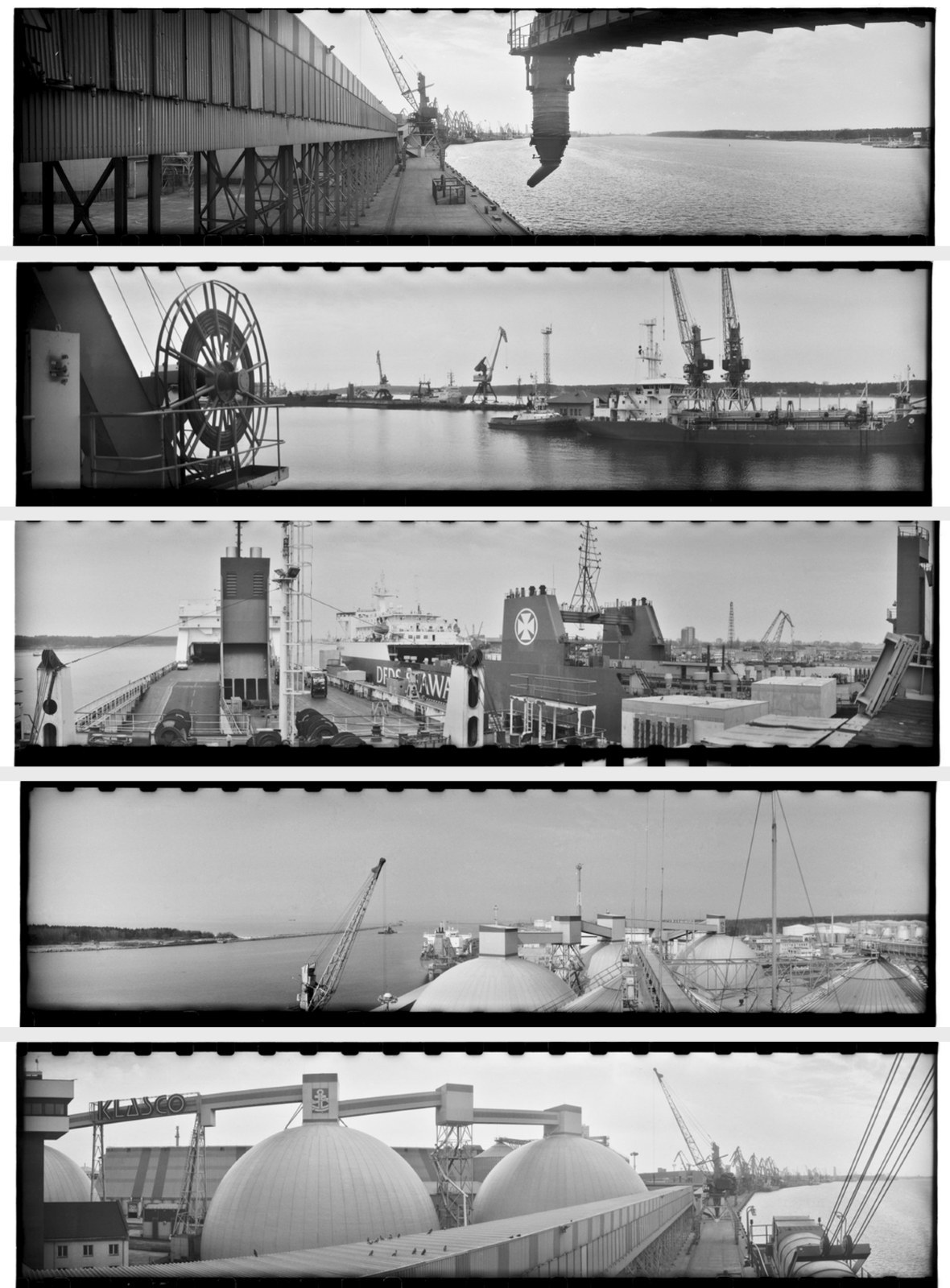
Photobook for Achema Group, 2011 · Panoramic film photographs for the annual report
17Photobook for Achema Group, 2011
Postcard, 2005–12 · Wooden pinhole camera, 13 × 18 cm plates, silver gelatin contact prints
18Postcard, 2005–12
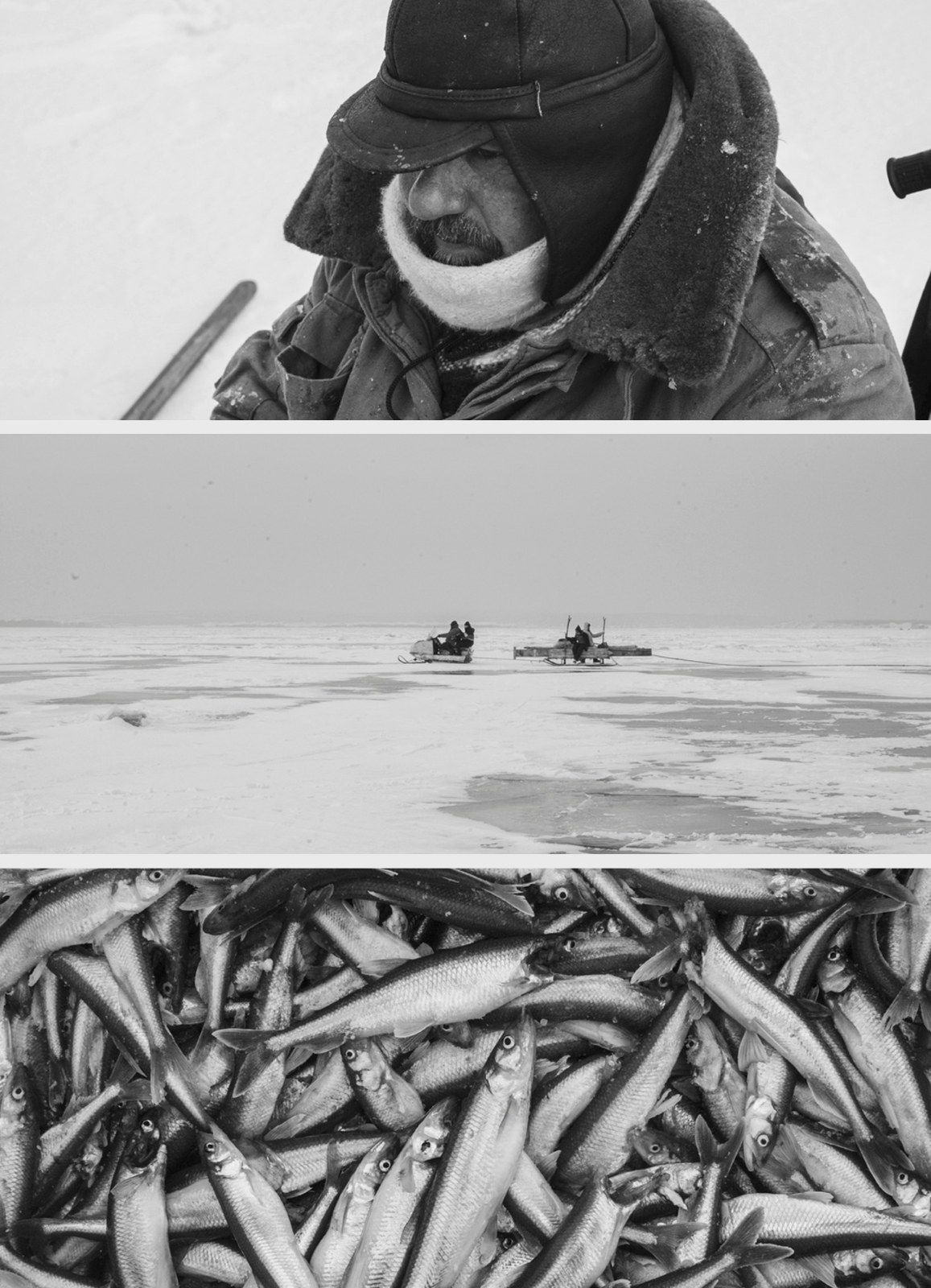
Smelt fishing, Nida, 2005 · Black-and-white photographs
19Smelt fishing, Nida, 2005

01Overview

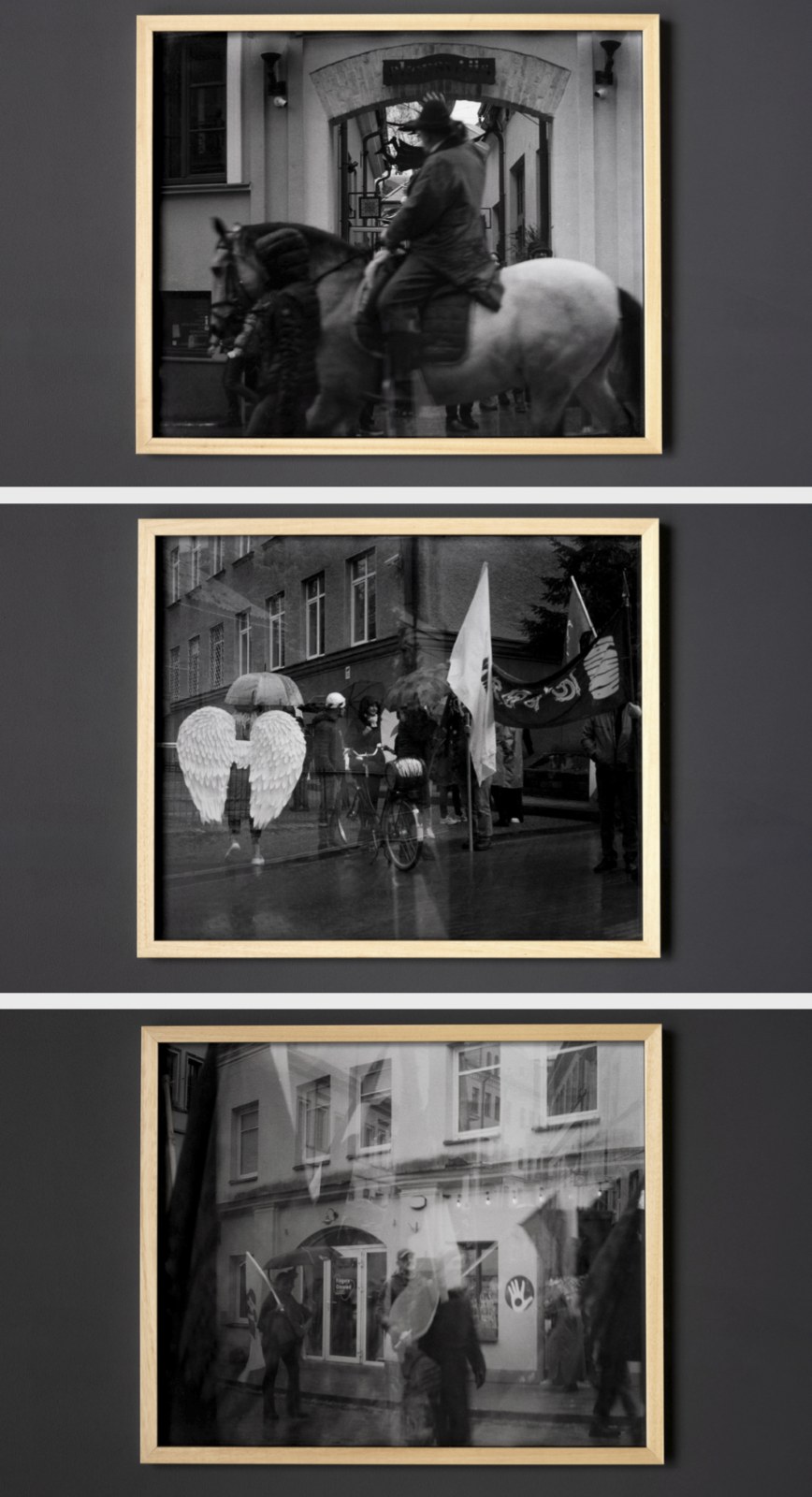
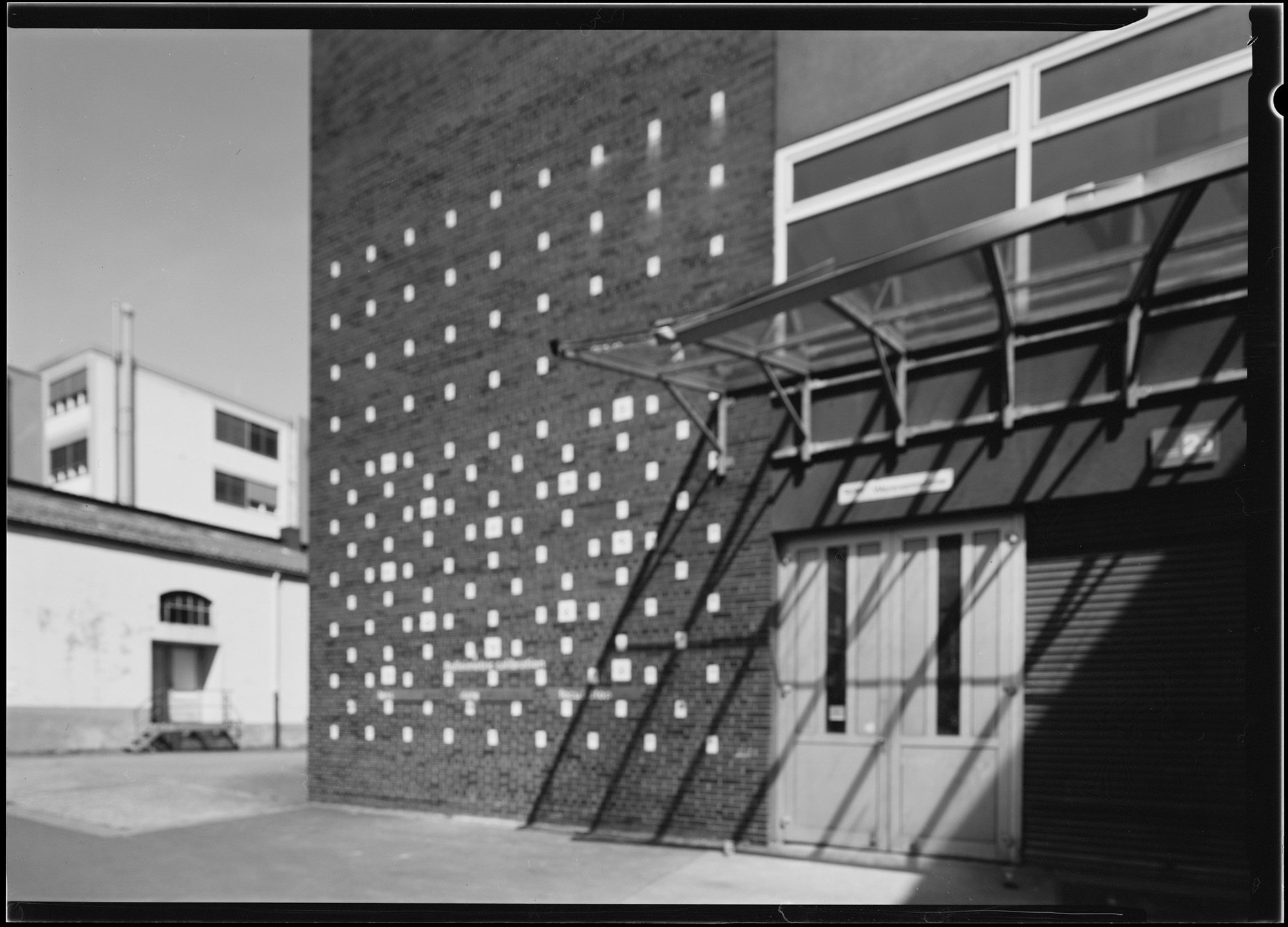
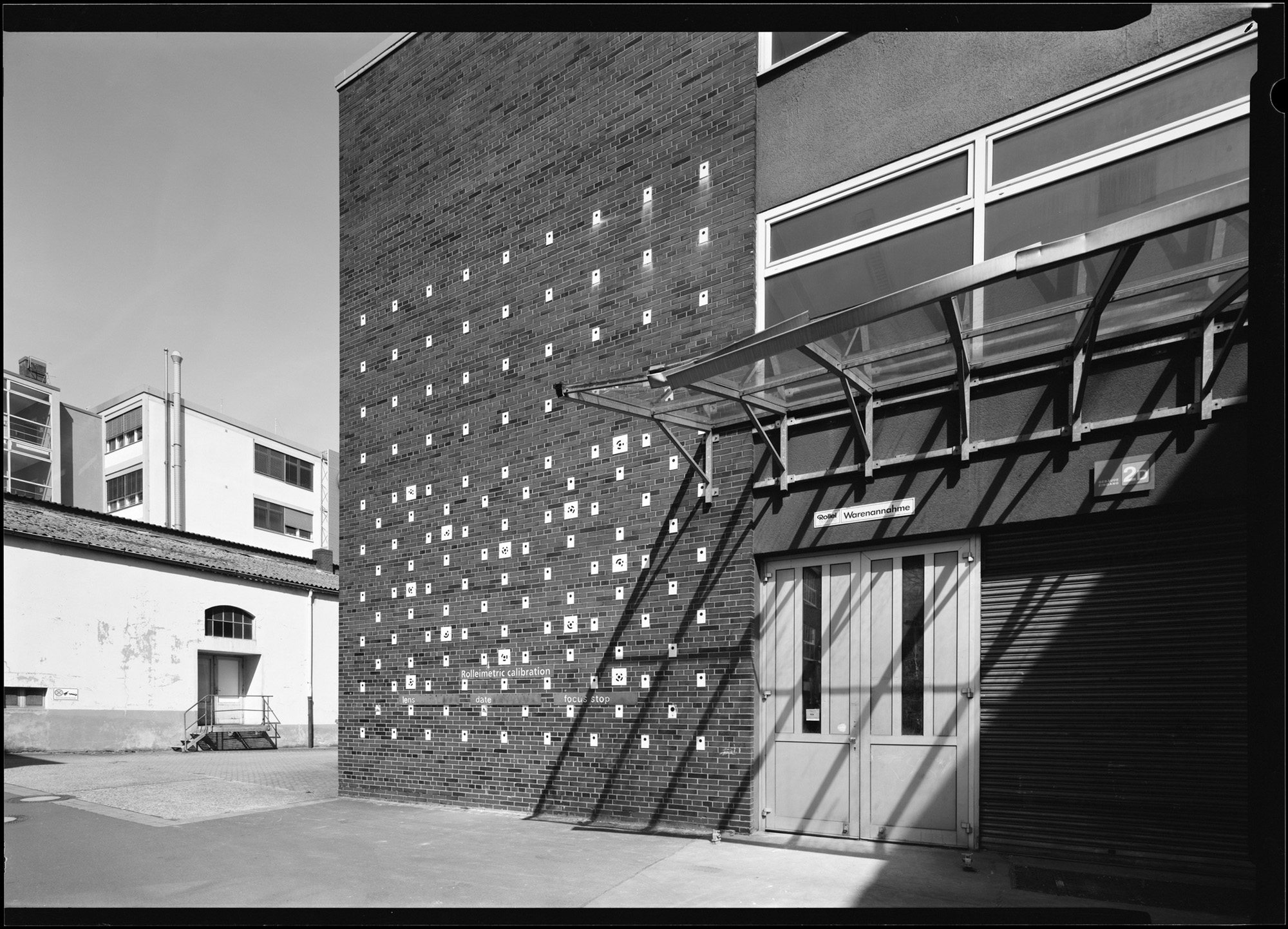
Rollei: The Vanishing Epoch, Braunschweig, 2015. The Rolleimetric calibration wall at the factory’s goods entrance, photographed twice: one frame dissolving, one sharp.Rollei: The Vanishing Epoch, Braunschweig, 2015. The Rolleimetric calibration wall at the factory’s goods entrance, photographed twice: one frame dissolving, one sharp.
Photo 01.0Rollei: The Vanishing Epoch, Braunschweig, 2015. The Rolleimetric calibration wall at the factory’s goods entrance, photographed twice: one frame dissolving, one sharp.
11
countries where his work has been shown
40+
exhibitions since 2005
2012
founded a university Photography department
6 yrs
maximum accreditation, praised by international experts
2
Esther Shalev-Gerz retrospectives: Paris and Lausanne
2025
commission for the national Čiurlionis anniversary

Selected venues and institutions

  1. Jeu de PaumeParisEsther Shalev-Gerz retrospective catalogue, 2010
  2. Musée cantonal des Beaux-ArtsLausanneEsther Shalev-Gerz monograph, 2012
  3. European Capital of CultureMateraVisions from Europe, 2019
  4. B-Part Am GleisdreieckBerlinNew Talents, 2020–21
  5. International Paper Art BiennialSchio2019
  6. Baltic Biennial of Graphic ArtKaliningrad2015
  7. Rodchenko School of PhotographyMoscowBlack Hole, 2010
  8. Kyiv Photography FestivalKyivPinhole LT, 2010
  9. FotofestiwalŁódźThe Factory of Photography, 2009
  10. Lithuanian Photography SeasonIrvine and Glasgow2014
  11. TaidebunkkeriImatraHorisontti, 2017–19
  12. Wyspa Skarbów, Archipelago of CultureGdańskThe Horizon, 2014
  13. National Gallery of ArtVilniusFather’s Land, 2022
  14. Lithuanian Sea MuseumKlaipėdaUnited by the Sea, 2019
  15. Vilnius Light FestivalVilniusČiurlionis’s Sun, 2025
  16. Vilnius University Life Sciences CentreVilniusThe Magic of Microorganisms, 2025

01.1Biography

As long as there are mistakes, making is still possible.

Petras, on Print of a Print, 2019

Petras is a Lithuanian artist whose work has been shown in ten countries and acquired by museums and private collectors in Lithuania and abroad. Critics introduce him first as a photographer, and then add at once that the word is too small: for twenty years he has moved between the photograph, the print, the installation and the laboratory, using photography less as a genre than as a way of thinking. Born in Kaunas in 1983 into a family of artists, his grandparents and his parents among them, he studied at the Vilnius Academy of Arts (BA 2009, MA 2012, audiovisual art), has held recognised artist status since 2013, is a member of the Lithuanian Artists’ Association, and sits on the boards of the Union of Lithuanian Art Photographers and of the Lithuanian Analogue Photography Association, which he helped to found.

Petras works with the place and the moment, and never adapts work made before. Each new piece takes its value from how it resonates with its surroundings and the place, and carries a clear message about the problem it addresses. At the heart of his practice is noticing a problem and, through photography, printmaking, sculpture and other forms, opening it to public discussion, sometimes where even public institutions cannot. At times uncomfortably, but always about questions that matter, so that viewers can form their own answer and understand the idea in depth.

What makes his work unusual is its range across the whole history of the medium. At one end are pinhole cameras he builds from wood, large-format view cameras, cyanotypes, salt prints and silver gelatin prints made by hand in his own darkroom; at the other, photomicrography in polarised light, 3D printing and light installations in public space. None of it is nostalgia. Each process is chosen because it can say something the subject needs: a fifty-year-old roll of unexposed film inherited from his father becomes a work about continuity; a factory about to be auctioned is photographed on the camera it once made.

That double attention, to the idea and to the object, runs through his best-known works. In 2015, in Rollei: The Vanishing Epoch, he recorded the last days of the legendary Rollei factory in Braunschweig, before, during and after its auction, on a Rolleiflex and Rollei film, every subject photographed twice, sharp and dissolving. Horizon: Nida joins seventeen seascapes from a single roll into a contact print a metre and a half long, accompanied by sixteen large prints of the places where the frames overlap; shown in Gdańsk and for two years in Imatra, Finland, it was nominated in 2024 for the Neringa Mayor’s Prize for carrying Nida to audiences abroad. Postcard took seven years, photographing twelve European cities on a wooden pinhole camera; Print of a Print stopped a 3D printer after its first layer to use it as a negative and was shown in Berlin.

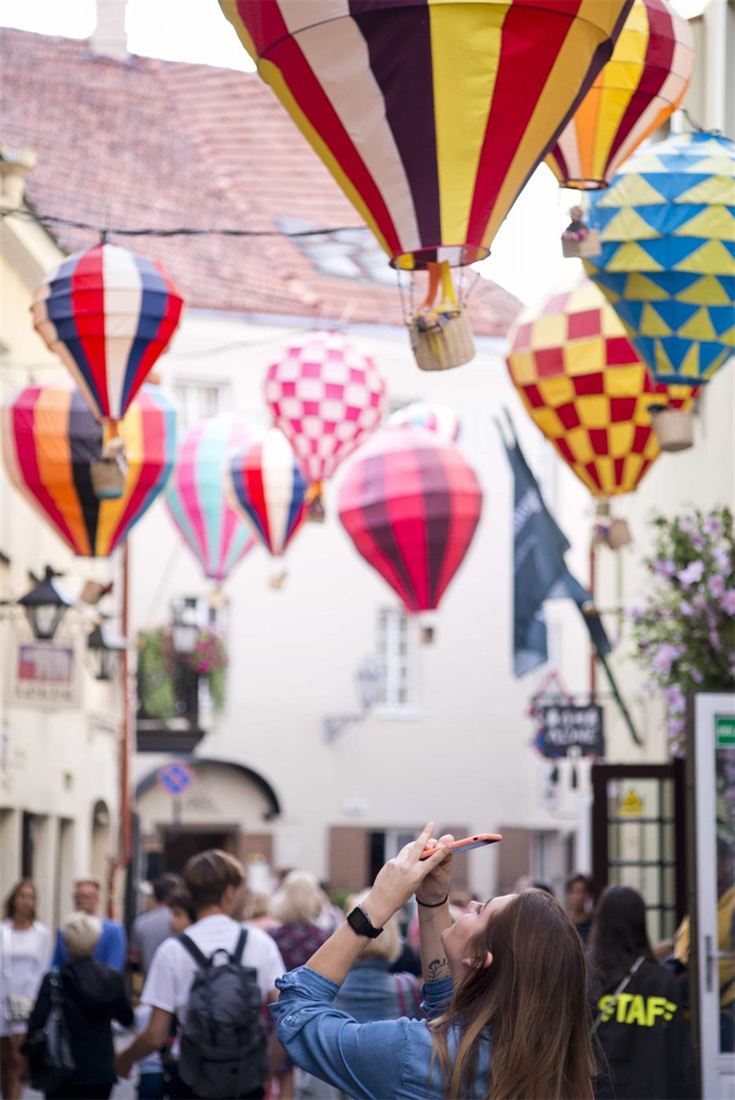
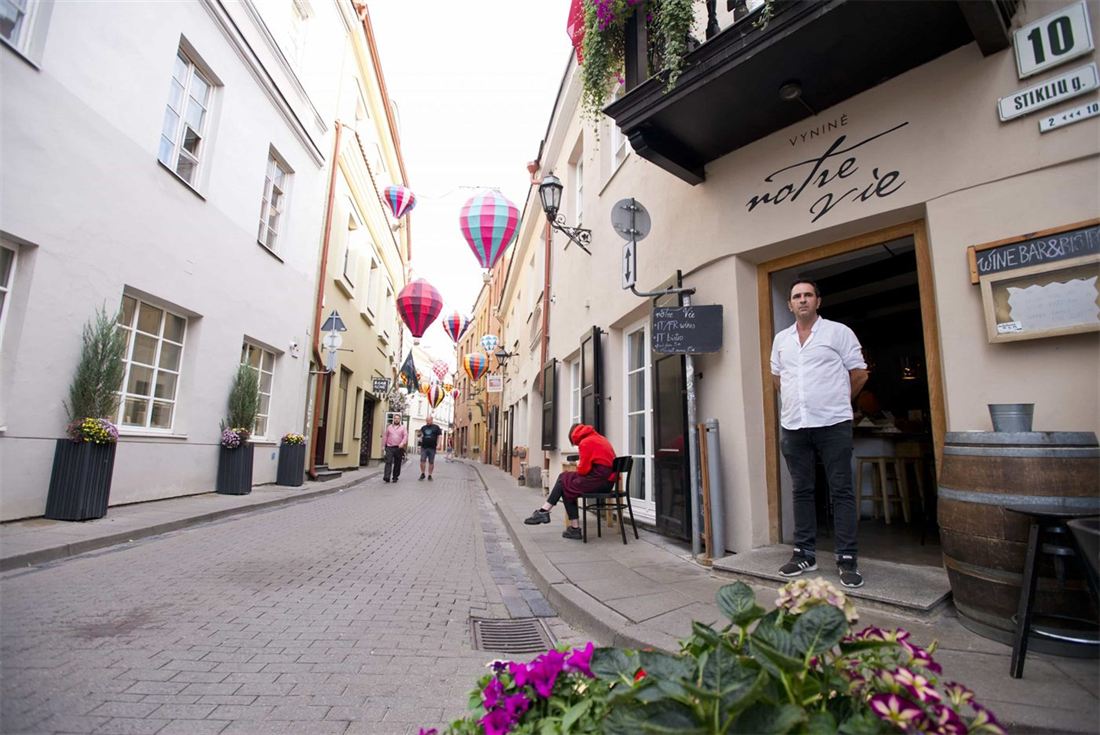
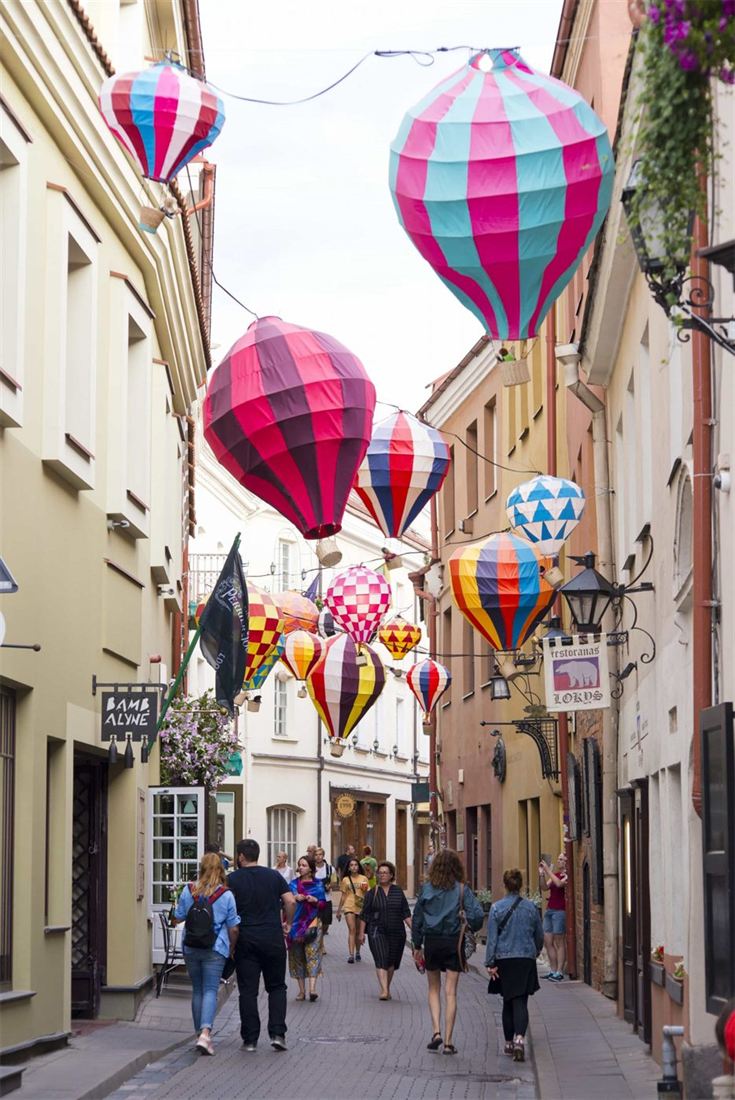
Increasingly his work leaves the gallery for the street. Vitrum (2022) hung geometric stained-glass objects over Stiklių Street in Vilnius, a requiem for the city’s lost glass culture, while photomicrographs of quartz sand glowed in the windows of the last stained-glass gallery. In January 2025 he was commissioned for the national programme marking the hundred-and-fiftieth anniversary of M. K. Čiurlionis: Čiurlionis’s Sun, a great sun in fog and music beside the house where the painter lived, opened the Vilnius Light Festival and stayed until summer. That winter he and Julia lit the Glass Quarter with Smiles of Vilnius.

His work has travelled to the Baltic Biennial of Graphic Art in Kaliningrad, the International Paper Art Biennial in Schio, Visions from Europe in Matera, European Capital of Culture 2019, New Talents in Berlin, the Lithuanian Photography Season in Scotland, the Kyiv Photography Festival and the Rodchenko School in Moscow, and to the Lithuanian Sea Museum in Klaipėda; and his photographs appear in the catalogues of Esther Shalev-Gerz’s retrospectives at the Jeu de Paume in Paris and the Musée cantonal des Beaux-Arts in Lausanne.

Critics agree on what sets him apart. The painter and photographer Algis Griškevičius writes that photography is the engine of his work but that the machine is built from every part of contemporary art, joined “masterfully and virtuosically”; the art historian Dr Tomas Pabedinskas calls him simply a creator of contemporary art, with photography as the common denominator, and names his rarest gift: joining the conceptual and philosophical concerns of the international scene with a personal, authentic relation to a particular place. Curators and reviewers have praised the “perfect graphic aesthetic” of his cyanotypes, the documentary force, persuasiveness and conceptual clarity of his black-and-white prints, photomicrographs that “let us become scientists”, and pinhole pictures that open “little windows into the worlds within”. Their texts are set out in full under Critics and curators.

He is also a builder of institutions. At the Justinas Vienožinskis Faculty of Arts of Kaunas University of Applied Sciences he founded the Photography department and its degree programme, accredited for the maximum six years and singled out by international experts for its quality, led it from 2012, became associate professor in 2014, founded the Bright & Showy gallery and was named lecturer of the year. Since 2019 he has been a guest professor at Liepāja University in Latvia. In the four years in which he built all this, he still held eleven solo exhibitions, four of them abroad, and took part in fourteen group shows.

Since 2022 he has worked with Julia as an artist duo, at times under the invented name Sije Verski, and together they run Secret Love. On RAW he is skipper and the voyage’s photographer: five years of pictures made by hand and by microscope, from the tropics to Antarctica and the Arctic.

02Highlights4

01.2With Esther Shalev-Gerz

Vilnius · Paris · Lausanne, 2008–2012

One of the most important chapters of Petras’s career is his work with Esther Shalev-Gerz, among the leading European artists of memory. Born in Vilnius in 1948 and living in Paris, she is known for public works that changed how monuments are made, from the Monument against Fascism in Hamburg-Harburg (1986–93, with Jochen Gerz), a twelve-metre lead column lowered step by step into the ground, to The Shadow at the University of British Columbia in Vancouver. Her work is held by the Israel Museum, the Sprengel Museum, the Buchenwald Memorial and the French national collection.

In 2008 she came back to Lithuania for the first time since childhood, invited to teach at the Vilnius Academy of Arts, where Petras was then studying photography. The following year she made Still/Film in Vilnius: a search, with cameras and lenses from her mother’s time, for her own childhood home and for the house in Alytus from which her mother had fled as a girl. The work opened at Galerija Akademija in Vilnius in 2009 and travelled on to Lausanne, Vancouver and Copenhagen.

Petras worked with her as a photographer in those years. He is credited among the photographers of the catalogue of her retrospective Ton image me regarde!? at the Jeu de Paume in Paris (2010), one of Europe’s foremost institutions of photography, alongside photographers from Sweden, France, Poland and Germany; and his photographs appear in the monograph published for her retrospective Between Telling and Listening at the Musée cantonal des Beaux-Arts in Lausanne (2012), with essays by Georges Didi-Huberman, James E. Young, Nora Alter and Annika Wik. His copy of the Paris catalogue carries her handwritten dedication, thanking him warmly.

For a young Lithuanian photographer it was an apprenticeship at the highest level: images made for two of Europe’s leading museums, beside an artist whose subject, like his own, is how pictures hold memory, place and lineage. Echoes of that work can be felt in what he made next, from Pages from the Book (2013), built on his father’s photographs, to Continuity and Calm, contact prints from film his father left him.

01.3Rollei: The Vanishing Epoch

Braunschweig, 2015 · exhibition project

After the years with Esther Shalev-Gerz, whose work asks what pictures keep of places and people that disappear, Petras turned the same question on photography itself. In the spring of 2015 the last of Rollei was being wound up in Braunschweig: the company founded in 1920 by the merchant Paul Franke and the engineer Reinhold Heidecke, once Germany’s largest maker of cameras. After Franke & Heidecke went bankrupt in 2009, three former employees had kept building cameras under the name DHW Fototechnik; when that firm too became insolvent, its machines, tools, lenses and stock, some 1,100 lots, went under the hammer in late April 2015.

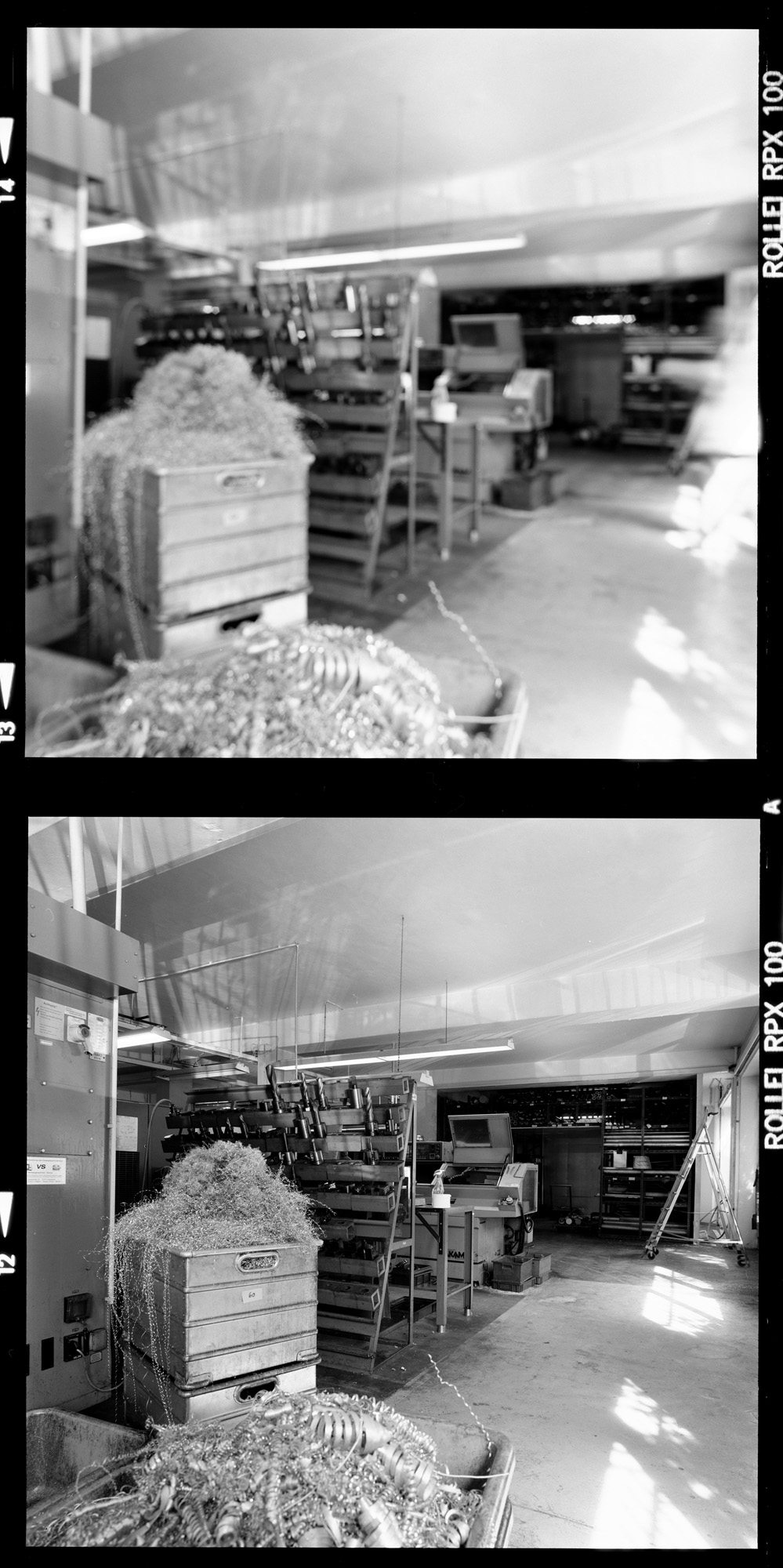
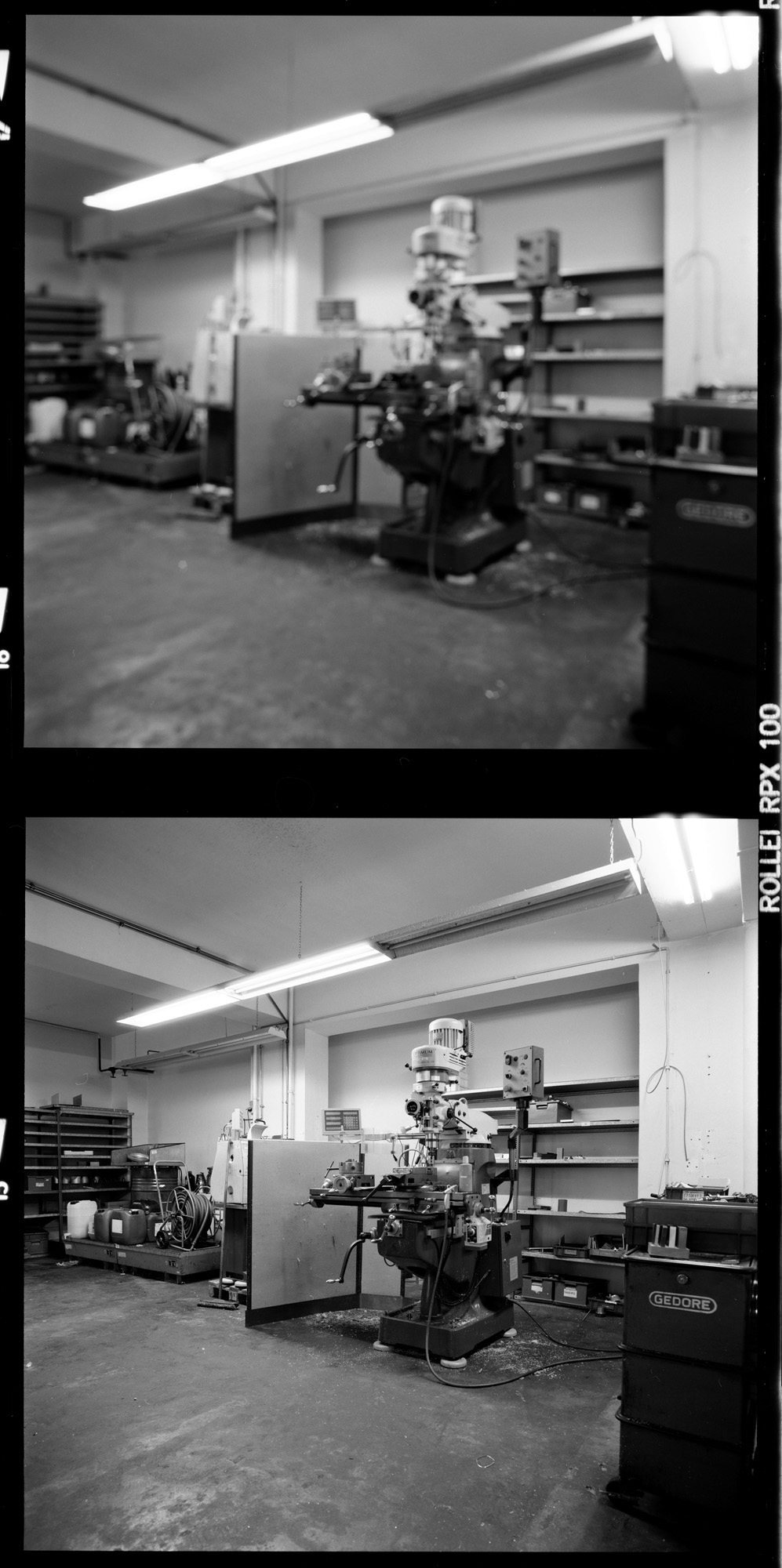
The Rolleiflex, the twin-lens reflex first shown in 1929, mechanical, focused by hand and almost indestructible, recorded some of the defining moments of the twentieth century. Petras went to Braunschweig with a Rolleiflex and Rollei film and photographed the factory in its last days: rooms still full of the most complex optical and mechanical equipment, the auction itself, and the same rooms two days later, emptied, with only the marks of the machines left on the floor.

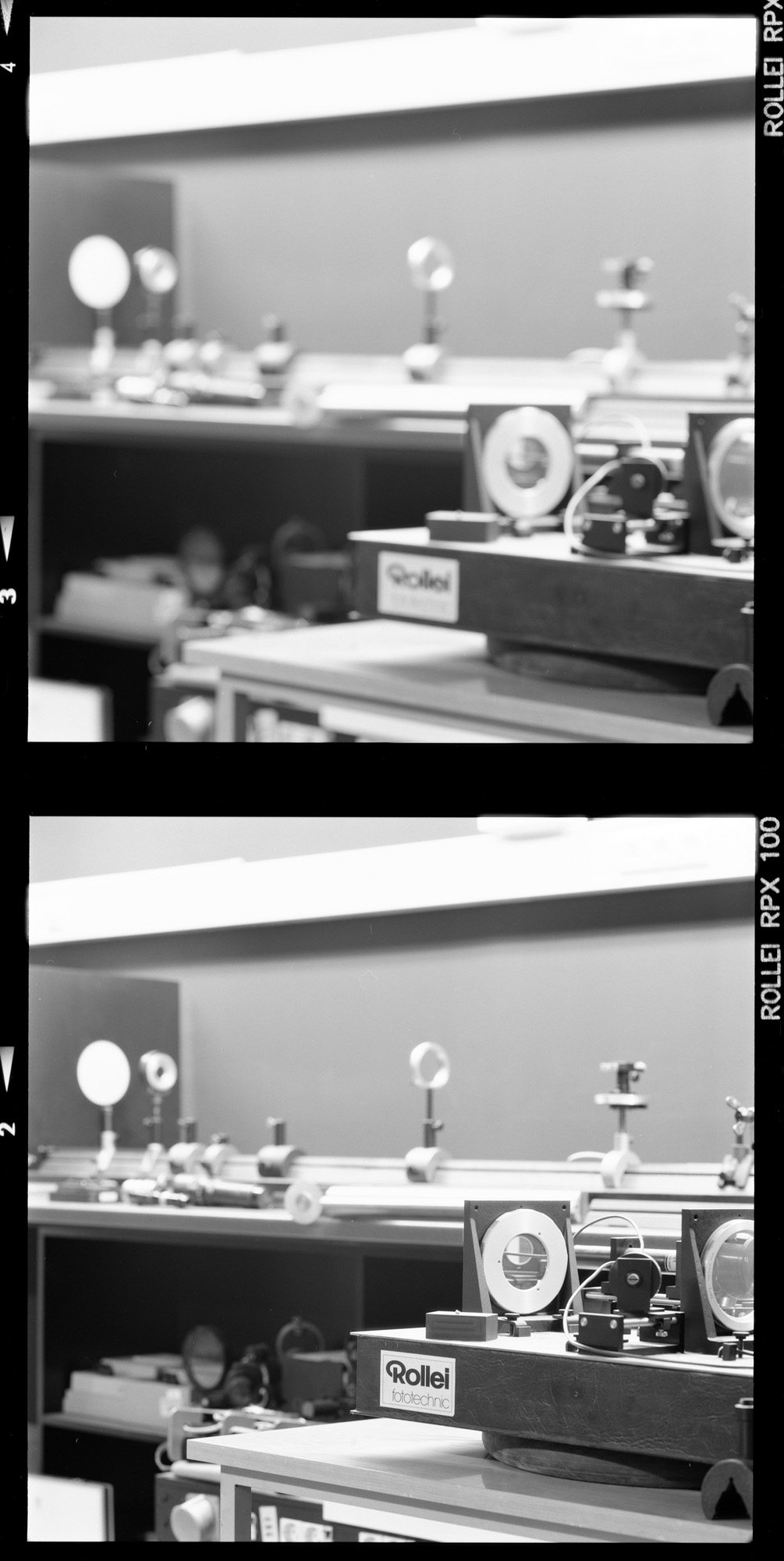
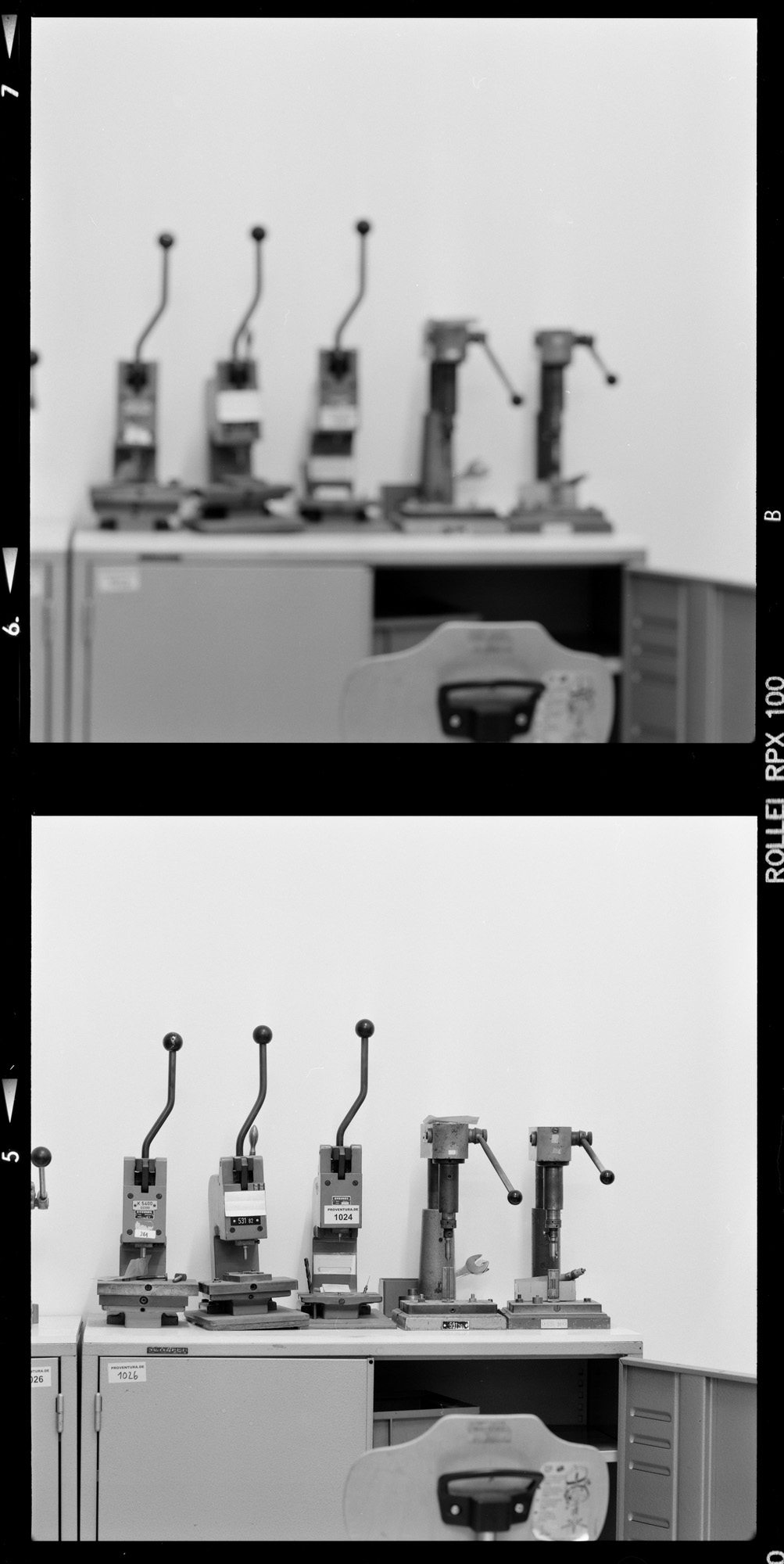
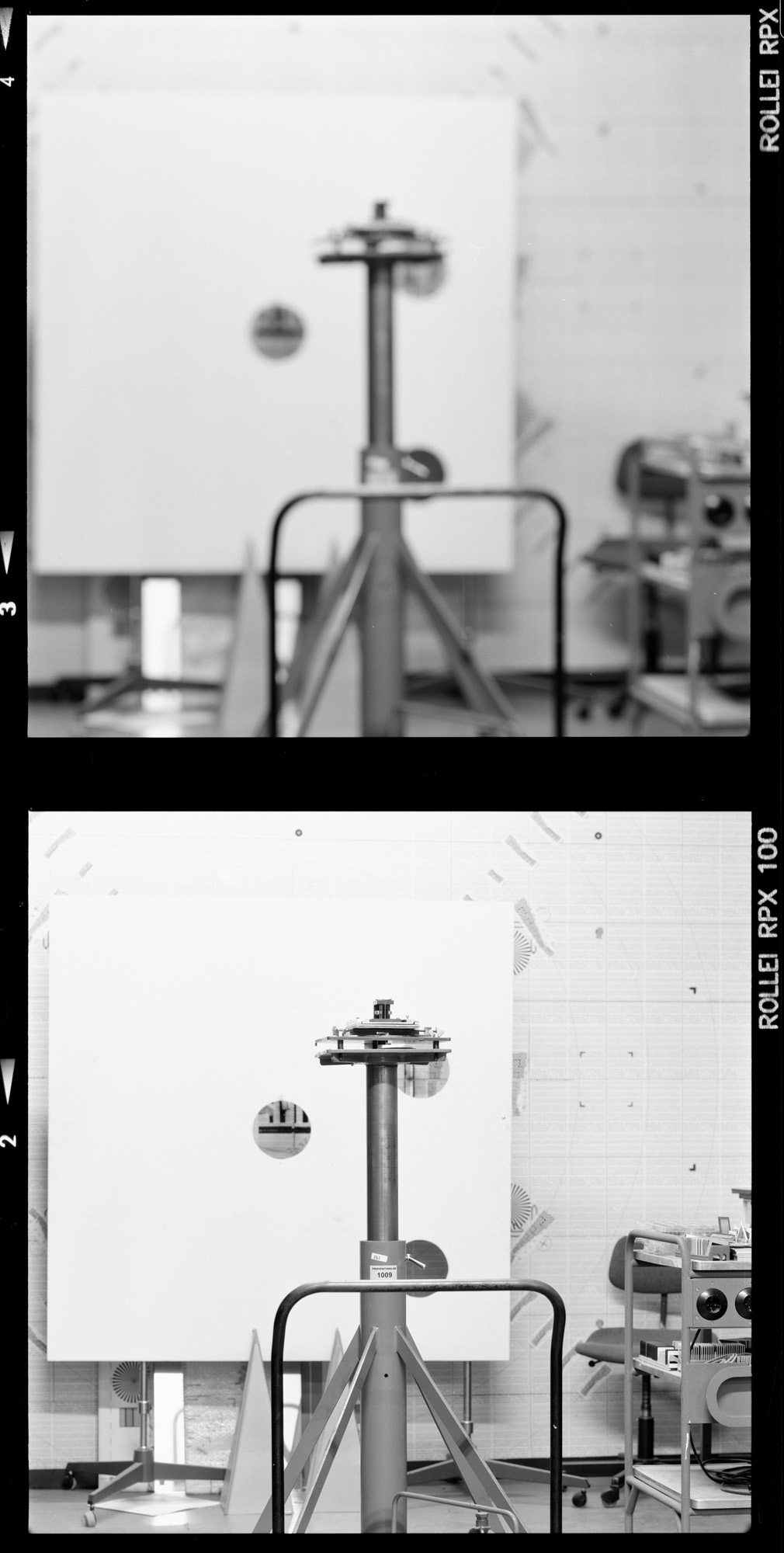
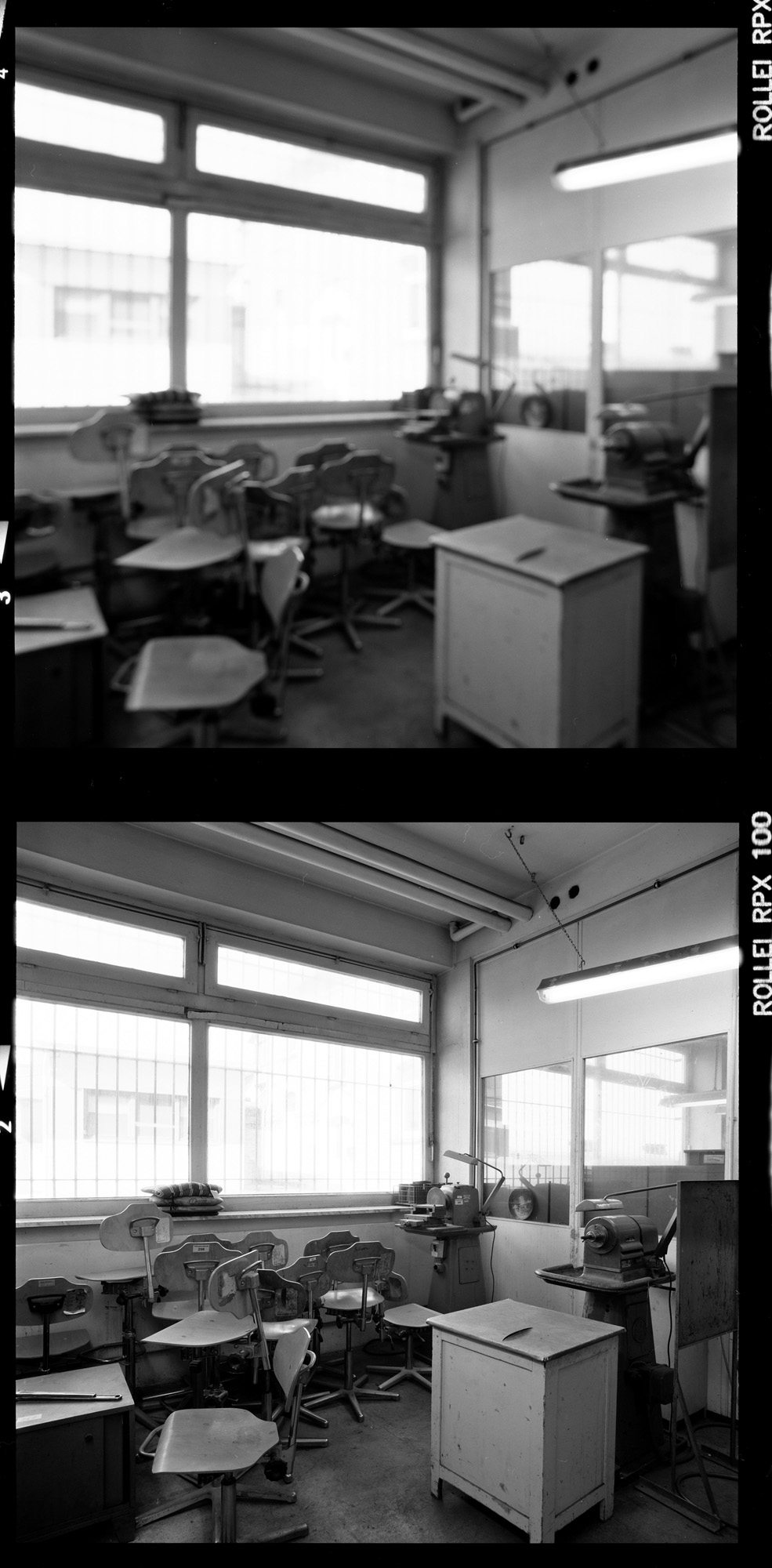
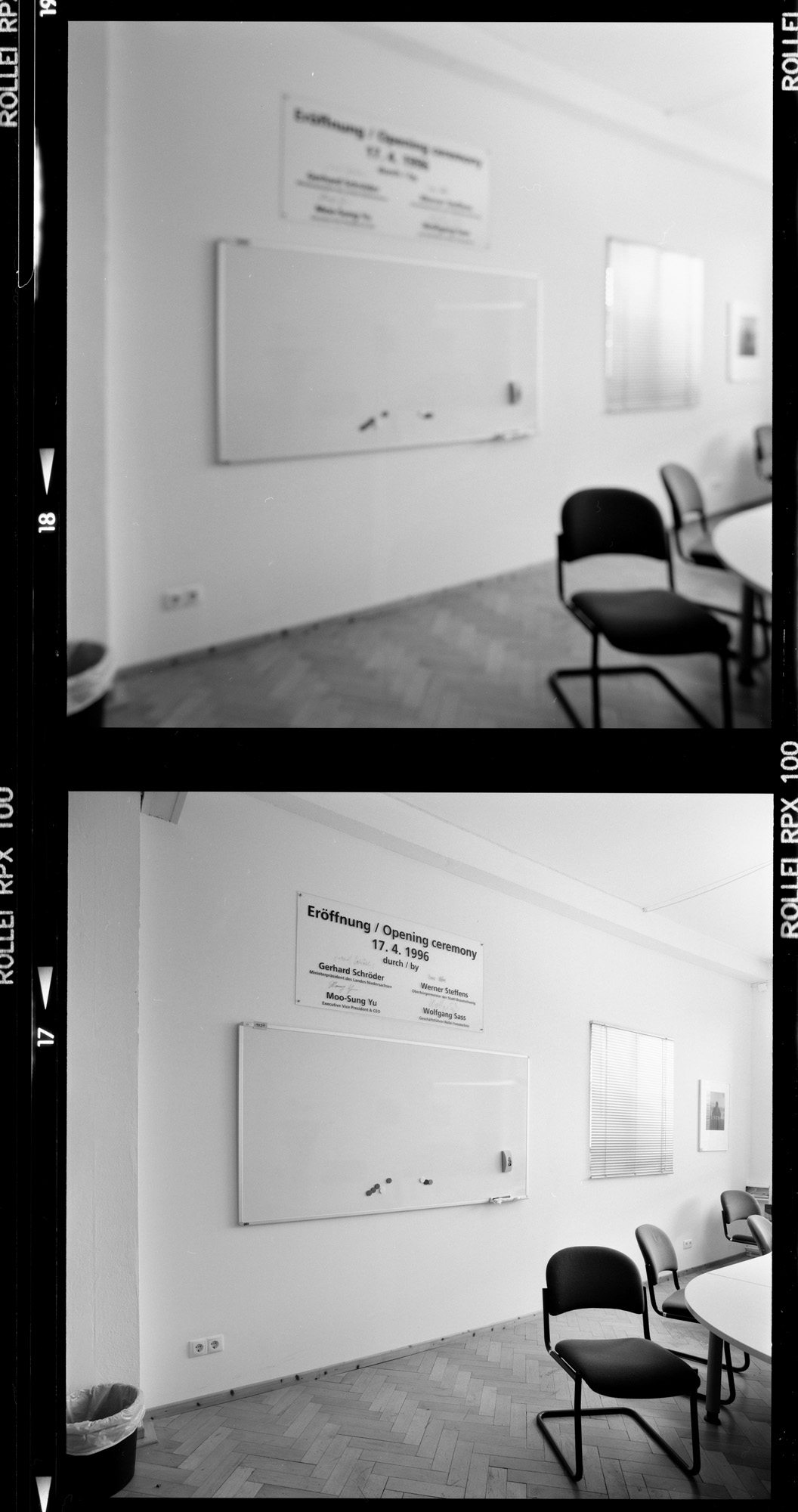
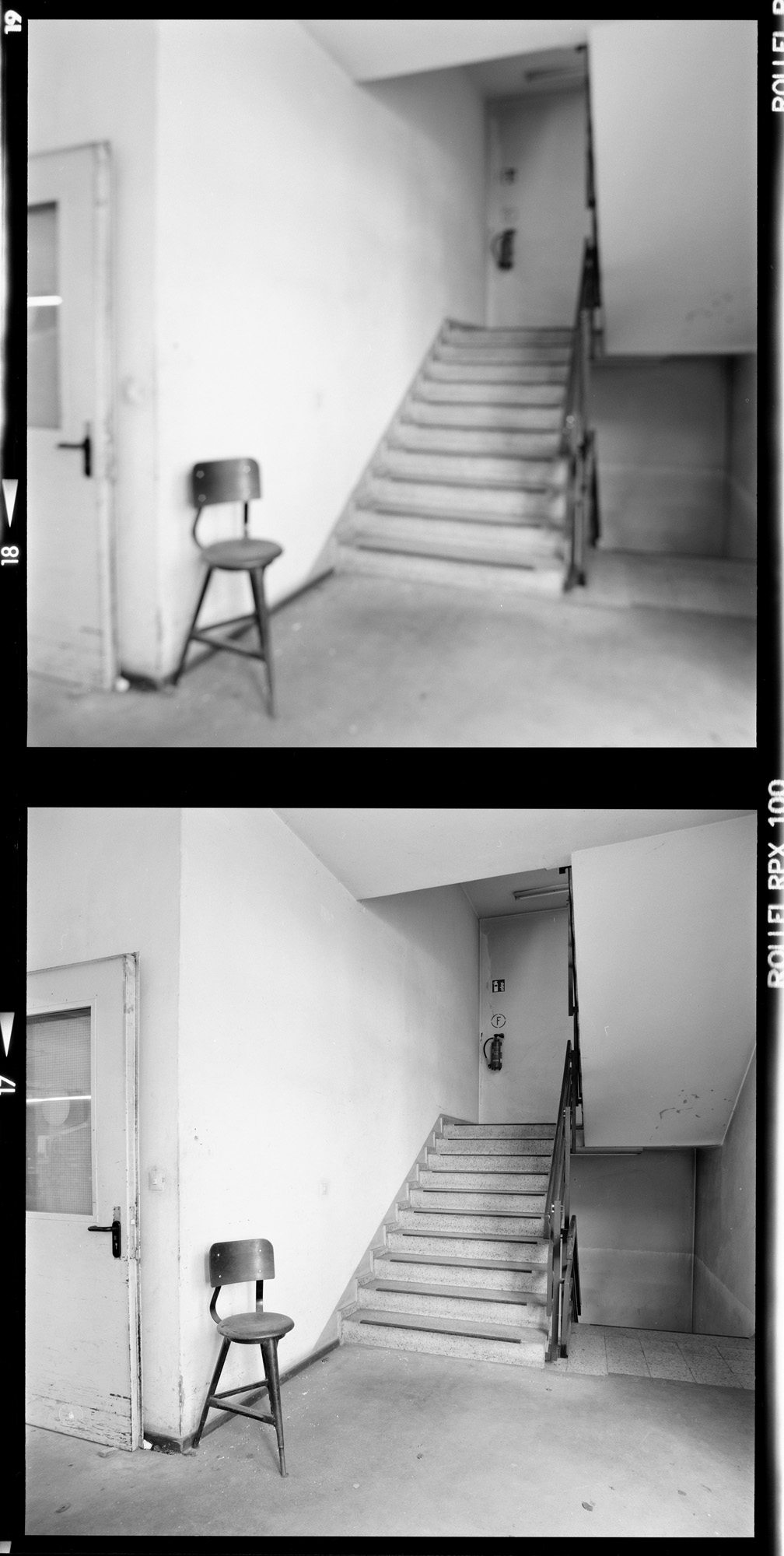
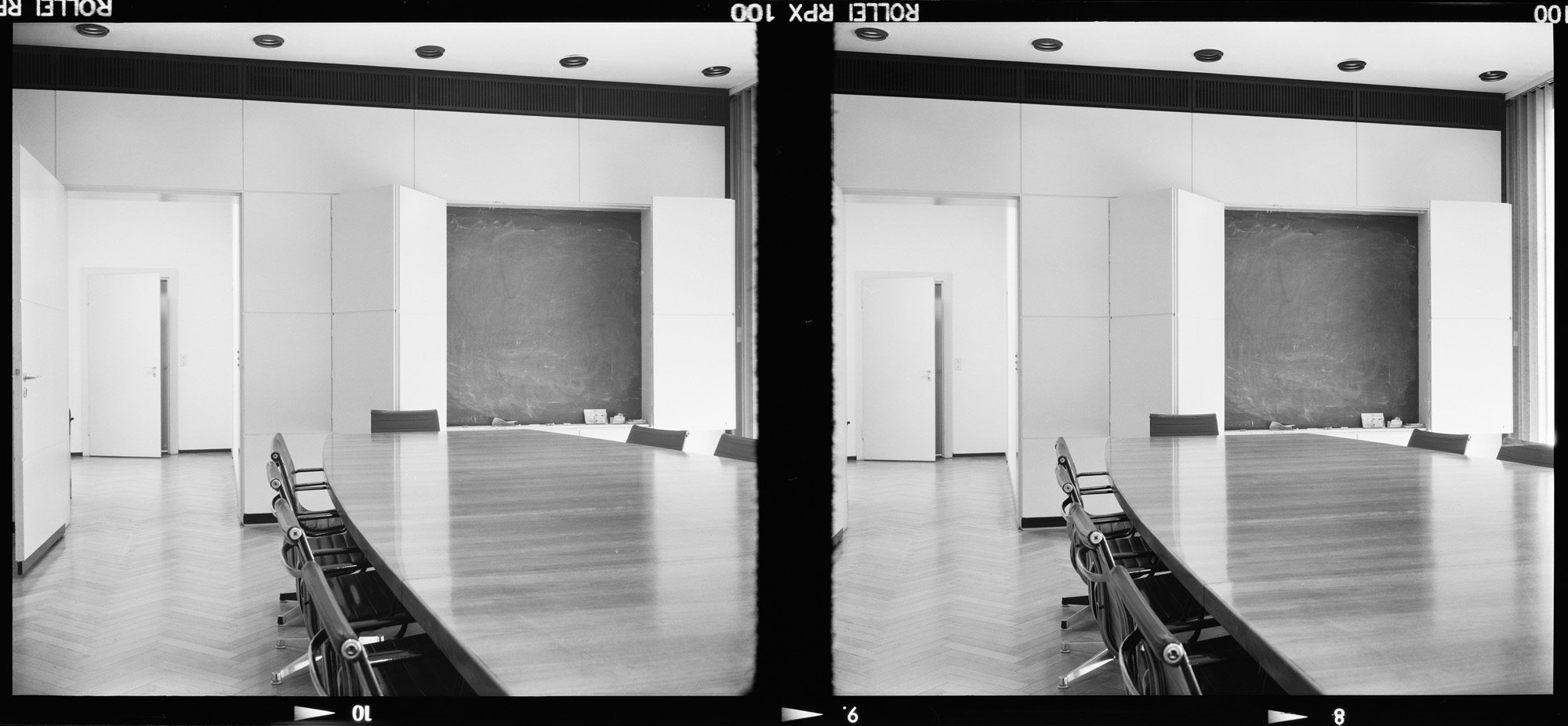
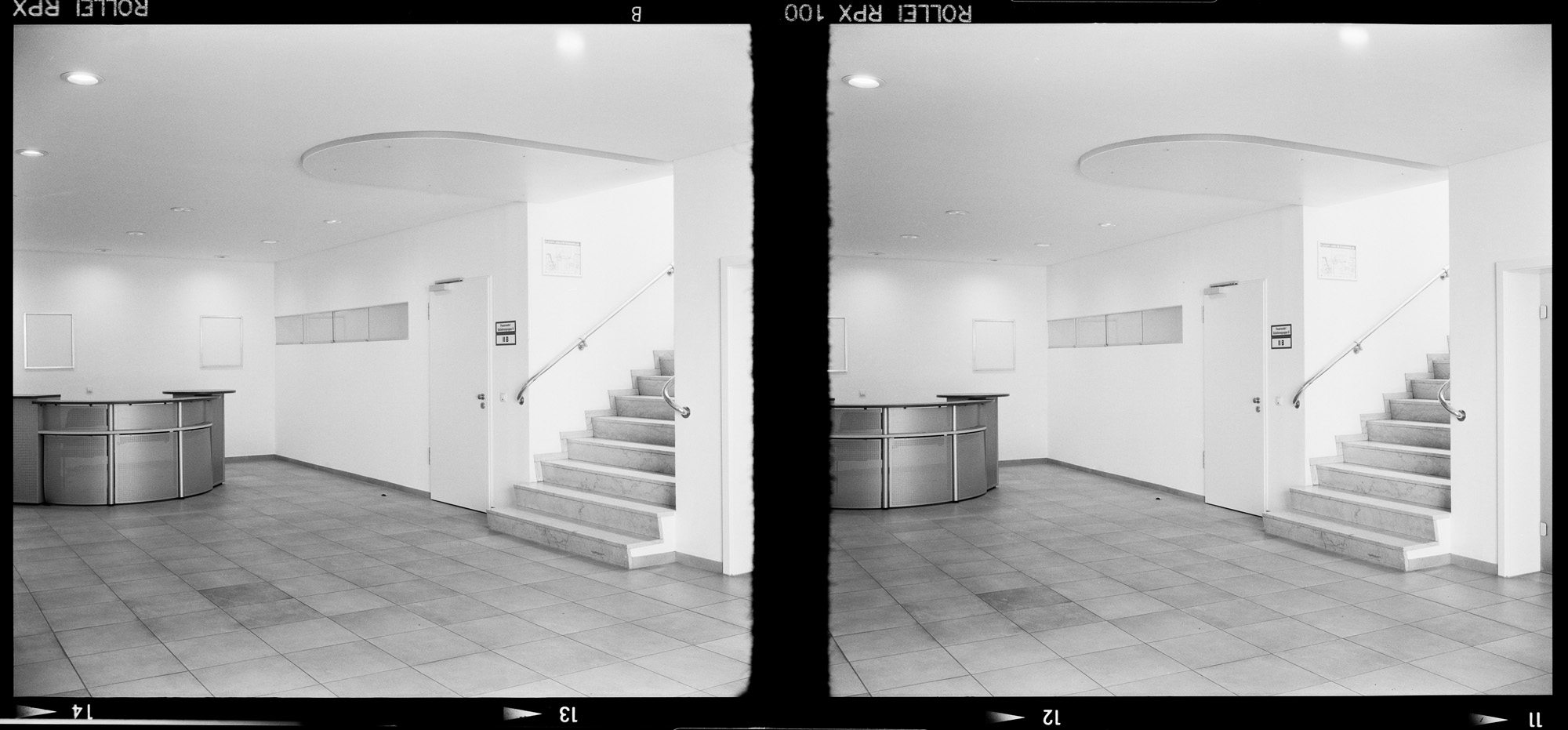
Every subject was made twice, one frame sharp and one dissolving out of focus, so that each pair reads like memory: how events, moments and knowledge fade from us over time. The pictures linger on things that will not be made again: the Rolleimetric calibration wall at the goods entrance, optical benches still labelled Rollei fototechnic, hand presses tagged with auction lot numbers, a calibration stand before a wall of test charts, a meeting room under the plaque recording the building’s opening in 1996 by Gerhard Schröder, then Minister-President of Lower Saxony.

The work has grown into an exhibition project, Rollei: The Vanishing Epoch, planned with the Museum für Photographie Braunschweig and the gallery of the Union of Lithuanian Art Photographers in Vilnius as partners. Forty photographs, shot, developed and printed entirely by analogue means, in three parts: the factory full of equipment, the auction, and the same rooms today, refitted and let to small leisure businesses. Its question is about more than a camera brand. When the making of things leaves a place, what goes with it? Is the loss of manufacturing followed by the loss of the quiet, hand-to-hand knowledge on which advanced technology rests? The handmade prints answer in part by being what they show: a social technology, passed from person to person, that is fading from Europe’s map along with its factories.

It is also the continuation of a long engagement. Petras had already published research on how photographers experience Rollei equipment as the technology of photography changes, and his own practice, from pinhole to large format, is built on the kind of craft the factory embodied.

Optical benches, Rollei fototechnic
01Optical benches, Rollei fototechnic
Hand presses with auction lot numbers
02Hand presses with auction lot numbers
Machine hall, metal swarf
03Machine hall, metal swarf
Milling machine
04Milling machine
Calibration stand and test charts
05Calibration stand and test charts
Workshop, chairs stacked
06Workshop, chairs stacked
Meeting room: the 1996 opening plaque
07Meeting room: the 1996 opening plaque
Stairwell
08Stairwell
Boardroom
09Boardroom
Entrance hall
10Entrance hall
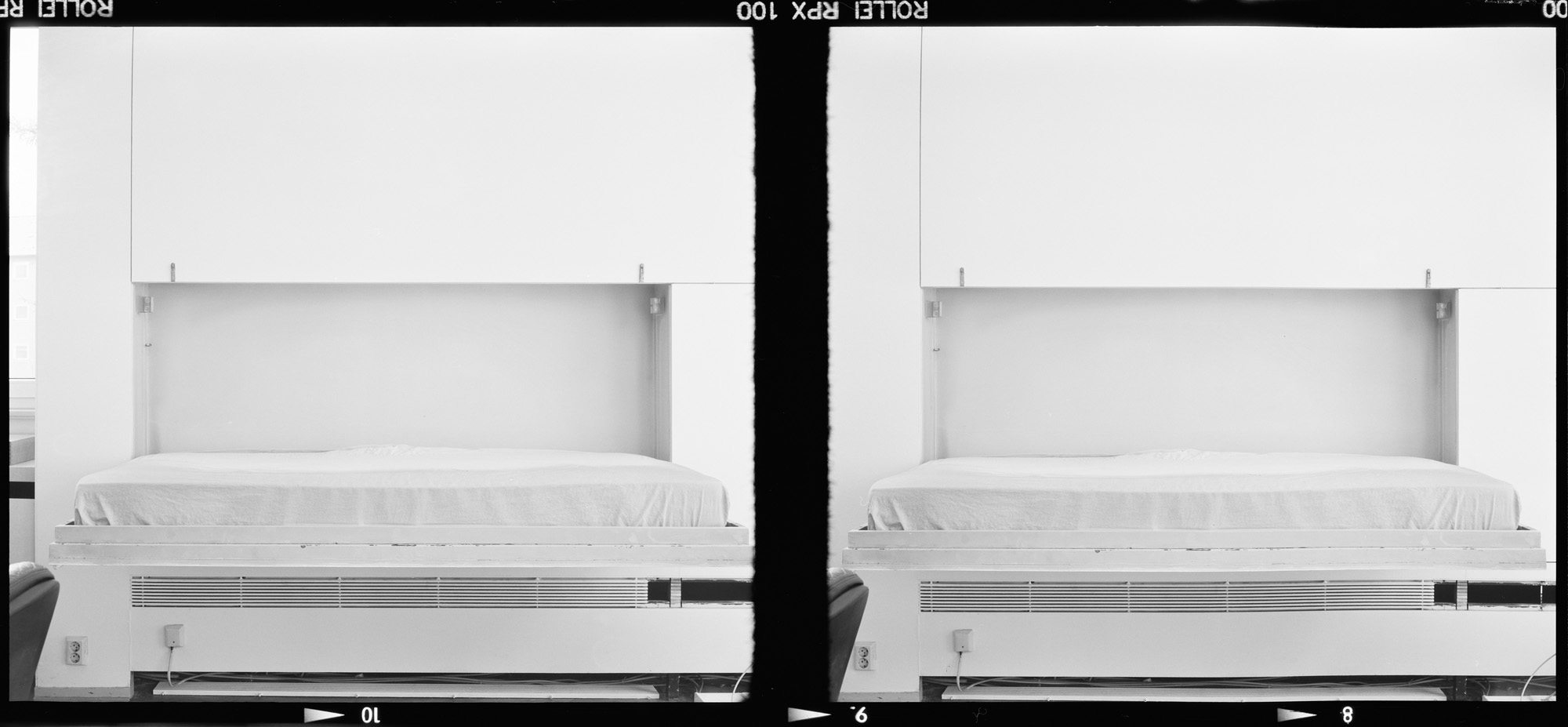
Fold-down bed
11Fold-down bed

01.4Secret Love, with Julia

2022–2026

For five years Petras’s other great work has been Secret Love, the story-design studio he is building with Julia around the cultural heritage of the royal couple at the heart of a legendary sixteenth-century love story, Barbara Radziwiłł and Sigismund Augustus. When the project first spoke in public, at Vilnius Town Hall in Lithuania on 28 April 2022, Julia and Petras curated the exhibition together, with the architect Gediminas Stoškus: a royal bed behind a sheer curtain with the intimate objects of the story made by Lithuanian designers, four reinterpreted court costumes, and a new portrait of the royal couple for which a violinist and the singer of The Roop posed.

Since then he has been the project’s eye and its hand. With Julia he designs all of it: the packaging, from the chocolates of the Rūta factory to the gingerbread of Meduolių namai, the sculptural candles of the king and the queen, the Rebel Queen pieces. Petras photographs their work, including Queens, Julia’s exhibition at Uppsala Castle in Sweden in 2026, and, that autumn, the launch of her first novel, Nematoma ranka. The whole story is told under About › Together.

Every Secret Love design is Julia and Petras’s. Theirs are the chocolate boxes made with the Rūta chocolate factory, among them Bona, with the Sforza crown, the Vytis of the Grand Duchy and the royal regalia, and the Secret Love chocolates and sweets designed around Miglė Kosinskaitė’s portrait of Barbara Radziwiłł; theirs too are the gingerbread boxes of Meduolių namai, Queen Barbara’s and Royal Vilnius, with their royal elegance and floral melancholy. Together they designed the candles of Queen Barbara and King Sigismund Augustus, the Royal Vilnius patterns, the map of the love story and the limited-edition Rebel Queen hoodie in three-layer neoprene, made only to order.

slaptameile.lt ↗

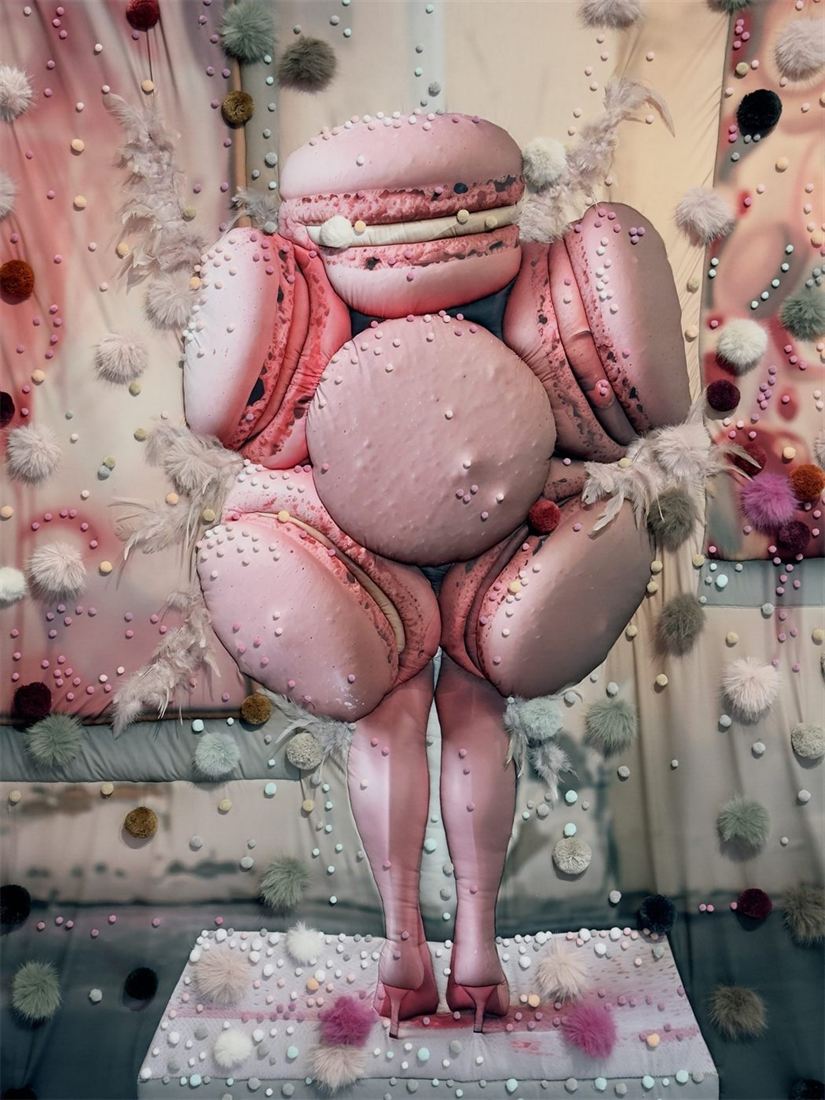
Golden Content, with Julia, 2024
01Golden Content, with Julia, 2024

01.5Critics and curators

What has been written about him, 2009–2024

For more than fifteen years Petras’s work has been written about by painters, art historians, curators and reviewers, in Lithuania and abroad: in festival catalogues in Łódź, in a curator’s account of the Baltic Biennial of Graphic Art, by reviewers in Glasgow, in the cultural weeklies 7 meno dienos and Literatūra ir menas, and in the recommendations written when he was nominated for the Neringa Mayor’s Prize. Read together, these voices agree on a few things with striking consistency: that he is first of all a photographer of real mastery, that the word “photographer” is nevertheless too small for what he does, and that his work joins an international, conceptual way of thinking to a close and personal attention to particular places.

The two recommendations written for the 2024 nomination are given here in full, in English translation. They are followed by an account of what each published review and curator’s text says about him, with links to the originals.

Algis GriškevičiusPainter and photographerRecommendation for the Neringa Mayor’s Prize, 2024 · full text, translated from Lithuanian

“He joins the forms of art masterfully and virtuosically.”

For a number of years now Petras has been moving consistently towards a synthesis of interdisciplinary art, photography and other forms of artistic expression. More than that: to achieve this synthesis he has lately been drawing not only on the means of art but also on the achievements of science, and in doing so he greatly widens and tests the limits of photography as a medium.

Although photography is the main engine of Petras’s creative mechanism, the mechanism itself is built from many of the parts and forms characteristic of contemporary art, and Petras joins these different forms of artistic expression masterfully and virtuosically, at the level of the idea and the concept.

Dr Tomas PabedinskasArt critic and art historianRecommendation for the Neringa Mayor’s Prize, 2024 · full text, translated from Lithuanian

“Simply a creator of contemporary art, with photography as the common denominator.”

In Lithuania and on the international art scene, Petras is probably best known as a photographer. Yet his education, his work and his teaching all show that this artist cannot be assigned to a single field of art. The variety of media and the different forms of creation he uses allow us, without hesitation, to call Petras simply a creator of contemporary art, and to regard photography as, so to speak, the common denominator of his works.

Depending on the particular work, photography may become the very subject of the piece (a medium analysed in different contexts), the finished work itself (the image), or the starting point of conceptual thinking, realised not necessarily through photographic means and materials.

Another vivid and important feature of Petras’s work is his ability to unite, in his art, the conceptual approach, philosophical generalisations and global questions that matter on the international contemporary art scene with attentiveness to the local: to the specific character of a place, to its history, and to a personal and authentic relationship with the theme he has chosen.

Danguolė RuškienėArt critic“About the sea: when facts meet creation” ↗, 7 meno dienos, 13 December 2019

“The horizon becomes not only a guarantee of stability, but an element of meaning.”

Reviewing the exhibition United by the Sea at the Lithuanian Sea Museum in Klaipėda, Ruškienė singled out the sixteen works Petras showed from his Horizon series. In her reading, he offers the horizon not only as the physical line that guarantees our sense of stability, but as an element that carries meaning in its own right.

She describes his method closely: using multiple exposures, he lays images of a similar reality one over another, so that instead of a familiar seascape the viewer discovers something new. The sixteen photographs hang in sequence with the horizon held at the same height from frame to frame, so that the line runs on and on, and one landscape seems to break into many fragments; this, she writes, gives the work an outer rhythm. His seascapes, in her words, move away from reality, and in the exhibition they entered into a quiet dialogue with the work of the sound artist Donatas Bielkauskas, which shares that distance from ordinary representation.

Viktorija MištautaitėCurator and writer“Incantations and the quiet persuasions of art” ↗, Literatūra ir menas, 2022; and her review of the year in 7 meno dienos, December 2022

“His photographs let us become scientists.”

Mištautaitė wrote at length about Vitrum in the open-air ARTerija gallery, which she read as a tribute to the history of stained glass. The work, she reminds us, recalls the identity of the Glass Quarter: Vilnius’s first glass manufactory, the glass market, the three Glass Streets and the lane between them, and the stained-glass gallery that, during the pandemic, became the last in the city to close. In answer, Petras built an ensemble of constructions, three-dimensional sculptures that give new meaning to the traditional art of stained-glass light.

She describes him as flirting gently with light, colour, volume and scale (the objects, after all, had to compete with the shop windows below). After dark the works glow; by day the sun shines through the transparent geometric forms and sends streams of coloured light into the street, and in the shadow of the installation, she notes, one might glimpse the tail of the Basilisk of Vilnius legend hurrying past. A monument was being raised, temporary but real, to the identity of a place, or to her majesty, the imagination.

Of the photomicrographs of quartz sand in the windows of Stiklių Street in Vilnius, Lithuania, she quotes Petras: we always want to see as far as possible and as near as possible, to find the bottom both in the distance and right beside us. In polarised light the grains of sand, the primal material of glass, shine in every colour; the light-breaking crystals turn into formless flowers of the cosmos, necklaces of river pearls and coloured, coiled snakes. In the open space of the city, she writes, the photographs are explored no longer with the eyes alone but with all the senses, and they let us become scientists, joining, through his microscope, the innermost and the far beyond.

In her review of the year 2022 for 7 meno dienos, Mištautaitė counted Sije Verski’s World Goes Bananas, the installation Julia and Petras made under that invented name in the Jonas Mekas passage, among the works in the city’s public spaces that stayed with her, alongside works by Jurga Barilaitė, Dainius Liškevičius and Linas Kutavičius.

Onutė GaidamavičiūtėArt critic“Embodying conceptuality and interdisciplinarity” ↗, Radikaliai, 2024

“Distinctive documentary force, persuasiveness and conceptuality.”

Gaidamavičiūtė’s essay introduces Julia and Petras as two talented creative personalities, and presents Petras as a professional photographer, founder of one of Lithuania’s photography degree programmes, associate professor, founder and curator of the Bright & Showy gallery and guest professor at Liepāja University, recounting in detail his curating of student exhibitions in Finland and Poland and his work with young people.

Writing about To the Left at the AP Gallery in Užupis, Vilnius, Lithuania, in April 2024, she notes that the exhibition showed his whole collection of photographs, in large and small formats: the panoramic April 1st, 2023. The 25th Anniversary of the Užupis Republic, a silver gelatin print a metre and a half long that stretches Užupis horizontally across a series of three frames, and the cycle Freetown Christiania, in which, in her words, time seems to stop, as one frame is creatively replaced by another, almost like a collage. His black-and-white photographs, she concludes, stand out for their distinctive documentary quality, their persuasiveness and their conceptuality, and she ends by wishing the duo new joint projects.

Marija Marcelionytė-PaliukėCurator of the Lithuanian section, 12th Baltic Biennial of Graphic ArtCurator’s account ↗, Vilnius Academy of Arts, 2015

“Perfect examples of pure graphic aesthetics.”

Selecting the Lithuanian works for the biennial at the Kaliningrad State Art Gallery (27 August – 27 September 2015), Marcelionytė-Paliukė included Petras, whom she introduces as a professional photographer, in a show of printmakers. His direct cyanotype prints, she wrote, are perfect examples of pure graphic aesthetics, and, interestingly, they can be discussed as prints from the technological point of view as well: the photographic plate transfers the image to paper exactly as a printing plate does in printmaking. For a photographer to be shown as a printmaker by a curator of prints is a rare acknowledgement of his craft.

Point101Reviewers, Glasgow“Awaiting images” ↗, Point101, February 2014

“Little windows into the worlds shown within.”

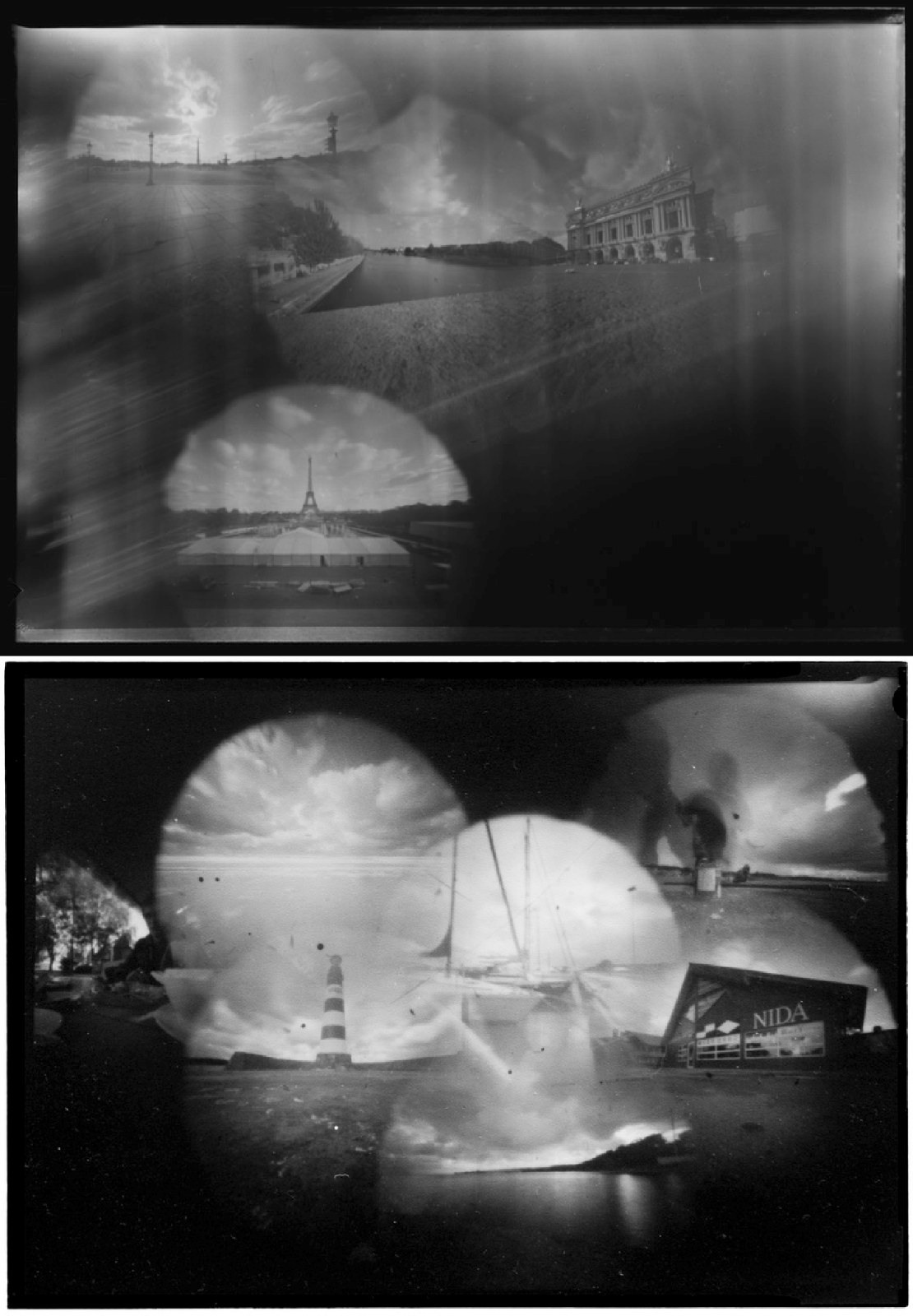
Covering the Lithuanian Photography Season in Scotland, the Point101 reviewers wrote about the LT Pinhole exhibition at 103 Trongate in Glasgow, for which Petras was one of only two photographers chosen. Preferring black and white, they observed, he overlays landscapes and street scenes fan-like across the photographic plane in a whimsical style, offering the viewer little windows into the worlds within. His circular pinhole images read to them as anonymous postcards that give no indication of a narrative, fleeting thoughts that reveal a fleeting whole, and they saw him as part of a newer generation of Lithuanian photographers more interested in the constructed image than in documentary.

(AV17) GalleryExhibition textPostcard. 2005–2012 (7) ↗, Vilnius, 15 May – 9 June 2013

“Another city appears: unseen, unexperienced.”

The gallery’s text on Postcard describes seven years of work with a wooden pinhole camera Petras made himself, twelve photographs of twelve cities (Rokiškis, Druskininkai, Alytus, Kaunas, Vilnius, Nida, Birmingham, Venice, Bruges, Paris, Stockholm and Amsterdam), each telling the story of its city through the artist’s personal prism.

Reading the city as a message, it says, he joins objects that are sometimes far apart in space and moments divided by time; laid down on a single plate and merging, the views build new connections that ignore the paths time and space impose. Without flash and without focusing, the objects he has tamed and fixed with light come together in one structure that follows his own path of searching. The image is no longer a documentary record: a real, recognisable city is there, but in the same place another city appears, unseen and never experienced. Such a postcard, the text concludes, escapes consumerism and overcomes the cliché of the picture postcard; and because a 13 × 18 cm plate and a hand-made silver gelatin contact print demand care and time, the format and technique create an intimate relationship between image and viewer, artist and work, a kind of dedication to the person the postcard is addressed to.

Fotofestiwal, ŁódźFestival catalogue, The Factory of PhotographyL’herbe est l’herbe mais ce n’est pas l’herbe ↗, 2009

“An ironic cut in the perfect surface of the real.”

Poland’s leading photography festival presented Petras, then still a student, with a spatial triptych about grass. The catalogue describes how he takes grass out of its natural surroundings and places it in the exhibition space, where it becomes an object with a new aesthetic value; how, set beside hyperrealistic artificial substitutes, it asks how technology dethrones the unique essence of reality while lending it the touch of aesthetics; and how a single hemp leaf acts as an ironic cut in the perfect surface of the real, less a question about reality than a statement to accept or reject. The work, it concludes, widens our ability to tell apart and classify what we call the Real.

03Works19

01.6Works

Golden Content, with Julia, 2024 · Plastic coated in gold-coloured paint, epoxy resin, 25 × 25 cm
W. 01Golden Content, with Julia, 2024Plastic coated in gold-coloured paint, epoxy resin, 25 × 25 cmslaptameile.lt ↗
Barbara and Sigismund Augustus, with Julia, 2024 · Sculpture project in bronze
W. 02Barbara and Sigismund Augustus, with Julia, 2024Sculpture project in bronzeslaptameile.lt ↗
Čiurlionis’s Sun, 2025 · Light installation: a sun in fog, with Čiurlionis’s music
W. 03Čiurlionis’s Sun, 2025Light installation: a sun in fog, with Čiurlionis’s musicSavičiaus Street, Vilnius Light Festival; Čiurlionis 150 programme
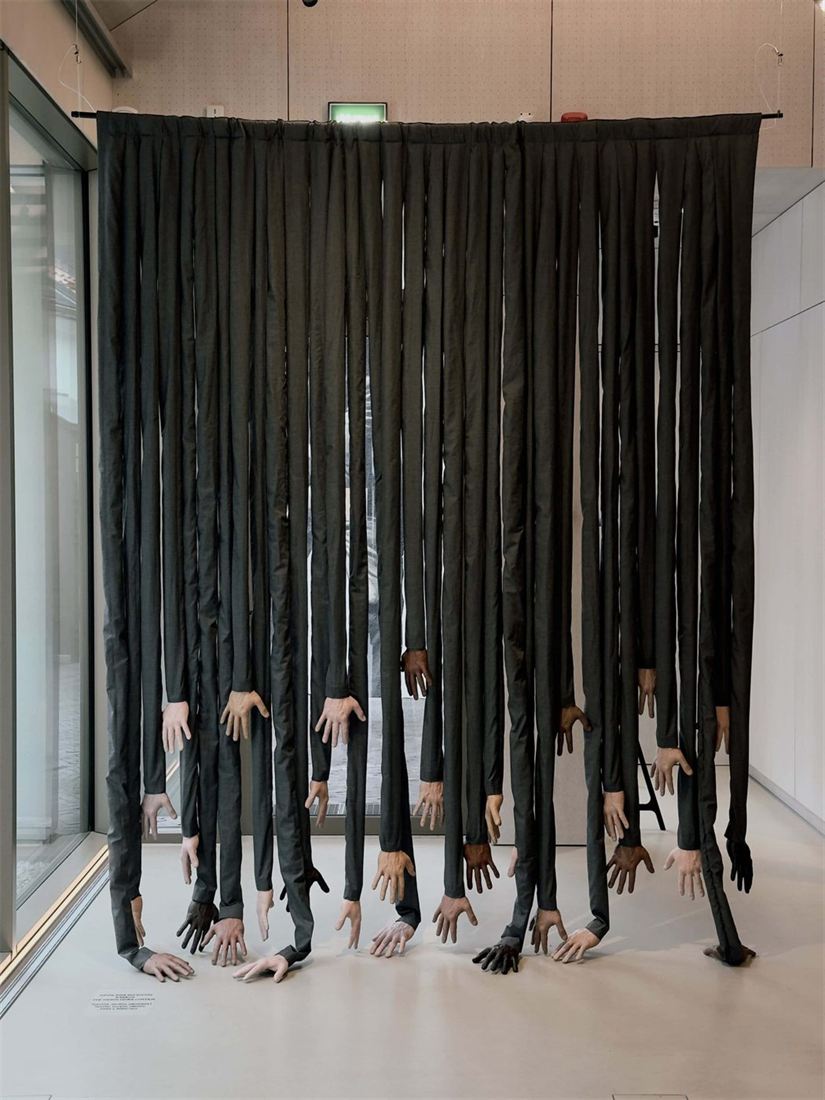
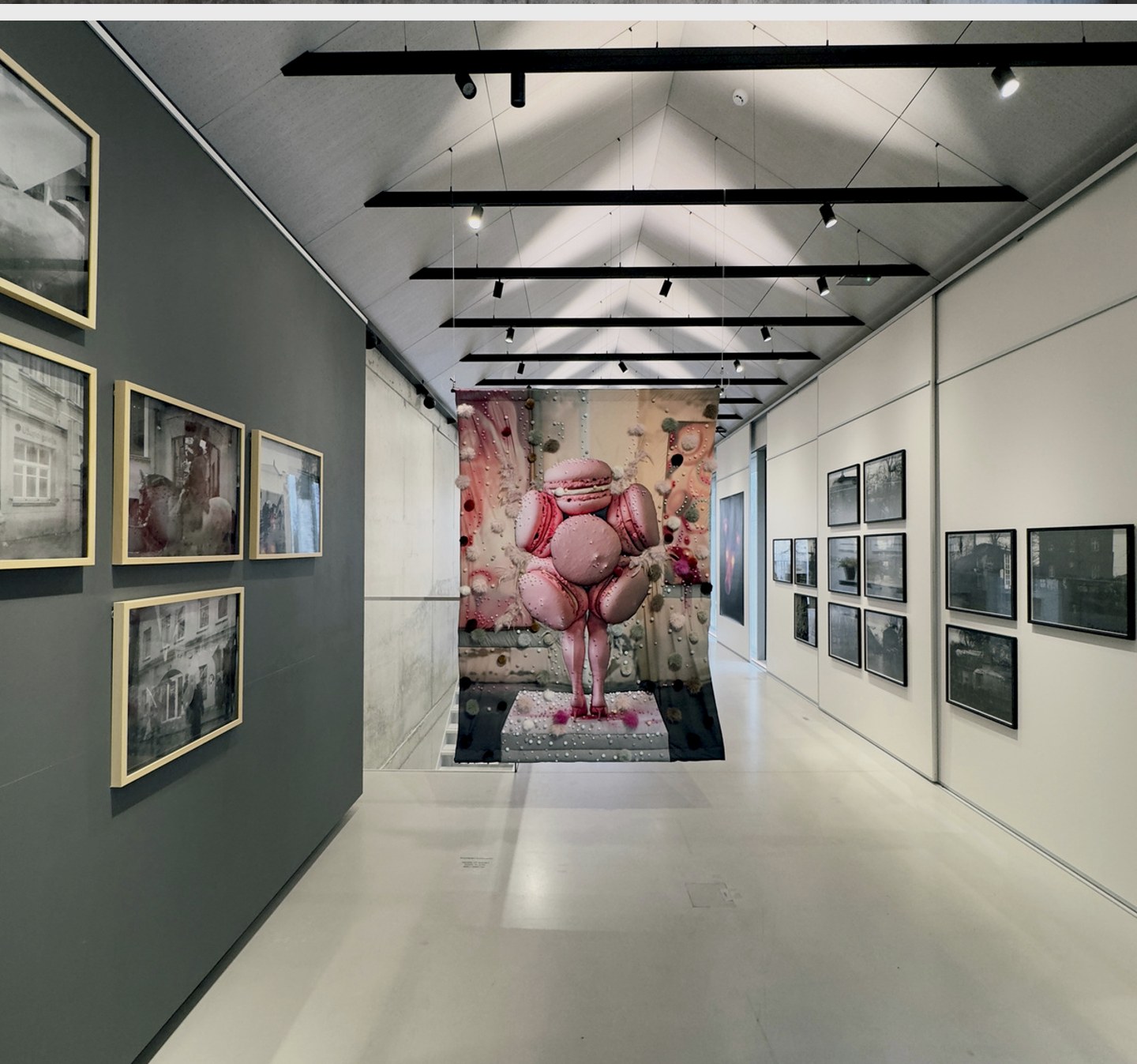
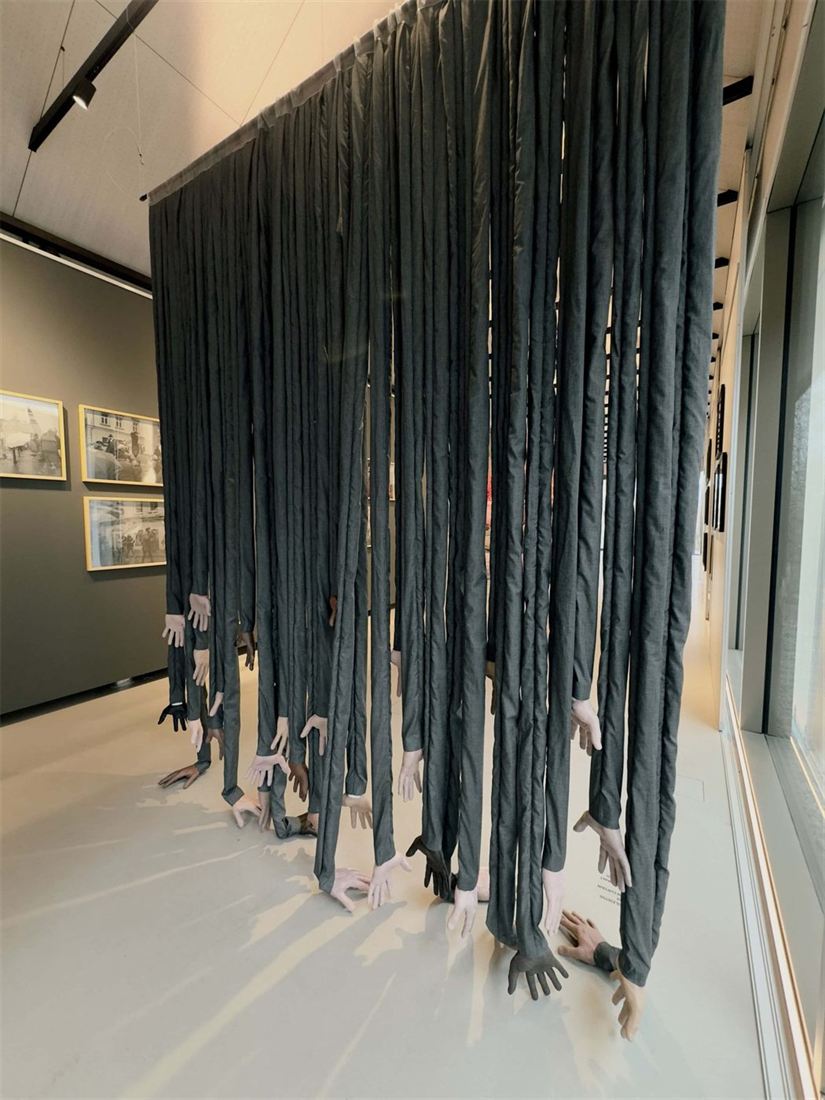
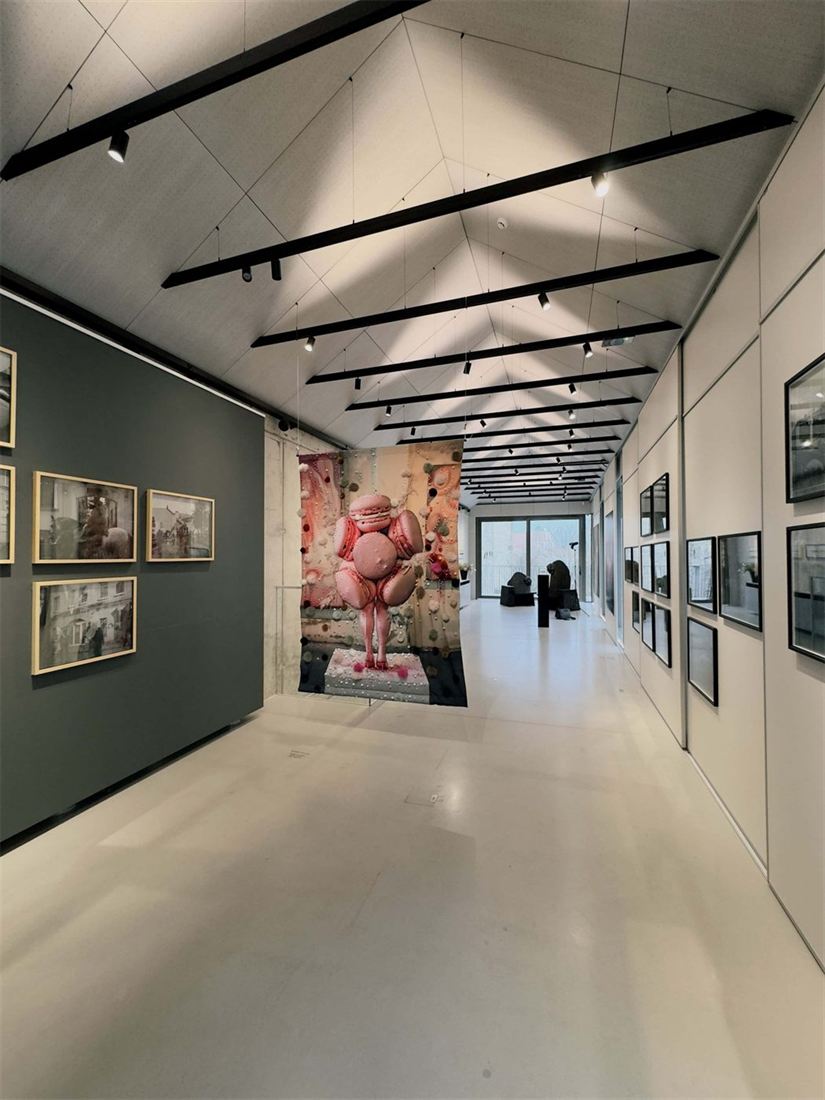
To the Left, with Julia, 2024 · Exhibition: analogue and digital photography, textile, wood sculpture, installation
To the Left, with Julia 1To the Left, with Julia 2To the Left, with Julia 3To the Left, with Julia 4To the Left, with Julia 5To the Left, with Julia 6To the Left, with Julia 7To the Left, with Julia 8To the Left, with Julia 9To the Left, with Julia 10To the Left, with Julia 11To the Left, with Julia 12To the Left, with Julia 1313 photos
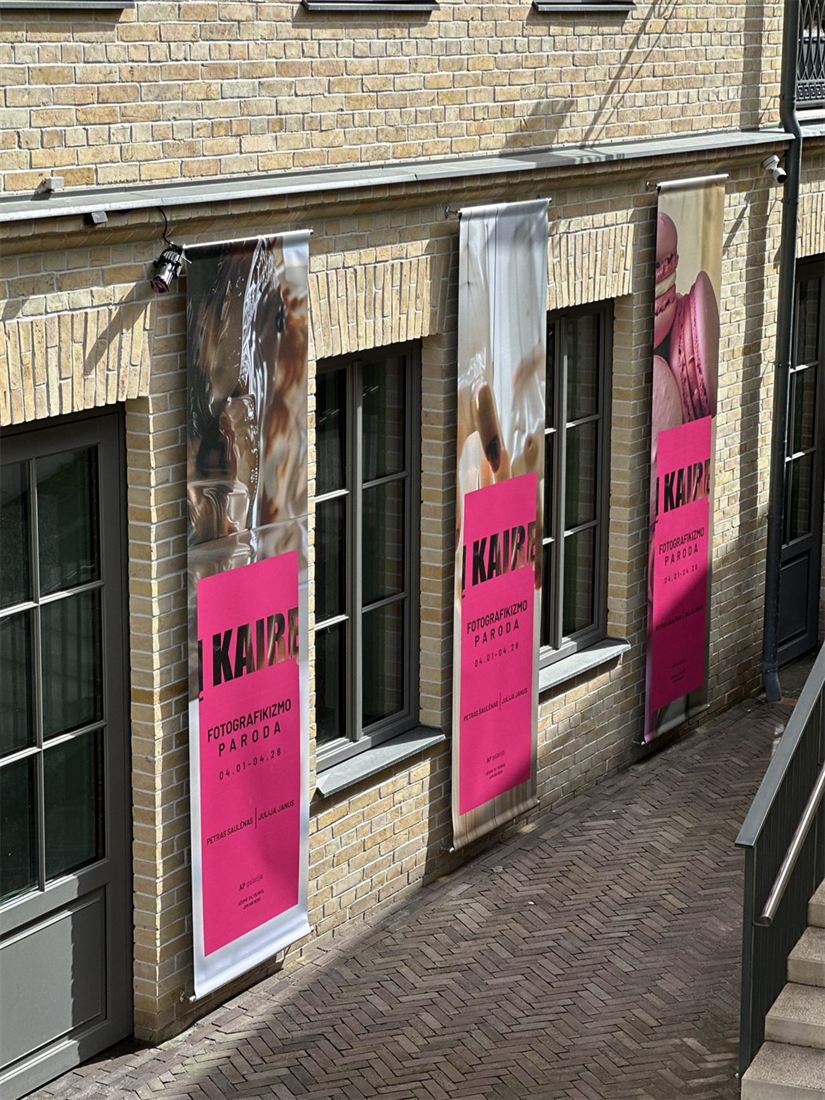
W. 04To the Left, with Julia, 2024Exhibition: analogue and digital photography, textile, wood sculpture, installationAP Gallery, Užupis, Vilnius
Užupis, 2024 · Silver gelatin prints
W. 05Užupis, 2024Silver gelatin printsTo the Left, AP Gallery
Freetown Christiania, 2024 · Silver gelatin prints
W. 06Freetown Christiania, 2024Silver gelatin printsCopenhagen; shown in To the Left
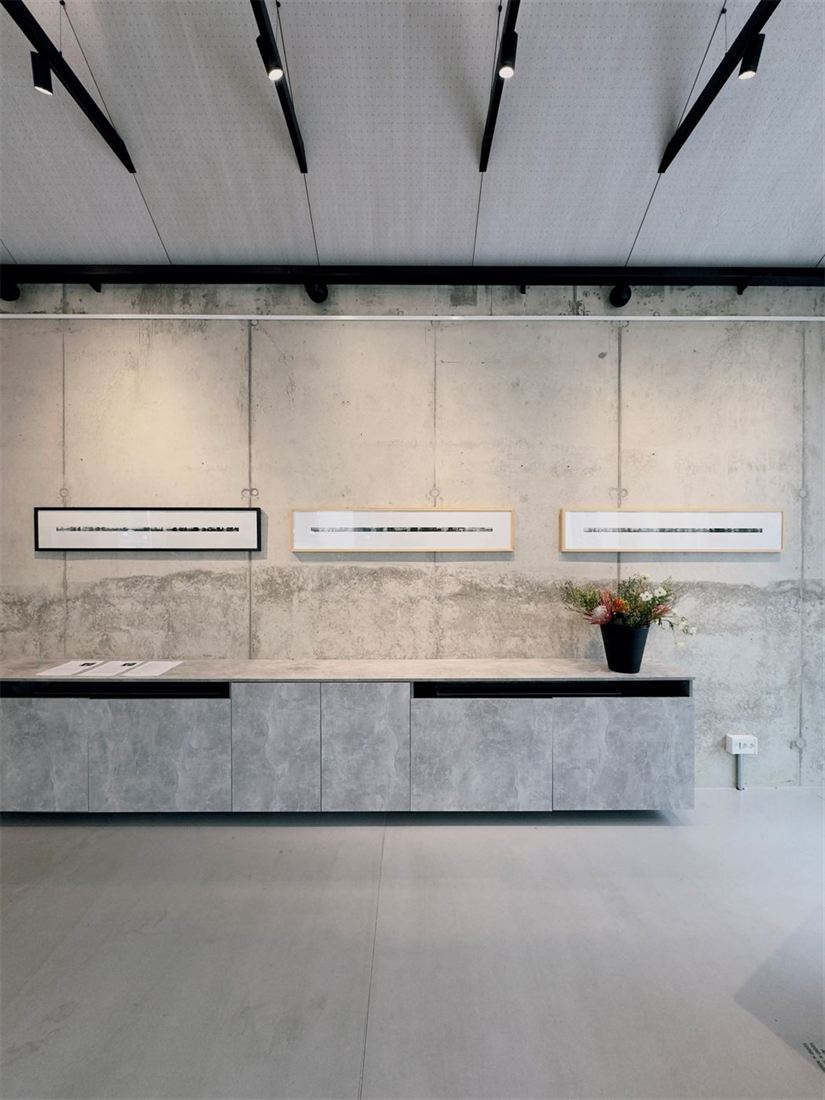
1 April 2023: The Republic of Užupis at 25, 2023–24 · Panoramic silver gelatin contact print, 1500 × 250 mm
W. 071 April 2023: The Republic of Užupis at 25, 2023–24Panoramic silver gelatin contact print, 1500 × 250 mmTo the Left, AP Gallery
Vitrum, 2022 · Spatial stained-glass objects and light
Vitrum 1Vitrum 2Vitrum 3Vitrum 4Vitrum 5Vitrum 6Vitrum 707 photos
W. 08Vitrum, 2022Spatial stained-glass objects and lightStiklių Street, Vilnius; ARTerija open-air gallery
Vitrum: quartz sand, 2022 · Photomicrographs in polarised light, in lightboxes
W. 09Vitrum: quartz sand, 2022Photomicrographs in polarised light, in lightboxesWindows of the former stained-glass gallery, Stiklių Street
Fotogrāfija, 2022 · Photographs
W. 10Fotogrāfija, 2022PhotographsMētras māja gallery, Liepāja University, Aizpute, Latvia
Unfolded, 2019 · A paper plane, unfolded and printed with light; salt evaporated from Baltic seawater
W. 11Unfolded, 2019A paper plane, unfolded and printed with light; salt evaporated from Baltic seawater
Print of a Print: Rectilinear #001, 2019 · 1100 × 1100 mm; a negative made from a 3D printer’s first layer
W. 12Print of a Print: Rectilinear #001, 20191100 × 1100 mm; a negative made from a 3D printer’s first layerNew Talents, B-Part Am Gleisdreieck, Berlin
Continuity and Calm, 2017–18 · Silver gelatin contact prints from fifty-year-old film; triptych, 25 × 75 cm each
W. 13Continuity and Calm, 2017–18Silver gelatin contact prints from fifty-year-old film; triptych, 25 × 75 cm eachInternational Paper Art Biennial, Schio, Italy
Horizon: Nida, 2014–17 · Silver gelatin contact print, 1500 × 250 mm, of seventeen seascapes from one roll of film, with sixteen projection prints, 600 × 500 mm
W. 14Horizon: Nida, 2014–17Silver gelatin contact print, 1500 × 250 mm, of seventeen seascapes from one roll of film, with sixteen projection prints, 600 × 500 mmGdańsk; Taidebunkkeri, Imatra, Finland; nominated for the Neringa Mayor’s Prize, 2024
Rollei: The Vanishing Epoch, 2015 · Paired frames, sharp and soft, on a Rolleiflex with Rollei RPX 100 film; silver gelatin prints
Rollei: The Vanishing Epoch 1Rollei: The Vanishing Epoch 2Rollei: The Vanishing Epoch 3Rollei: The Vanishing Epoch 4Rollei: The Vanishing Epoch 5Rollei: The Vanishing Epoch 6Rollei: The Vanishing Epoch 7Rollei: The Vanishing Epoch 8Rollei: The Vanishing Epoch 9Rollei: The Vanishing Epoch 10Rollei: The Vanishing Epoch 11Rollei: The Vanishing Epoch 12Rollei: The Vanishing Epoch 13Rollei: The Vanishing Epoch 1414 photos
W. 15Rollei: The Vanishing Epoch, 2015Paired frames, sharp and soft, on a Rolleiflex with Rollei RPX 100 film; silver gelatin printsThe Rollei factory, Braunschweig, Germany, in its last days
Pages from the Book, 2013 · Cyanotype contact print, 30 × 40 cm
W. 16Pages from the Book, 2013Cyanotype contact print, 30 × 40 cmThomas Mann Festival, Nida
Photobook for Achema Group, 2011 · Panoramic film photographs for the annual report
W. 17Photobook for Achema Group, 2011Panoramic film photographs for the annual report
Postcard, 2005–12 · Wooden pinhole camera, 13 × 18 cm plates, silver gelatin contact prints
W. 18Postcard, 2005–12Wooden pinhole camera, 13 × 18 cm plates, silver gelatin contact prints(AV17) Gallery, Vilnius
Smelt fishing, Nida, 2005 · Black-and-white photographs
W. 19Smelt fishing, Nida, 2005Black-and-white photographsCuronian Lagoon

04Texts7

01.7How he works

Petras distrusts the easy picture. Most of his projects begin with the machinery of seeing, and only then with the subject: a camera he has built from wood, a roll of film no one ever exposed, a factory about to be auctioned, a microscope pointed at a grain of sand. The slowness is deliberate. A contact print from a large negative takes time to make and time to look at, and that time becomes part of what the picture says.

He is fond of the mistakes machines make. In Print of a Print he stopped a 3D printer after its first flat layer and used it as a negative; from a distance the prints look perfect and mechanical, and close up every error of the algorithm shows. The same curiosity ran through his teaching. Students who passed through his darkroom learned to coat their own paper, to print colour by hand, to make one-off portraits in a mobile darkroom on a market square, and to photograph a solar eclipse with whatever the department had.

Light interests him as much as images do. Vitrum turned the lost stained-glass tradition of the Glass Quarter in Vilnius, Lithuania, into geometric light sculptures hung over the street, glowing at night and throwing coloured light by day. In the shop windows below, quartz sand, the raw material of glass, was shown under a polarising microscope, where the grains turn into flowers, river pearls and small constellations.

Each of his light works begins with the street it is made for. In January 2025, marking the 150th anniversary of the birth of M. K. Čiurlionis, the genius of Lithuanian painting and music, he hung a large sun in a narrow lane of the Old Town, beside the house where the painter lived in 1907–1908, and wrapped it in fog and Čiurlionis’s music; the sun appears in more than twenty of Čiurlionis’s paintings, and the people walking towards it became part of one of them. The work opened the Vilnius Light Festival and shone until the summer. Čiurlionis has been with him since childhood: through museum visits, reproduction work during his studies and the photographic series Interpretations of M. K. Čiurlionis’s Works of Art.

01.8The photographer

Behind the artist is a working photographer of twenty years’ standing, at ease with every format from a 13 × 18 cm glass plate to a digital file. He has photographed architecture for APS magazine and editorial work for Hypoxia, made a panoramic photobook on film for the annual report of Achema Group, and contributed photographs to the monograph of the artist Esther Shalev-Gerz published by the Musée cantonal des Beaux-Arts in Lausanne. As a student he photographed the interiors of the M. K. Čiurlionis National Art Museum and made reproductions of the painter’s works, the kind of exacting technical work that leaves no room for error in colour, light or geometry.

His most recent work takes the camera where the eye cannot go. For The Magic of Microorganisms, made with the photographer Paulius Makauskas and scientists of Lithuania’s Nature Research Centre, he built a microscope rig and spent days in the studio photographing the yeasts, bacteria and fungi that clean oil-polluted soil, turning a bioremediation laboratory into colour and light; the exhibition opened in 2025 at the Vilnius University Botanical Garden and Life Sciences Centre. With the same partners he made Father’s Land, shown at the National Gallery of Art in 2022. It is exactly the kind of imaging the voyage’s research programmes need.

He knows cameras from the inside. He builds them, teaches with them and has documented their history; he has taught generations of students to load film in the dark, to judge a negative, to make a print that will last a century. That is the eye and the hand a camera, lens or marine-electronics maker gets on RAW: someone who can make an image that sells a place, and who can tell exactly why one piece of equipment worked and another did not.

01.9In his own words

Artist’s statements

Petras writes about his work rarely, but precisely. These are his own statements, translated from the Lithuanian, for the works that define him.

Horizon: Nida2014–17Silver gelatin contact print, 1500 × 250 mm, and sixteen projection prints, 600 × 500 mm

The contact print joins seventeen seascapes. A thin horizon line constructs an apparent wholeness. The photographer and the camera are only passers-by, recording the path they have walked on a single roll of film. You can hear the voice of the emerging horizon, as a promise of stability, certainty and order.

The question inevitably arises: what is the ground of the fundamental things we rely on? What gives us reason to believe that the guidelines we follow rest on something true and real? The visible horizon draws a boundary where the field of vision ends. But fixing on that boundary, as a guarantee of stability, can save you from seasickness, when the brain receives conflicting signals: the eyes see that the world is stable, while the body, and above all the vestibular system, sends signals of a moving world. The horizon, as the edge of the field of vision, stabilises. Nida, the visible boundary between nature and the built, between sea and sand, stabilises the mind of the one who watches.

Sixteen fragments draw out the places where the seascapes overlap, revealing the possibility of creating a new reality. But the horizon remains.

Continuity and Calm2017–18Silver gelatin contact print, 1/1, from fifty-year-old 35 mm film, unexposed but developed; triptych, 25 × 75 cm each

I no longer want to search. I am at home. Home is within me. Home is in this old film my father gave me, on which no images were recorded. Home is the time that has passed. Only the traces of time are left imprinted on that film. They give that sense of continuity and calm.

Print of a Print2019Rectilinear #001 and Archimedean Chords #001, 1100 × 1100 mm; shown at B-Part Am Gleisdreieck, Berlin

In this series I explore the processes of traditional printmaking and photography. Photography and printmaking have always been objects of technological progress, striving for precision, perfection and realistic results. Now 3D printing can overshadow many other technologies and make them unnecessary: everything, from drawing an idea to making it, can be done by synthetic methods more complex and more perfect than ever. Yet technological progress has always come with a certain unease, as when photography was invented and people feared that their souls would be stolen. There is something impressive, and at the same time frightening, in a machine’s ability to grow a three-dimensional object.

Here, using the first printed layer is symbolic: to assess progress, the process has to be stopped. I stop the making of the 3D object at the moment when it is still flat, and so I can make a negative from it. The print of a print speaks of the imprint that is left behind; it becomes a hybrid, the duality of cause and result. Every print is a version of a program, an algorithm. From a distance these pictures look almost perfect and mechanical, but close up the errors are perfectly clear, and I love these prints for their errors. The relationship between control and error is the main component of creation. As long as there are mistakes, making is still possible.

Pages from the Book2013Cyanotype contact prints, 30 × 40 cm; in memory of Petras Motiekaitis; Thomas Mann Festival, Nida

I rarely go to my father’s birthplace. But whenever I do, I climb into the attic and look for something. That “something” is probably my father’s distant past, which he hardly ever talks about. Lately it has become something I need myself: I found trays for prints, an enlarger, a drying rack and rolls of film. It turns out that as a schoolboy my father was interested in two things, aviation and photography. I never thought the passions of his youth were so close to my own.

If I asked him and he told me about them, I would forget after a while, or not hear everything, or not know what to ask. By printing these photographs and presenting them in a book, I can hope for my father’s memories: provoking him with the image, I invite a conversation, perhaps a reflection on the past, which may become a great legacy. And this is not only my family’s past. Memories always hide deeper and wider layers, which are our past as a nation too.

The work is dedicated to Petras Motiekaitis (1920–1988), still the most famous aeromodeller in Lithuania’s history and one of its most remarkable sportsmen: sixteen world records, two inventions in colour photography among his patents, four flying machines of his own design, and a collection of 460 butterflies and moths, one of which, a species he discovered, bears his name.

Vitrum2022Spatial stained-glass objects and photomicrographs of quartz sand in polarised light, Glass Quarter, Vilnius

Stained-glass art cannot be truly seen in a workshop; it comes alive only when it is installed and lit by daylight, through the effect of light in colour, the divine power that the old glass artists knew. Quartz sand is the first state of glass, the material from which molten glass is born at very high temperatures. When light rays are refracted, the microscopic grains give off the same range of colours that stained glass has shown for thousands of years. And like stained glass, the photographs made from them cannot be reproduced or multiplied. The sun made unexpected reflections on the walls of the street that revealed the essence of the work in ways no one could have planned.

Čiurlionis’s Sun2025Light installation, fog and music, Savičiaus Street 17, Vilnius, 24 January – 31 July 2025; from his interview with LRT

He first met Čiurlionis as a child, in illustrated books, where the paintings seemed mysterious and irresistible; later came museum visits as a schoolboy, where the symphonic poems In the Forest and The Sea left a lasting mark, then reproduction work on Čiurlionis’s paintings as a student, and a photographic series of his own, Interpretations of M. K. Čiurlionis’s Works of Art. He chose the sun because it shines in more than twenty of Čiurlionis’s paintings, not merely as a natural phenomenon but, as he puts it, as a cosmic spirit tied to ancient beliefs and spiritual energy. The installation turns the sun’s rays into abstract, rhythmic forms in the spirit of Čiurlionis’s music of colour; in his words, it unites music, light and space in a single work that invites the viewer to feel what Čiurlionis felt as he created.

01.10Building a school

Kaunas, 2009–2019

Alongside his own work, Petras built one of Lithuania’s photography schools almost from nothing. He began in 2009 as a lecturer in photography on the Art Education programme of the Justinas Vienožinskis Faculty of Arts at Kaunas University of Applied Sciences, and, while teaching full time, completed his master’s degree in audiovisual art at the Vilnius Academy of Arts. With what he had learned there and in international practice, he proposed, wrote and launched an entirely new degree programme, Photography, and in 2012 founded the Photography department to run it. On 8 October 2012 the programme’s first intake worked together in the darkroom for the first time, a night that became the department’s founding tradition.

It went exceptionally well. In 2016 the programme was accredited for the maximum term of six years, and the international expert panel described the way it was run as an example of exceptional quality and a unique study opportunity of international standard. By then the department had produced its second graduating year, eighteen graduates in all, many of whom went on to work in the field; its graduates won the J. Vaitis Prize in 2015 and the E. Lašienė Prize in 2016. Petras became associate professor in 2014, and in 2016 the College named him its lecturer of the year, for the high academic results of the programme, for founding and curating the Bright & Showy gallery with his students, for initiating and curating their international exhibitions and festival appearances, and for the quality of the department’s public presence. The faculty also put him forward for the Meilė Lukšienė Prize, a national award for teachers.

He opened the school to the world. Through his efforts the department built a wide international network of partners, so that students could carry Lithuanian photographic culture abroad and raise the country’s profile. He curated their exhibitions at the Archipelago of Culture in Gdańsk (2014 and 2016), at Saimaa University in Finland (2015) and at the Białystok photography festival, where the programme itself was presented (2015); entered their work in the World Biennial of Student Photography in Novi Sad (2013); and saw one of his students chosen among sixty from across Europe for the FreedomBus 2015 workshops at the University of Opole. In 2015 alone he organised nine student exhibitions, among them shows at the Energy and Technology Museum in Vilnius, at the Kaunas Photo festival, in the exhibition space of the Vilnius Academy of Arts and in the Kaunas Photography Gallery. With Finnish and Russian students his students made the joint project Three Ideas (2014), and part of the Kaunas Photo 2015 festival was held in the faculty’s own rooms.

He brought the world in, too. Visiting photographers and scholars led workshops and seminars for his students: Aleksandr Gliadelov from Ukraine (On the Edge, 2013), Mariusz Forecki from Poland (2013), Deborah Bell on the history of American art photography (2014), the Greek photographer John Demos on the stages of his work (2014), Päivi Eronen of Saimaa University (2014), and the photojournalist Artūras Morozovas on working in conflict zones (2014). In 2015 Petras founded the Bright & Showy gallery inside the College, showing well-known Lithuanian and foreign photographers beside the best student work: nine artists’ exhibitions in its first season, each with a talk by the visiting artist.

Above all, he made photography something students did with their hands and in public. The department’s traditions became known around Kaunas: the Photography Night in the darkroom; a large-format camera project in which students printed their own colour photographs (2013); Easter eggs decorated with photographic processes every spring from 2013 to 2015; and the mobile darkroom, in which students made unique direct-positive portraits on the spot for passers-by at the Kaziukas fair in 2013 and in Town Hall Square in December 2013 and 2014, with a camera-obscura “house of light” to step into. On 20 March 2015 the whole department photographed the solar eclipse in the faculty courtyard. They joined the city’s life as well: an action by the Kaunas photo club in December 2013 in support of the Ukrainians protesting for democracy and freedom and for a future in the European Union; Kaunas Jazz on the Pavement (2014); a volunteering project with the Nykoka street-art festival (2014); and open days every year. Parents were invited to the semester reviews and exhibition openings, and spoke warmly of him; the faculty’s nomination describes him as a teacher his students both love and respect, who passes on not just information but his own wide professional experience, sets individual assignments every year and takes personal responsibility for the quality of what his students achieve.

The teaching reached beyond the College. He gave masterclasses in cyanotype and cliché-verre for Lithuanian art teachers for the Ministry of Education and Science (2014), taught in the international youth camp I Live Free for young people of Lithuania’s national communities (2016), helped the Lithuanian Analogue Photography Association to recruit and exhibit new members (2014), taught photography with Dr Tomas Pabedinskas on Museum Night at the Lithuanian Sea Museum (2019), and since February 2019 has been a guest professor at Liepāja University in Latvia, in its New Media Art and Design programmes and its International Week. In the four years from 2012 to 2016, while building all this, he still held four solo exhibitions abroad and seven in Lithuania and took part in fourteen group shows.

Teaching at a large-format camera
01Teaching at a large-format camera
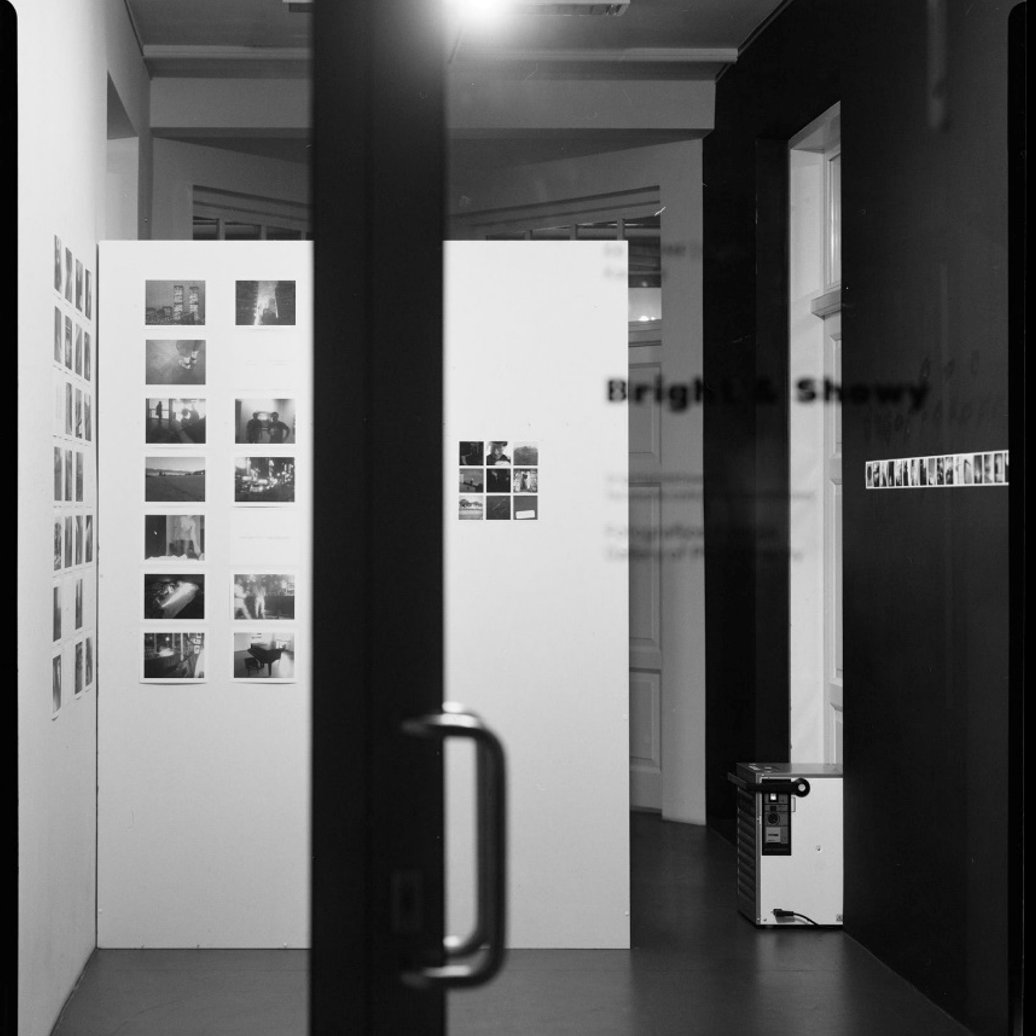
The Bright &amp; Showy gallery, Kaunas
02The Bright & Showy gallery, Kaunas
A student exhibition he curated
03A student exhibition he curated
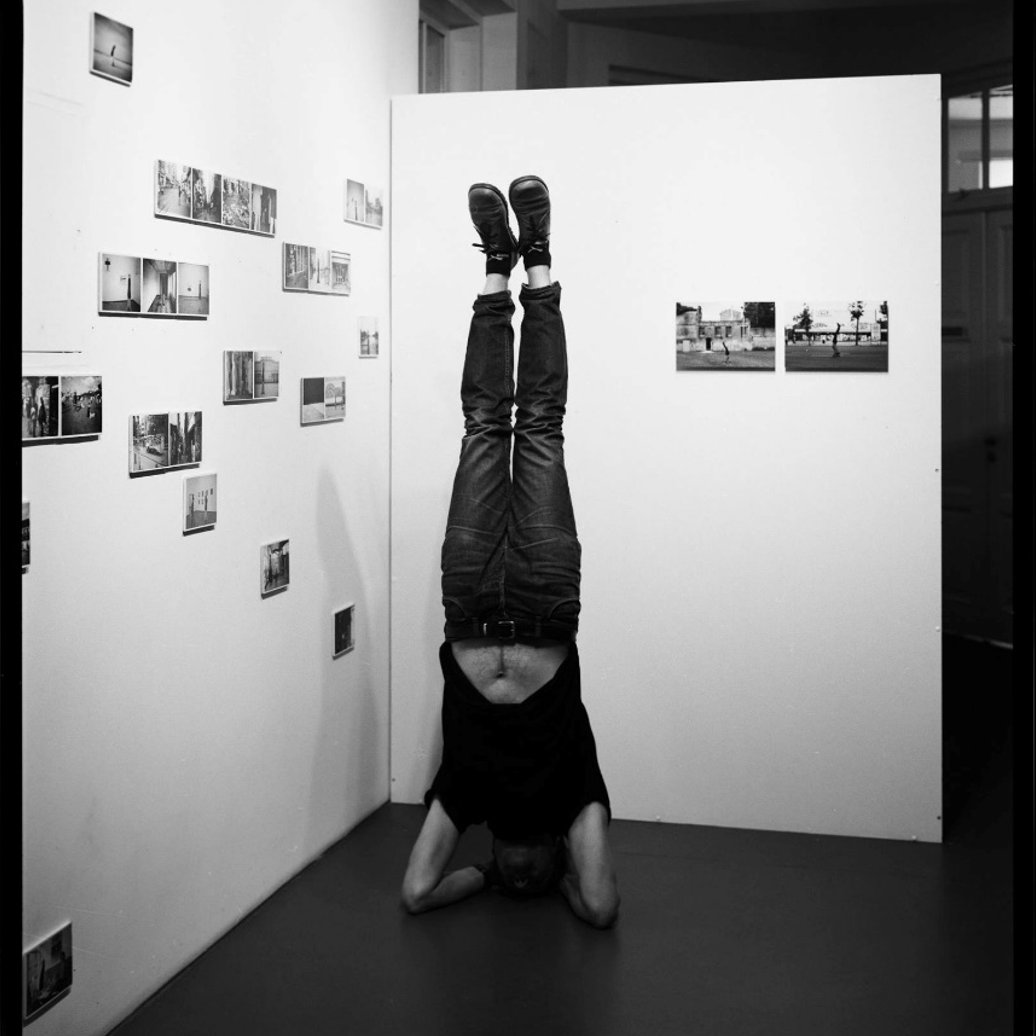
Upside down, in the gallery
04Upside down, in the gallery

01.11Early years

Pinhole, plates and the factory of photography, 2005–2013

Petras began where photography itself began, with a box and a hole. While still a student he built a wooden pinhole camera for 13 × 18 cm plates, and from 2005 to 2012 carried it through twelve cities for Postcard, from Rokiškis and Nida to Venice, Paris and Stockholm; the first Postcard works were shown in 2005–06 at the Meno parkas gallery in Kaunas in the Art Today project. He became one of the central figures of Lithuanian pinhole photography: Pinhole Strategies at the Photography Museum in Šiauliai (2007) and the Prospekto galerija in Vilnius (2008); LT Pinhole Photography at the Antanas Mončys House-Museum in Palanga and the book of the same name, with six pages of his work (2010); Pinhole LT at the Kyiv Photography Festival and Black Hole at the Rodchenko Moscow School of Photography and Multimedia (2010); and the LT Pinhole show in Glasgow (2014).

Abroad, his student work was already travelling. C.A.L.V.I.N.O. Invisible Cities, an international project after Italo Calvino’s book, toured Vilnius, Urbino, Łódź, Poznań and Granada in 2007; in 2009 Fotofestiwal in Łódź, Poland’s leading photography festival, showed his spatial triptych L’herbe est l’herbe mais ce n’est pas l’herbe in The Factory of Photography; the same year he showed at the Jonas Mekas Visual Arts Center in Vilnius.

At the same time he was a working professional. He photographed architecture for the magazine APS: Architecture, Design, Construction (2008) and editorial work for Hypoxia (2006); made the photographs for more than twenty pages of the album Pasirinkimai (Choices, 2012) and a panoramic photobook on film for the annual report of Achema Group (2011); appeared in the catalogue Meno celės (2012) and, with the silver gelatin print Dratas, in Kvadratas, the international exhibition of art lecturers (2012); photographed the interiors of the M. K. Čiurlionis National Art Museum and reproduced Čiurlionis’s paintings; and photographed for Esther Shalev-Gerz’s retrospectives in Paris and Lausanne. In 2013 he published a research paper on how users experienced the photographic equipment made by the Rollei factory as photographic technology changed.

Two early works point to everything that followed. A 2005 series records the old way of fishing for smelt under the ice of the Curonian Lagoon, practised for generations in Preila, Pervalka and Nida: a four-metre board of spruce or pine is lowered with the nets through a hole in the ice, 50 cm square, and the fisherman, sitting on a stool, drums on its end with wooden mallets, sometimes singing along, so that the fish, fleeing the noise under the ice, swim into the nets. And in 2013, at the Thomas Mann Festival in Nida, Pages from the Book turned his father’s youthful photographs, found in the attic of the family house, into cyanotypes: the first of his works about inheritance, memory and the sea’s edge.

01.12The sea

The Baltic runs through his most personal work. Horizon: Nida joins seventeen seascapes from a single roll of film into one long contact print, held together by the thin line of the horizon. A 2005 series follows the old way of fishing for smelt under the ice of the Curonian Lagoon, where a fisherman drums on a plank to drive the fish into the nets. Unfolded prints a child’s paper plane, opened flat, with salt evaporated from Baltic water.

He has written that the horizon is what steadies us when the eye and the inner ear disagree: the old cure for seasickness, and for him a way of thinking about what we take to be certain. Five years at sea will test that idea more thoroughly than any gallery.

01.13On board

On RAW Petras keeps the record. He will photograph the voyage on large and medium format and digitally, develop and print where he can, and turn the microscope on what the research programmes bring aboard: fragments of plastic, plankton, sand from ninety shores. The aim is not a travel feed but an atlas, a body of work made slowly and on location, to be printed, exhibited and published when the boat comes home, and shared along the way with the schools and universities in the ports.

05CV118

01.14Now: Secret Love8 · 2022–2026
2022–Co-creator of Secret Love, with JuliaDesign with Julia: products, packaging and visual identity; photography; see About › Together
2026Photographs of Queens, Julia’s exhibitionUppsala Castle, Sweden; with the National Museum of Lithuania
2026Photographs for the launch of Julia’s novel Nematoma rankaPublished with the press coverage, September 2026
2022Co-curator, with Julia, of Secret Love, the project’s first exhibitionVilnius Town Hall, 28 April – 28 May 2022; with the architect Gediminas Stoškus
2025–26Sculptural candles of King Sigismund Augustus and Queen BarbaraDesigned with Julia
2025–26Packaging for the Secret Love chocolates and gingerbread, with JuliaDesign: Julia and Petras; made with the Rūta factory and Meduolių namai
Rebel Queen, limited hoodie made only to pre-orderDesigned with Julia
2024Golden Content; Barbara and Sigismund Augustus sculpture projectWith JuliaGolden Content; Barbara and Sigismund Augustus sculpture project
01.15Selected projects14 · 2005–2025
2025Čiurlionis’s SunLight installation for the 150th anniversary of M. K. Čiurlionis, Savičiaus Street, Vilnius Light Festival; January–July 2025Čiurlionis’s Sun
2025Smiles of Vilnius, with JuliaLight installation for the Glass Quarter’s winter season, ARTerija, Stiklių Street
2025The Magic of Microorganisms (12 Invisibles), with Paulius MakauskasPhotomicrographs of the yeasts, bacteria and fungi that clean oil-polluted soil, made on a microscope rig Petras built; with scientists of the Nature Research Centre; Vilnius University Botanical Garden and Life Sciences Centre
2022Father’s Land, with Paulius MakauskasArt-science project with mycologists of the Nature Research Centre; Photography Weekend, National Gallery of Art, Vilnius
2023–24Christiania and UžupisPanoramic silver gelatin contact prints, 1500 × 250 mm, on two self-declared “free” city districts, Copenhagen and VilniusChristiania and Užupis
2022Vitrum: the path of glass from quartz sand to stained glassPublic installation and photomicrographs of quartz sand in polarised light, Glass Quarter, Vilnius; the ninth ARTerija exhibitionVitrum: the path of glass from quartz sand to stained glass
2022–Sije Verski, with JuliaWorld Goes Bananas, site-specific installation, Jonas Mekas passage, Vilnius; The Tail of the Draft
2019Print of a PrintPhotography meets 3D printing: contact negatives made from the first printed layer, 1100 × 1100 mmPrint of a Print
2019UnfoldedA paper plane unfolded and printed with light; salt evaporated from Baltic seawaterUnfolded
2017–18Continuity and CalmContact prints from fifty-year-old unexposed film left by his father; triptych, 25 × 75 cm eachContinuity and Calm
2021–Rollei: The Vanishing Epoch, exhibition projectForty analogue prints in three parts; planned with the Museum für Photographie Braunschweig and the gallery of the Union of Lithuanian Art Photographers, VilniusRollei: The Vanishing Epoch, exhibition project
2015Rollei: The Vanishing EpochThe Rollei factory in Braunschweig before, during and after its auction, in paired sharp and soft frames on a RolleiflexRollei: The Vanishing Epoch
2005–12PostcardTwelve European cities on 13 × 18 cm plates, made with a wooden pinhole camera he builtPostcard
2005Smelt fishing, NidaThe traditional ice-fishing of the Curonian LagoonSmelt fishing, Nida
01.16Solo exhibitions6 · 2013–2022
2022VitrumARTerija open-air gallery, Glass Quarter, VilniusVitrum
2017–19Horisontti (Horizon)Taidebunkkeri gallery, Imatra, Finland
2015HorizonAukso pjūvis gallery, Kaunas, 16–30 September; in the Changes cycle marking the faculty’s fifteenth anniversary
2014The HorizonWyspa Skarbów, Gdańsk Archipelago of Culture, Gdańsk, Poland
2013Postcard. 2005–2012 (7)(AV17) Gallery, VilniusPostcard. 2005–2012 (7)
2013Pages from the Book, a father’s legacyThomas Mann Festival, “The Search of Homeland”, NidaPages from the Book, a father’s legacy
01.17Selected group exhibitions29 · 2005–2024
2024–25Refleksija, Vilnius Academy of Arts and Liepāja AcademyVilnius
2024To the Left, with JuliaAP Gallery, Užupis, Vilnius; 1–28 AprilTo the Left, with Julia
2022Mētras mājaLiepāja University gallery, Aizpute, Latvia
2020–21New TalentsB-Part Am Gleisdreieck, Berlin; one of 34 artists from 18 countries chosen by international open call
2020Piekrastes reljefs (Coastal Relief)Jūras vārti theatre house, Ventspils, Latvia
2019Visions from EuropeMatera, Italy, European Capital of Culture 2019
20194th International Paper Art BiennialSchio, Italy
2019United by the SeaLithuanian Sea Museum, Klaipėda
2019Plastic Nature; Science NightRomas Dārzs gallery and MPLab art and research laboratory, Liepāja, Latvia
2019–20Liepāja visual art exhibitionsLiepāja Museum, Latvia
2019Loppu: The End, final exhibition of the galleryTaidebunkkeri, Imatra, Finland
2018Camera Obscura #3POST gallery, Kaunas
2018Night of photography projectionsTsekh gallery, Vilnius
2018The Path of a CallingKupiškis Ethnography Museum
2016Communicating VesselsSi:said gallery, Klaipėda
201512th Baltic Biennial of Graphic ArtKaliningrad State Art Gallery; direct cyanotype prints
2015My YardKaunas Photography Gallery, Union of Lithuanian Art Photographers
2014Kaunas Street Photography and LT PinholeLithuanian Photography Season in Scotland, Harbour Arts Centre, Irvine; one of two artists chosen for the LT Pinhole show at 103 Trongate, Glasgow
2014New FolderProspekto galerija, Union of Lithuanian Art Photographers, Vilnius
2012–13Kvadratas, international exhibition of art lecturersAukso pjūvis gallery, Kaunas
2010Pinhole LTKyiv Photography Festival, Gallery RA, Kyiv, Ukraine
2010Black HoleRodchenko Moscow School of Photography and Multimedia, Moscow
2010LT Pinhole PhotographyAntanas Mončys House-Museum, Palanga
2009Fotofestiwal 09: The Factory of PhotographyPATIO Art Centre, Łódź, Poland; the spatial triptych L’herbe est l’herbe mais ce n’est pas l’herbe
2009Lithuanian photographyJonas Mekas Visual Arts Center, Vilnius
2008Pinhole Strategies IIProspekto galerija, Vilnius
2007C.A.L.V.I.N.O. Invisible CitiesVilnius; Urbino, Italy; Łódź and Poznań, Poland; Granada, Spain
2007Pinhole Strategies IPhotography Museum, Šiauliai
2005–06Postcard, Art Today projectMeno parkas gallery, Lithuanian Artists’ Association, KaunasPostcard, Art Today project
01.18Teaching and curating22 · 2009–2019
2009–Lecturer in photographyJustinas Vienožinskis Faculty of Arts, Kaunas University of Applied Sciences
2012–Founder and head of the Photography departmentSet up the Photography degree programme; 18 graduates by 2016
2014–Associate professorKaunas University of Applied Sciences
2016Photography programme accredited for the maximum six yearsPraised by international experts as an example of exceptional quality
2015–18Founder and curator, Bright & Showy galleryKaunas; nine exhibitions in its first season, with talks by the visiting artists
2016“Photography School” movementA group for students and graduates making conceptual series to an international standard
2014Masterclasses for art teachers: cyanotype and cliché-verreEducation Development Centre, Ministry of Education and Science
2013–14Mobile darkroomOne-off direct-positive portraits made on the spot at Kaziukas fair and in Kaunas Town Hall Square
2019–Guest professorLiepāja University, Latvia: New Media Art and Design programmes; photography workshops in its International Week
2014–16Curator of student exhibitions abroadGdańsk Archipelago of Culture, Poland; Saimaa University, Finland
2013–15Workshops and seminars with visiting photographersAleksandr Gliadelov, Mariusz Forecki, Deborah Bell, John Demos; events of the Kaunas Photo festival
2015Nine student exhibitions in Lithuania and abroadKaunas Photo festival, Białystok photography festival, Saimaa University, Energy and Technology Museum, Vilnius
2016Kaunas Interwar Architecture and Interpreting SculptureStudent exhibitions curated in Gdańsk, Poland
2016I Live Free, international youth summer campTeaching in a programme for young people from Lithuania’s national communities
2013World Biennial of Student PhotographyNovi Sad, Serbia; his students’ work selected
2012The first darkroom night of the first Photography intake8 October 2012; the start of the department’s Photography Night tradition
2015–16Graduates’ prizesJ. Vaitis Prize (2015) and E. Lašienė Prize (2016) for graduates of the programme
2013–15Mobile darkroom, photographic Easter eggs, the solar eclipsePublic events with students in Kaunas: Kaziukas fair, Town Hall Square, the faculty courtyard
2013Action in support of Ukraine’s pro-European protestsWith the Kaunas photo club and photographers of Kaunas, Town Hall Square
2014Artūras Morozovas on photographing in conflict zones; Three Ideas with Finnish and Russian studentsJustinas Vienožinskis Faculty of Arts
2015FreedomBus 2015One of his students chosen among sixty from across Europe, University of Opole, Poland
2019Photography masterclass on Museum NightLithuanian Sea Museum, Klaipėda, with Dr Tomas Pabedinskas
01.19Commissions and publications10 · 2006–2015
2015Article: “The dynamics of the photographic phenomenon: purpose, role and value”Fotografija magazine; one of four articles in academic and general publications
2013Paper: how users experience Rollei photographic equipment as photographic technology changesArt, Design and Art Education
2012Photographs in the monograph Esther Shalev-Gerz (pp. 128–129)Musée cantonal des Beaux-Arts, Lausanne, and JRP|Ringier, for the retrospective Between Telling and Listening
2010Credited photographer, catalogue Esther Shalev-GerzJeu de Paume, Paris, and Éditions Fage, for the retrospective Ton image me regarde!?
2012Photographs in the album Pasirinkimai (Choices)More than twenty pages
2012Dratas, silver gelatin print, in the catalogue KvadratasInternational exhibition of art lecturers
2012Photographs in the catalogue Meno celės
2011Photobook for the annual report of Achema GroupLithuania
2010LT Pinhole PhotographyBook; six pages of work
2006–08Photographs for Hypoxia and APS architecture magazines
01.20Education and memberships11 · 2009–2024
2012MA in audiovisual art, Photography and Media ArtVilnius Academy of Arts
2009BA in audiovisual art, Photography and Media ArtVilnius Academy of Arts
2014–Co-founder and board memberLithuanian Analogue Photography Association
MemberLithuanian Artists’ Association
2013–Member; board member since 2016Union of Lithuanian Art Photographers
2013Art creator statusRecognised as a professional photographic artist
2016Lecturer of the yearKaunas University of Applied Sciences
2016Nominated for the Meilė Lukšienė PrizePut forward by the Justinas Vienožinskis Faculty of Arts
2022State stipend for photography, Lithuanian Council for CultureSeven months, to archive and publish the Bright & Showy gallery’s documentation
2024Nominated for the Neringa Mayor’s PrizeFor the Horizon cycle and for carrying Nida’s culture abroad; proposed by the ARTerija gallery
Works in collectionsMuseums and private collectors in Lithuania and abroad
01.21Press and references13 · 2009–2025
2025Interview on Čiurlionis’s Sun ↗LRT, Lithuanian National Radio and TelevisionInterview on Čiurlionis’s Sun ↗
2025Čiurlionis’s Light ↗Vilnius Light Festival
2025The Magic of Microorganisms ↗Vilnius University Life Sciences Centre
2019Visions from Europe ↗Matera European Photography
201512th Baltic Biennial of Graphic Art ↗Vilnius Academy of Arts
2012Esther Shalev-Gerz, monograph ↗JRP|Ringier and Musée cantonal des Beaux-Arts, Lausanne
01.22Working with partners5
ImagingLarge-format, medium-format and digital photography of places, people and equipment in use, from the tropics to Antarctica and Svalbard; exhibition-grade prints.
Field useCameras, lenses, marine electronics and clothing used every day for five years at sea, with considered reports from the field.
Science imagingPhotomicrography and documentation for the voyage’s research programmes: microplastics, reefs, the sea surface.
Exhibitions and booksExhibitions, photobooks and talks during and after the voyage, building on more than forty exhibitions in ten countries.
TeachingWorkshops and lectures in ports and universities along the route, drawing on more than a decade of university teaching.