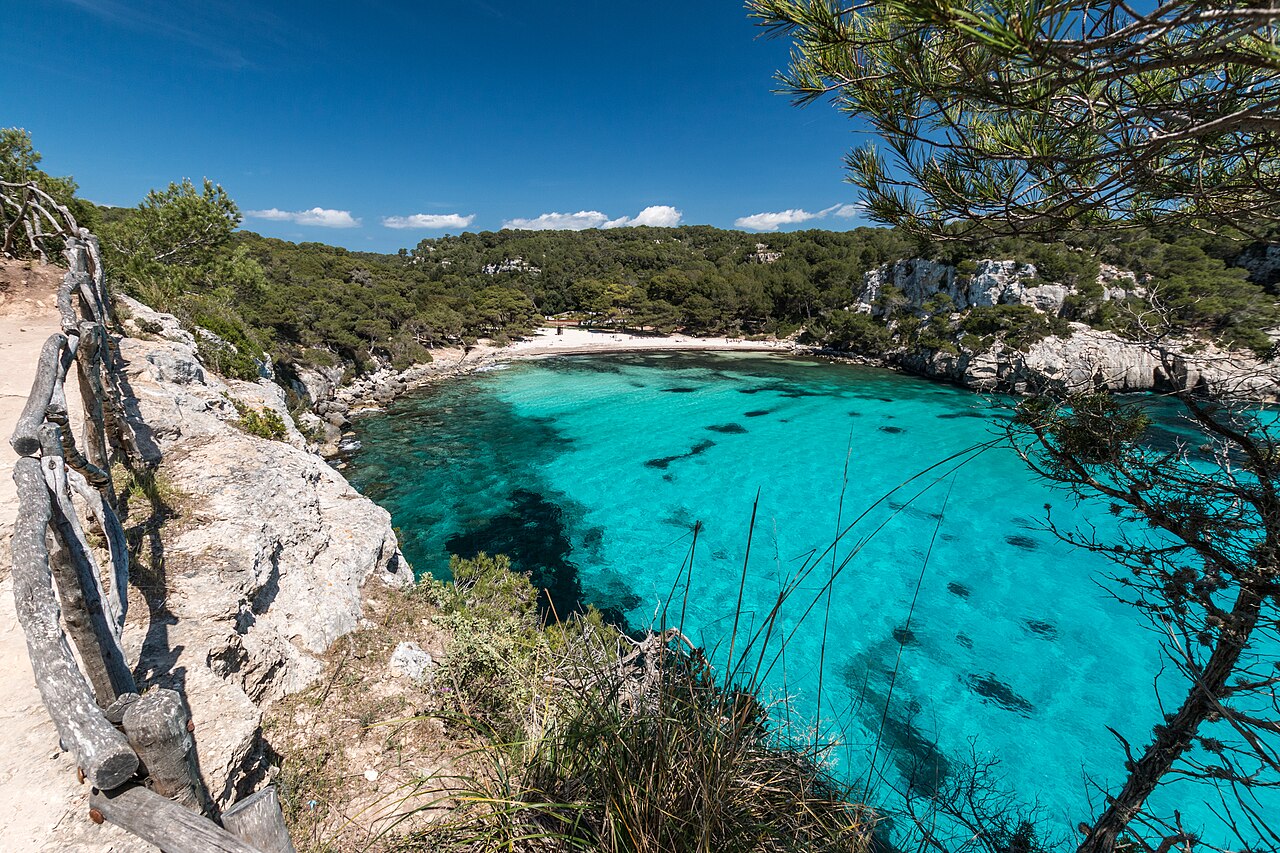
01 Why it’s unique
Menorca is a UNESCO biosphere reserve, and its Talayotic prehistoric sites were inscribed on the UNESCO list in 2023, including the taulas, T-shaped stone monuments found nowhere else.
02 Culture and history
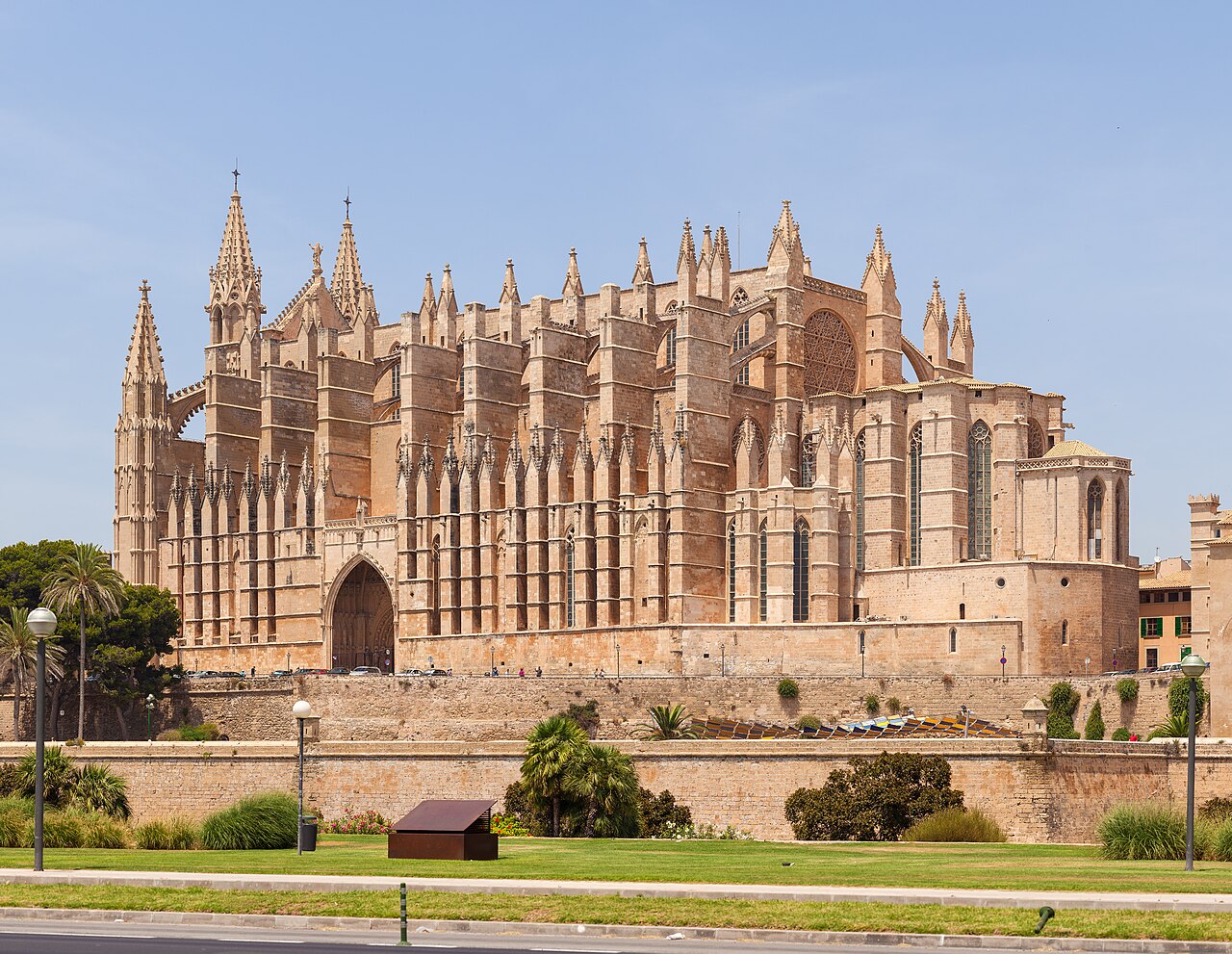
Palma Cathedral (La Seu) rises straight from the old sea wall; Antoni Gaudí reworked its interior from 1904 to 1914, and Miquel Barceló added a ceramic chapel in 2006. Joan Miró spent his last decades in Palma, and his studio by Josep Lluís Sert is now the Fundació Miró. Chopin and George Sand wintered in Valldemossa in 1838–1839. Menorca was British for much of the 18th century, which left Georgian sash windows in Mahón and a taste for gin; Mahón has one of the largest natural harbours in the Mediterranean.
03 Placemaking
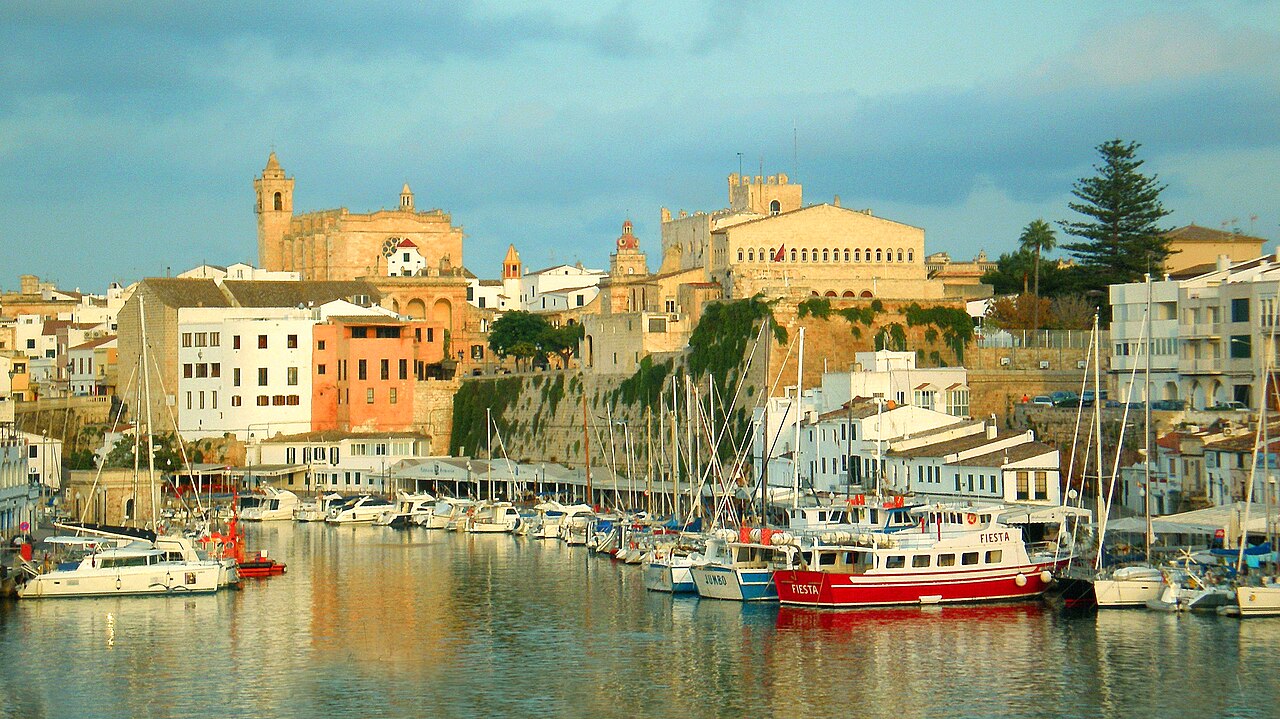
Palma’s Passeig del Born and its seafront promenade are the city’s stage. Ciutadella on Menorca has arcaded streets (Ses Voltes) around its cathedral. Menorca’s countryside is a landscape of dry-stone walls dividing small fields, built over centuries.
04 Diving and water
Cabrera National Park, south of Mallorca, has seagrass meadows and large groupers; Menorca has sea caves and clear coves.
05 Photography
Palma Cathedral’s rose window light; Menorca’s coves such as Cala Macarella; taulas at dusk.